At JAE we’re taking the opportunity to showcase our wonderful Editorial Board by chatting to our Editors about their research, experience as an editor, and their advice to prospective authors.
Editor Profile
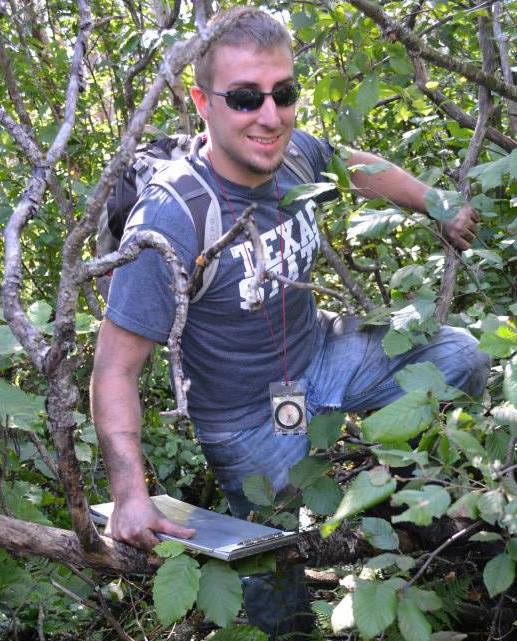
Name: Garret Street Associate Editor Since: January 2017 Location: Wildlife, Fisheries & Aquaculture, Mississippi State University, USA Keywords: behaviour, Cervidae, habitats, landscape, mammals, modeling, movement, production, resource selection, space use, Suidae
Can you briefly describe your research interests?
As a quantitative ecologist, I am interested in the proper application of math and stats to complex problems. My goal is to help people understand and interpret these complexities, and to use the tools they’re working with. I’m also interested in developing new methods and tools. My primary research interest is understanding how fine-scale processes, such as habitat selection, thermoregulatory processes, and animal sociality, produce broad-scale patterns over space and time. I want to know how these processes occur at the individual level across different landscapes and habitats, and how they contribute to population-level and species-level patterns.
Why did you choose to study this specific area – what makes it so exciting?
I did some undergraduate work on grazer aggregation patterns and sociality, and during my master’s, my advisor allowed me to consider how I could expand on that idea. I realised that I needed to model something, but I had no idea how to do computer modelling! As a graduate student, I took some basic freshman-level computer programming courses. I collaborated with mathematical and simulation-based modelling experts to develop my thesis, which I shared with John Fryxell, my future PhD advisor at the University of Guelph in Canada. He is an outstanding quantitative population ecologist and one of the best in the field. Later, I completed a postdoc with John Fieberg, who was a great mentor. Over time, I came to appreciate that the phenomena we observe at one level may not apply at another level, and we require tools that can explain how things move across these levels. Although some of these tools are non-existent, those that exist are frequently misapplied. I want to give back to the field, and help others enhance their work by addressing this problem.
What are specific questions does your research address?
It’s all about how behaviors and ecological processes transfer across scales and different levels of biological complexity. One example is Johnson’s orders of selection, which were introduced in a famous paper from 1980. We are still trying to determine how to connect these orders of selection, which has been a challenge for researchers. However, people such as Jason Matthiopoulos, John Fieberg, Luca Berger, and myself are actively working to find solutions. For instance, an animal may choose a particular area as their home range because of a specific factor, like the availability of a good den site, but once they are there, that factor may no longer be important for other decisions they make. Instead, they base their decisions on other considerations such as food availability and anti-predator responses. This notion of scale and mismatch applies to many ecological issues. I have been working closely with some colleagues on the abundance occupancy relationship and demonstrating how mismatches may exist due to selectivity differences across scales. This idea of mismatched processes is the biggest ecological issue that currently interests me. Methodological issues also excite me. How do we capture relatedness between interconnected scales, such as individual decisions and migratory pathways? The current tools aren’t adequate for addressing these challenges. I have been collaborating with others to consider how we can use new models of animal movements, such as step-selection models, to predict how animals will utilize different areas over broad temporal scales. This presents a fantastic opportunity to develop new methods and statistics that can help us answer these complex scaling problems.
What do you perceive to be the future direction for this field of research?
One benefit of the kind of work I do is seeing expected patterns emerge from the new tools that we have, which is fantastic. However, what makes this most useful is the application. For example, I work with people who have close external ties to the US Federal government, who frequently look at the listing status for species under the Endangered Species Act. Our involvement aims to provide quantitative assessments to the government for these initiatives. Tools like this help us to assess predictive models and ask what will happen when the mechanisms that govern them change through time. The obvious example is climate change. If we were to take the predicted patterns of climate change and scale these down to the level of local weather patterns, we can use the fundamental mechanisms of animal decisions and behaviors to predict distributions. Predictions are no longer based on correlations as with traditional models – they can be grounded in the closest approximation we have of the actual mechanisms that animals use to make choices. That fascinates me – and that’s the future direction. Once these tools are in place, we will be able to make predictions about animal behavior, movements, emergent individual distributions, and ultimately species –level distribution patterns in response to management regimes, expected climate change, conservation action, and delineation of spaces as protected areas. We could use these tools to change or inform decisions, to give the best chance possible to these animals of persisting.
How have you found your time being an Associate Editor with JAE?
It’s been very good. I’m in my last of three terms, which is a little bittersweet because I have deeply enjoyed it. As a researcher with my own lab, it’s hard to find time to read new literature… especially with two young kids at home! My time is stretched between advising students, mentoring graduate students and postdocs, applying for funding, and writing. Being an AE gives you an excuse to read! The role also helps me to think about new ideas moving through the field and spot interesting new observations. Being an AE has given me great mentoring opportunities– my role has given me a special sort of insight into the peer-review and publication processes that I can use to help my students and postdocs. I get to talk with authors to help them get their papers published. There have been a few times where people have wanted to submit a paper but thought it was too long or did not meet requirements. I told them to just send it, and their paper ended up getting published! I like to think I helped them in a small way to make that happen. I like to help others, and this role is giving me the chance to do that.
Are there any big challenges to your role?
One challenge that I wasn’t expecting is reviewing papers that are outside of my expertise. I’ve had papers about taxa and specific systems that I just know little about, although I do understand the methodologies. In selecting reviewers, I find people who have that expertise and I tend to seek more reviewers than usual to provide a wider breadth of experience and perspectives. In doing that, I benefit from learning from the expertise brought by qualified reviewers.
What are some pitfalls or common mistakes that you see in new submission?
One pitfall is the failure to explicitly state hypotheses and predictions effectively. People often get wrapped up in stating the objective of their study. This may be due to different philosophical perspectives on how we should perform analyses, but sometimes people rely too heavily on things like model competition and AIC. They try to let the statistical machinery make decisions for them, rather than using their knowledge to craft elegant and meaningful individual models that can answer their questions. Another thing that I often see is the failure to tell an interesting story. Storytelling is one of the oldest arts that humanity has. I think that the scientific writing style doesn’t always lend itself nicely to trying to tell a compelling story. We should think about narrative, structure, and plot to make a paper more interesting. If a paper feels compelling to read and is narratively engaging, it will be received better in the review process and by readers afterwards.
What advice would you give others for authoring a paper that meets the scope and aims of the Journal?
Read all the time, even things that are not in your field. When a new issue of a journal that you like comes out, read the whole thing – even papers unrelated to what you’re studying. You won’t be able to replicate the writing style of a target journal if you’re not familiar with it. Second, practice writing, and not just scientific writing. Write for blogs or any outlet that gives you an opportunity to practice communicating a complex problem.
Finally, think about your story. Your introduction should set the stage and capture the reader’s interest, just like the first chapter of a book. You want to create the beginning of a story that makes the reader say, “huh… I’ve never thought about it quite like that before. Let’s see what else you’ve got!”. I recommend Stephen Heard’s book on how to write for science, or Helen Sword’s books about how to write for a general academic audience. Something that I do (and not everyone will want to do this) – is read a paper aloud to myself. I don’t read deadpan – I read it as if speaking on a stage, or in conversation. This helps me find the cadence in the writing.
One final question – are there any issues in the wider ecological research community that you would like to highlight?
The biggest thing that I would highlight is diversity, equity, and inclusion. Too often, people talk about this, but do not take action. We need to ask ourselves daily, ‘how can I demonstrate to the people in my research lab or network that I value DEI?’ I do not have the perfect solution, but when I interact with students and postdocs, I am constantly questioning if I am approaching things correctly, if I am being the role model they need me to be, and what I can do better if they tell me how I can improve. Another significant issue is mental health and wellness. When appropriate, I openly discuss my own mental health during meetings with students and postdocs, with the hope that it encourages them to talk candidly about their struggles and any impacts on their work. These discussions enable us to approach their professional development in a manner that prioritizes their mental and physical well-being. It is okay to struggle, and it does not change who you are or what you can accomplish as a researcher. If anything, it sheds valuable insight on research from the perspectives of neurodiversity and mental health. It improves accessibility in research approaches and creates an inclusive, safe space.
 Animal Ecology in Focus