At JAE we’re taking the opportunity to showcase our wonderful Editorial Board by chatting to our Editors about their research, experience as an editor, and their advice to prospective authors.
Associate Editor Profile
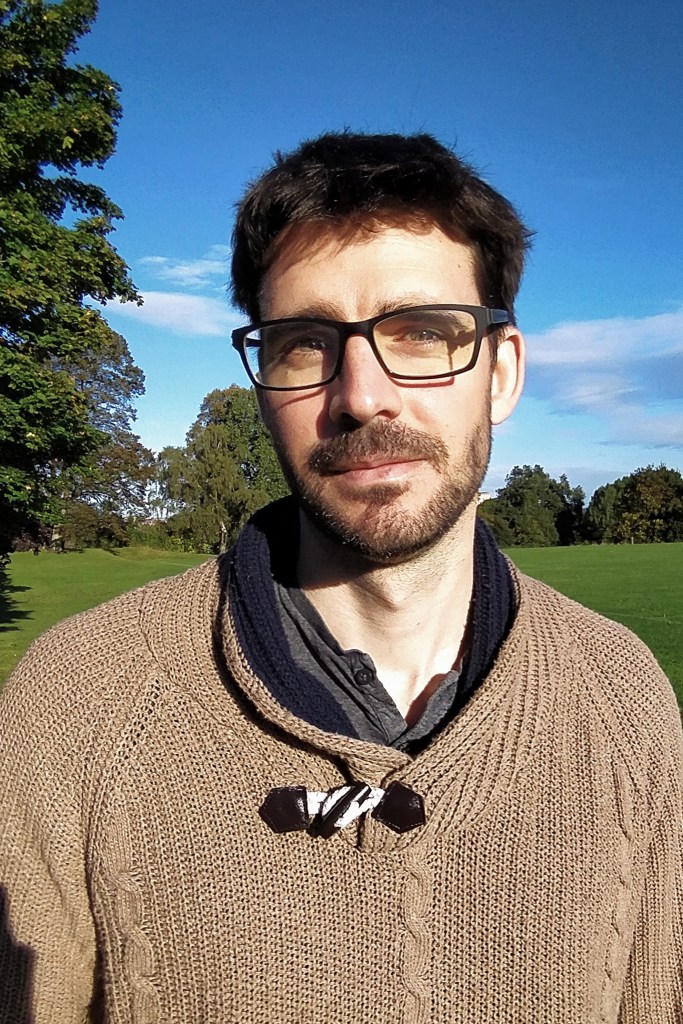
Name: Pol Capdevila Location: University of Barcelona, Spain Keywords: conservation, demography, extinctions, life history theory, macroecology, phylogenetic analyses, population ecology, regime shifts, resilience. Twitter: @PolCapdevila90 Website: https://polcapdevila.weebly.com/
What area of ecology do you research? What makes it so exciting/important?
Growing up in close contact with nature, particularly the marine environment, I developed a strong connection to the natural world. However, as I became more aware of the environmental challenges we face, such as climate change, pollution, or habitat loss, I realized that I wanted to do more to protect and preserve the ecosystems that had given me so much joy and inspiration. That’s why I became interested in understanding the resilience of natural ecosystems.
What challenges do you hope to address in you research?
My current research focuses on understanding the resilience of Mediterranean marine systems to marine heat waves. These extreme events are becoming more frequent and intense due to climate change, and they pose a significant threat to the ecological integrity and functioning of these systems. Specifically, I am interested in how the resilience of populations scales up to the community level. By studying this connection, I hope to better predict the resilience of communities based on the resilience of some of their constituent populations.
What is one of the biggest challenges you have faced in your career?
One of the biggest challenges in my career was to develop a framework to operationalise resilience for demography. While the concept has been defined in many other disciplines of ecology, in demography there were very little studies explaining how to define it and measure it. For this, we decided to use mathematical properties of demographic models to calculate the resilience of populations and species. Working on a manuscript that was not really testing any hypothesis was difficult, and making sense of some of the complex mathematical properties of demographic models was not an easy task. However, with the help of my collaborators we were able to finally translate the mathematical properties into resilience concepts.
What is the future direction for your research?
There are many possibilities. Scaling up resilience from low levels (e.g., physiology, genetics) to upper levels of organisation (e.g., communities, ecosystems) is something that could help us a lot to better design conservation actions.
Why are you an Associate Editor with JAE?
I absolutely love my role as Associate Editor. It enables me to stay on top of the latest literature in my field and beyond, while also providing intellectual stimulation as I dive into the authors’ intentions and help them achieve their goals. The editorial board and staff are exceptionally helpful and friendly, defying my initial perception of journals as unapproachable entities. Moreover, being an editor is highly regarded in the scientific community, especially during times of stiff competition for permanent positions, fellowships, grants, and other opportunities.
However, finding reviewers can be a daunting challenge, often taking longer than desired. Providing constructive feedback to authors is another demanding task, requiring much more time and effort than one might anticipate.
What are some of the mistakes / pitfalls that you see in the papers? How might these be addressed by submitting authors?
One of the most common mistakes I come across is a lack of clear communication. This can be especially challenging for those whose primary language is not English. My recommendation is to explain everything as if the reader has no prior knowledge of your field. This approach can be particularly helpful in the methods section, which is often unclear. It can also improve the clarity of the introduction and discussion sections, where the hypotheses and objectives should be articulated explicitly. By ensuring that the text is clear, readers are more likely to stay engaged and understand the manuscript.
What submissions would you like to see more of?
While there are many topics that are underrepresented in scientific publications, I would like to highlight the lack of attention given to marine ecology. As a marine biologist, I may be somewhat biased, but I have observed a tendency towards more terrestrial and freshwater publications in our journal. I believe that marine ecology has a lot to offer to the broader field of ecology, and it would be wonderful to see more of these contributions in our journal.
How does being an associate editor benefit your own research / academic career?
As I previously mentioned, being an Associate Editor is a great way to stay current with the latest literature in my field, while also providing me with a broader perspective on manuscripts. Additionally, being an editor is highly valued within the scientific community and has helped me secure grants and fellowships. Furthermore, my editing skills have improved significantly over the years. While I initially believed that I was already proficient in editing, my experience as an AE has allowed me to hone my skills even further.
What, would you say, are some challenges facing ecological research?
In my opinion, one of the most pressing challenges facing ecological research today is effectively communicating our knowledge to society. With social media and other forms of media dominated by short, oversimplified messages, conveying our findings in a way that resonates with the wider public can be challenging. While ecologists are acutely aware of many pressing environmental issues, such as climate change and habitat loss, we often struggle to convey these challenges to society at large. However, I firmly believe that if we could effectively communicate our results to a broader audience, we could make significant progress in addressing these challenges. A more informed society would be better equipped to make the right decisions and take action to preserve our planet’s biodiversity and ecosystems.
What advice would you give to early career researchers in ecology / prospective authors?
Investing time in improving communication skills is something that I would highly recommend. While it can be challenging to carve out time to work on these skills, doing so can greatly enhance your ability to secure funding, get manuscripts accepted, and stand out at conferences. By improving your ability to communicate effectively, you can better convey the importance of your research and engage with a wider audience. Whether it’s through improving your writing, honing your public speaking skills, or becoming more adept at using visual aids, investing in your communication skills is an investment in your career and your impact as a scientist.
JAE aims to publish novel research that significantly advances / contributes to the field of ecology. What does this mean to you?
Defining what constitutes novel research might be a debate in itself. However, in my view, a manuscript can be considered novel if it effectively addresses a knowledge gap in the field. This could involve describing a previously unknown ecological process, identifying a new ecological mechanism, or predicting the former on novel conditions (to put some examples). To help readers understand the novelty of their research, I recommend that authors clearly articulate which is the gap of knowledge that they are aiming to fill, based on current knowledge. Achieving this can be challenging but it often comes down to creating a compelling narrative in the introduction that effectively contextualizes the research and emphasizes its importance. It all might boil down to creating the right narrative for the manuscript.
You can browse Journal of Animal Ecology’s full editorial board here
 Animal Ecology in Focus