
This blog post is provided by Philip Matich and tells the #StoryBehindThePaper for the paper “Long-term effects of climate change on juvenile bull shark migratory patterns” which was recently published in the Journal of Animal Ecology. The authors explore the effects of warming water temperatures on juvenile bull shark migrations.
Wildebeest, humpback whales, copepods… these are among the thousands of animals that migrate because of seasonal or daily changes in food availability, environmental conditions, risk, or reproductive cycles. Growing up in the northeastern United States, Canadian geese would pass through my hometown on their way south for the winter and north for the summer every year; stopping by the local ponds to feed and drink. But migrations of many species have changed since the 1980’s, including those of some sharks. Our recently published paper in the Journal of Animal Ecology Long-term effects of climate change on juvenile bull shark migratory patterns highlights this, showing how warming water temperatures in the Gulf of Mexico have been both directly and indirectly responsible for delaying the overwintering migrations of juvenile bull sharks from their nurseries in Texas estuaries into the Gulf for the last 40 years.

Climate change has led to chronic increases in temperatures for decades. In the western Gulf of Mexico, autumn water temperatures have increased by ~1.55 °C in the last 40 years, causing phenological shifts among ecologically and economically importance species. Southern flounder are a popular gamefish in the region and engage in batch spawning in the winter, moving into the Gulf of Mexico from estuaries to breed in large quantities. However, the success of their offspring is in part reliant on cold winter temperatures. As warming has persisted, flounder spawning success has diminished, and other fish, like mullet, have followed similar suit. In turn, fisheries have been affected. But there are broader ecological consequences, including the pressure placed on the predators that feed on them.
The estuaries that are home to flounder and mullet are also essential habitats for juvenile bull sharks, better known as nurseries. In the western Gulf of Mexico, bull sharks are born in spring-early summer, after which they vigorously feed while trying to avoid being eaten by larger sharks, growing quickly before they must vacate nurseries in late Autumn for the deeper, warmer Gulf of Mexico. Sharks that fail to make this migration face water temperatures that can induce cold stress (<18 °C), and estuaries that lack adequate winter food sources. In the 1980’s, the migrations made by sharks took place in September-October. But today, bull sharks are leaving much later, some in November right before Thanksgiving.
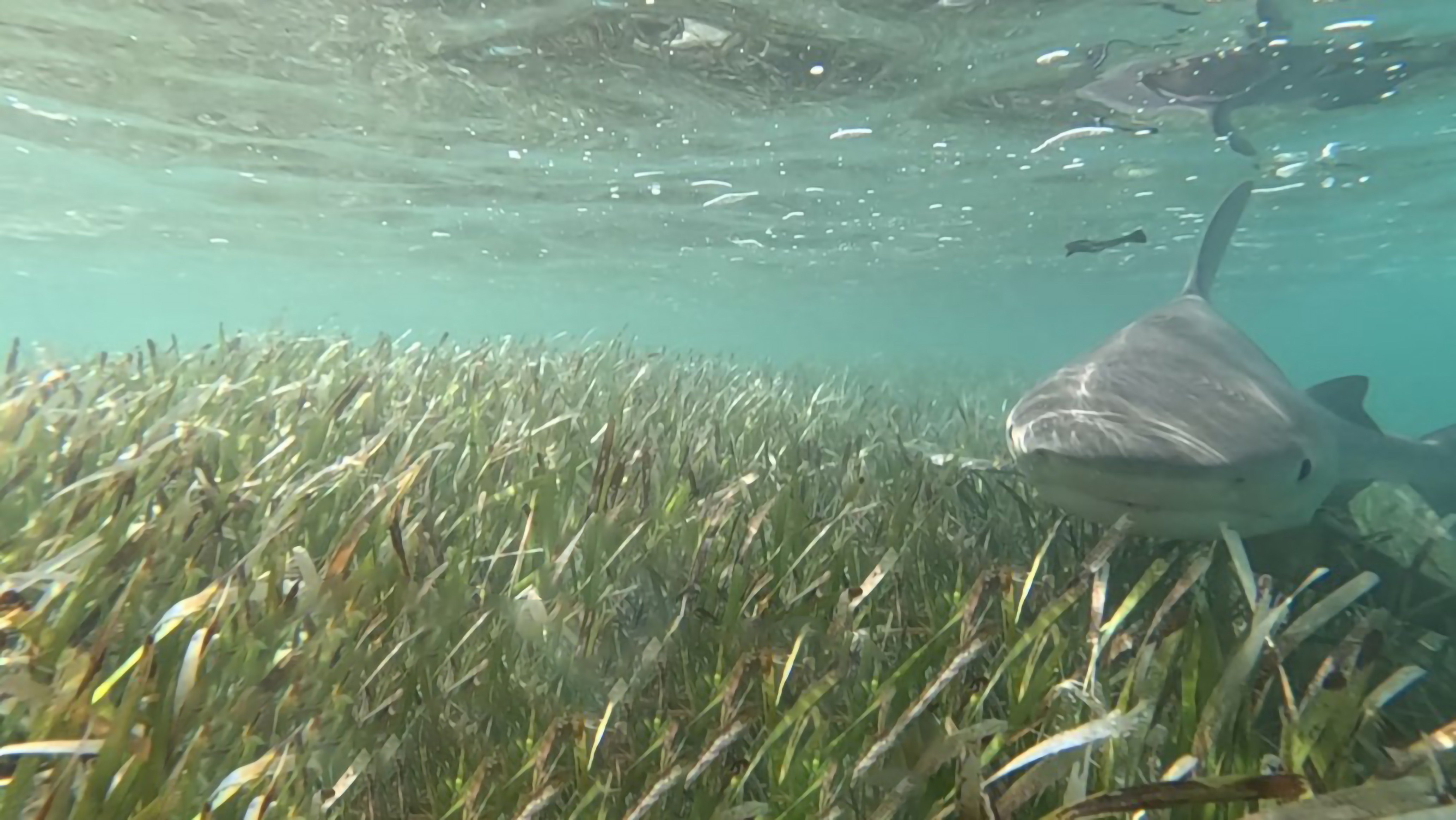
Autumn cold fronts defined by significant declines in temperature, drops and rapid rises in barometric pressure, and changes in wind speed and direction are an indicator for onset of winter and a cue for juvenile sharks to depart estuaries. And these cold fronts have been occurring ~0.5 days later every autumn for the last 40 years. But the cold fronts are indicators of conditions to come rather than a force that pushes sharks into the Gulf. Like other animals, sharks have a threshold for cold temperatures, and these cold fronts trigger an innate behavior in the sharks to leave the shallow estuaries before this threshold approaches.
Yet, water temperatures themselves do not appear to be the primary factor leading to bull shark migratory behavior. It is the climatic impacts on fish stocks that have led to delays in juvenile shark migrations. As a result of poor spawning success in recent decades, the relative abundances of mullet, the primary prey species of young bull sharks, have significantly declined (up to 94%). Consequently, bull sharks require more time in their nurseries to feed after they are born to reach a size that enables them to successfully overwinter in the Gulf of Mexico. And the warmer autumn temperatures have permitted them to do so, because the onset of stressful conditions has been later and later. Despite spending more than 30 days longer in their nurseries in 2021 than 1982, sharks are the same size before they migrate now as they were in the 1980’s (~90 cm total length). Thus, we have witnessed a direct (temperature) and indirect (prey availability due to temperature) impact of climate change on juvenile bull shark migrations.
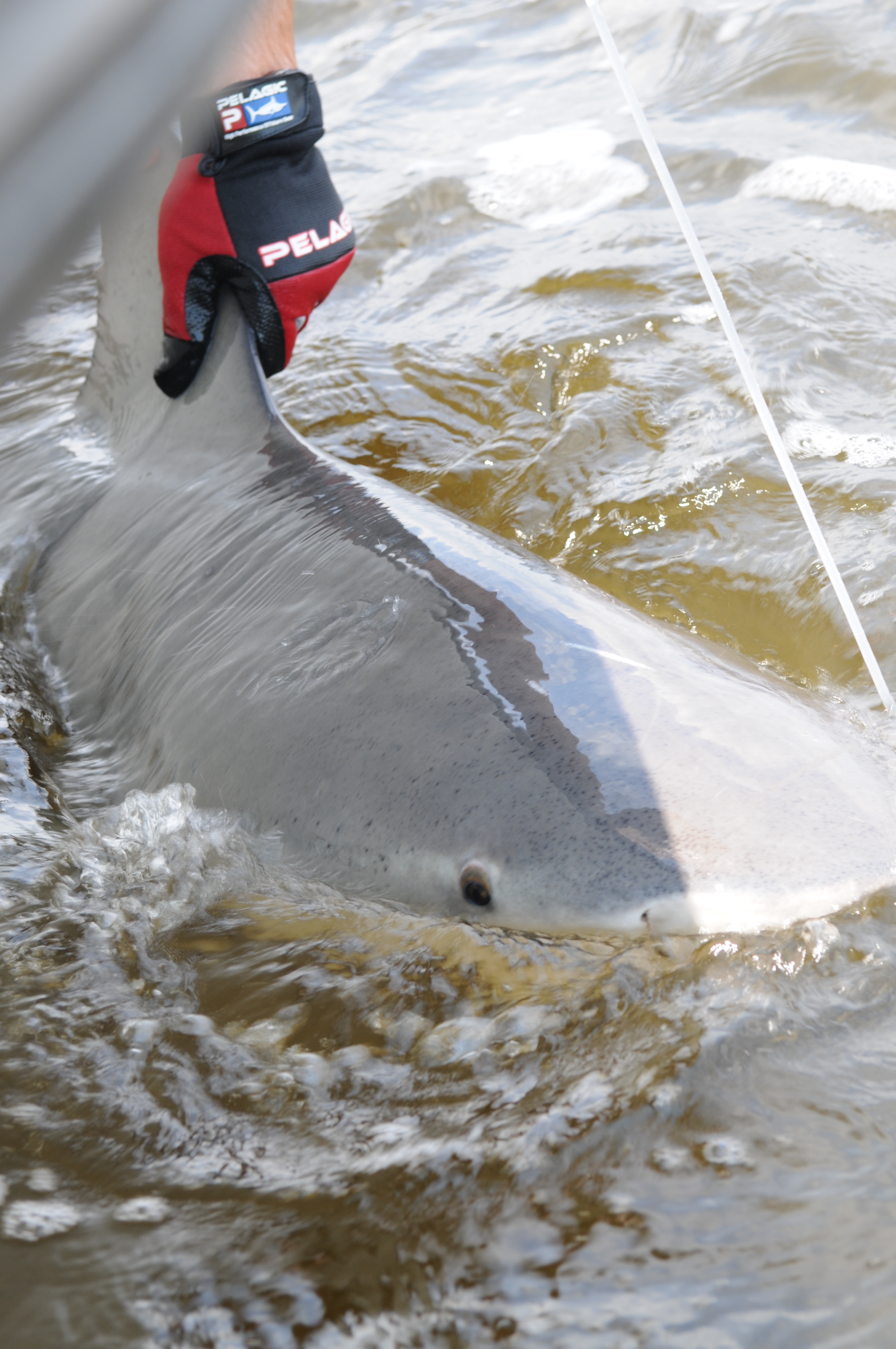
But it’s not just the timing of migrations that climate change has impacted. As a result of these delays, bull sharks are spending less time in the Gulf of Mexico in the winter. Juvenile sharks use estuaries because they offer refuge from larger sharks, and the more time spent away from these refuges, the greater risk they face of being attacked and preyed upon. The shorter overwintering period bull sharks are now experiencing has in turn increased survival rates (+50%) since the 1980’s.
Bull sharks reach maturity at >10 years of age, thus the long-term effects of greater survival rates have not yet been realized. But an important question remains: how will this impact ecosystems? Sharks experienced unprecedented human-induced declines in the 20th century, and many management and conservation organizations have been striving to mitigate these losses. But it is not clear how other members of ecological communities will respond to shark recovery, including prey populations. If mullet, the primary prey species of juvenile bull sharks in the western Gulf of Mexico, have experienced declines due to poor spawning success, and they face greater predation pressure due to increased shark abundances, will mullet populations remain healthy enough to support natural predator populations and human fishing pressure? Mullet are key prey species for many predators, including sharks, birds, and other fishes. Will some of these predators struggle because of prey declines, or will they seek out other prey species? And if they seek alternative prey sources, how will this impact ecosystem stability. Prey availability is not an apparent limitation for juvenile sharks in the western Gulf of Mexico. But could this change if trends persist? Time will tell, and long-term monitoring by the Coastal Fisheries Division of Texas Parks and Wildlife Department from which the data for our paper was provided will be integral in answering this question.
Read the paper
Read the full paper here: Matich, P., Plumlee, J. D., Bubley, W.,Curtis, T. H., Drymon, J. M., Mullins, L. L., Shipley, O. N.,TinHan, T. C., & Fisher, M. R. (2024). Long-term effects ofclimate change on juvenile bull shark migratory patterns.Journal of Animal Ecology, 00, 1–17. https://doi.org/10.1111/1365-2656.14140
 Animal Ecology in Focus