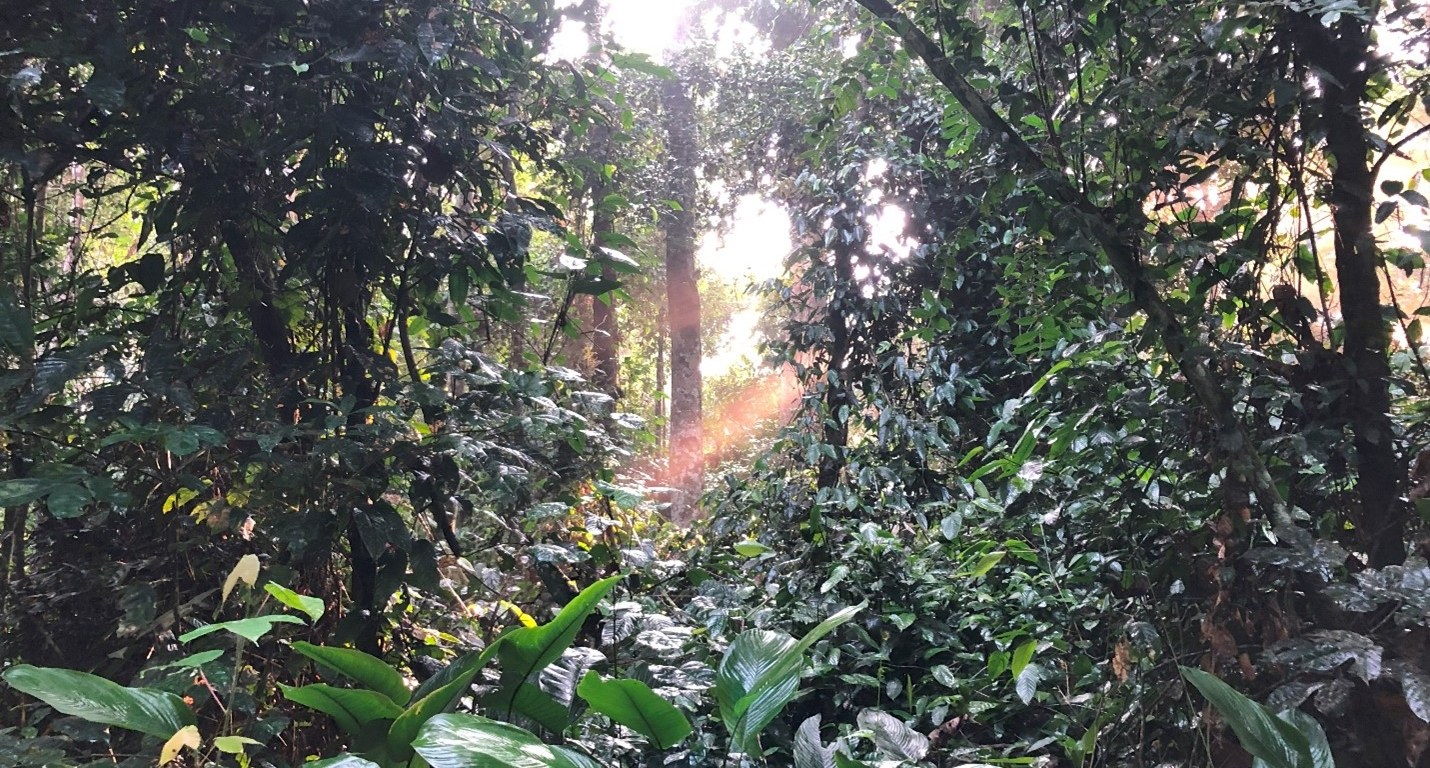
This blog post is provided by Nicholas Russo and tells the #StoryBehindThePaper for the paper “Three-dimensional vegetation structure drives patterns of seed dispersal by African hornbills” which was recently published in the Journal of Animal Ecology. Together with colleagues, Nicholas shows how vegetation structure and weather affect the behaviour and habitat preference of two hornbill species and how this, in turn, may influence seed dispersal.
In the rainforests of Central Africa, animals disperse the seeds of up to 90% of tree species, contributing to the rich plant diversity of these ecosystems. Seed dispersal also sets the template for vegetation structure, which is itself a component of biodiversity. As animals disperse seeds, they must navigate the complex arrangement of branches, foliage, and canopy gaps, thereby setting up a feedback loop in which vegetation structure influences the movements of animals that shape vegetation structure in turn.
Tracking Hornbill Movements
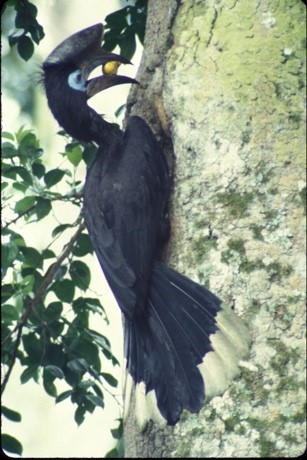
Hornbills are a familiar sight and sound of rainforest canopies in Central Africa, commuting among fruiting trees with loud, whooshing wingbeats that keep their heavy bodies aloft. Together with colleagues, I studied the movements of Cameroon’s two largest hornbills—black-casqued and white-thighed—which together disperse the seeds of about a quarter of the region’s tree species.
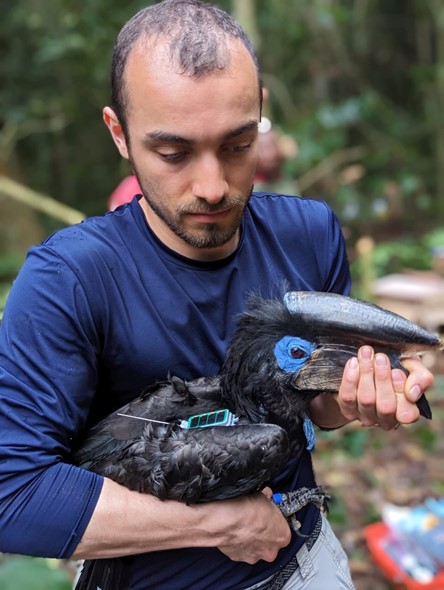
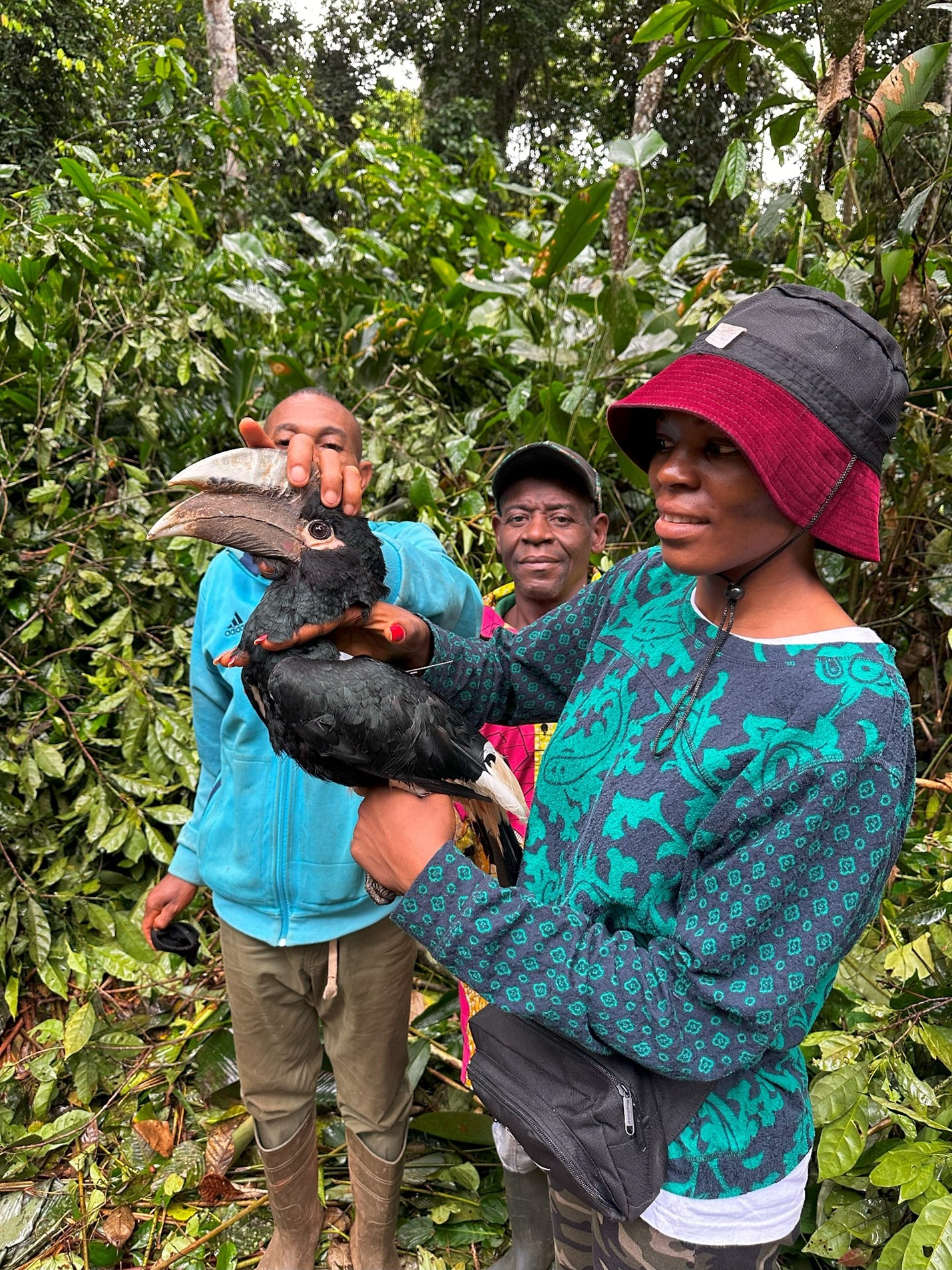
For this task, I recruited the experts—several Baka and Badwe’e guides who have spent parts of 30 years identifying, capturing, and tracking hornbills. These forest guides hailed from the villages of Bifolone, Kompia, Nkolékoul, and were the driving force behind all hornbill fieldwork. We GPS-tracked 16 black-casqued and five white-thighed hornbills in the Dja Faunal Reserve, Cameroon’s largest protected area, and surrounding villages. Capturing hornbills is like mist-netting any bird, except that at least two people need to raise and lower the net with a set of ropes the way theatre techs raise and lower a curtain. I described this technique in greater detail in another blog post for the Association of Field Ornithologists: https://afonet.org/2024/10/a-canopy-net-for-cameroons-rainforest-hornbills/.
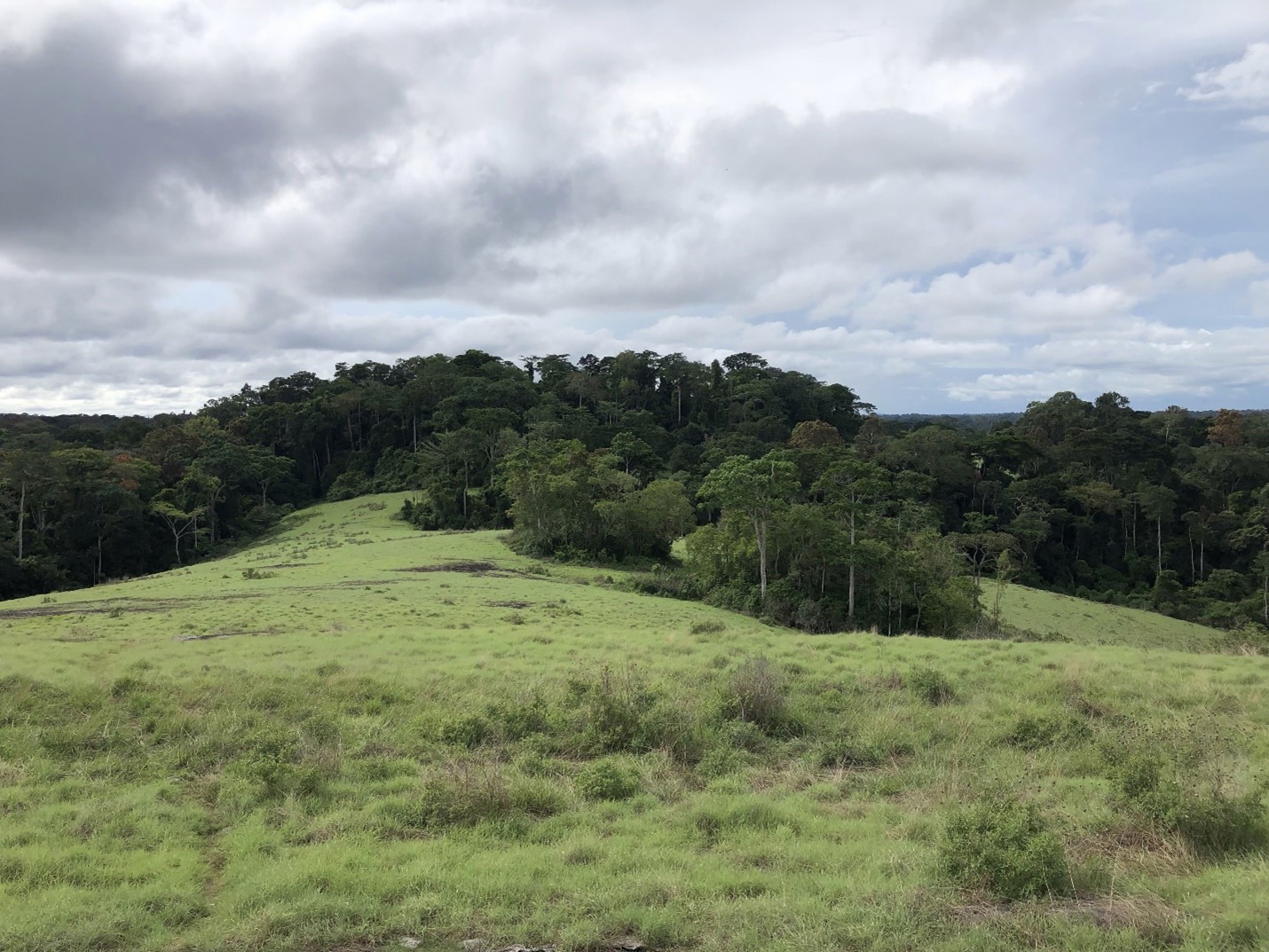
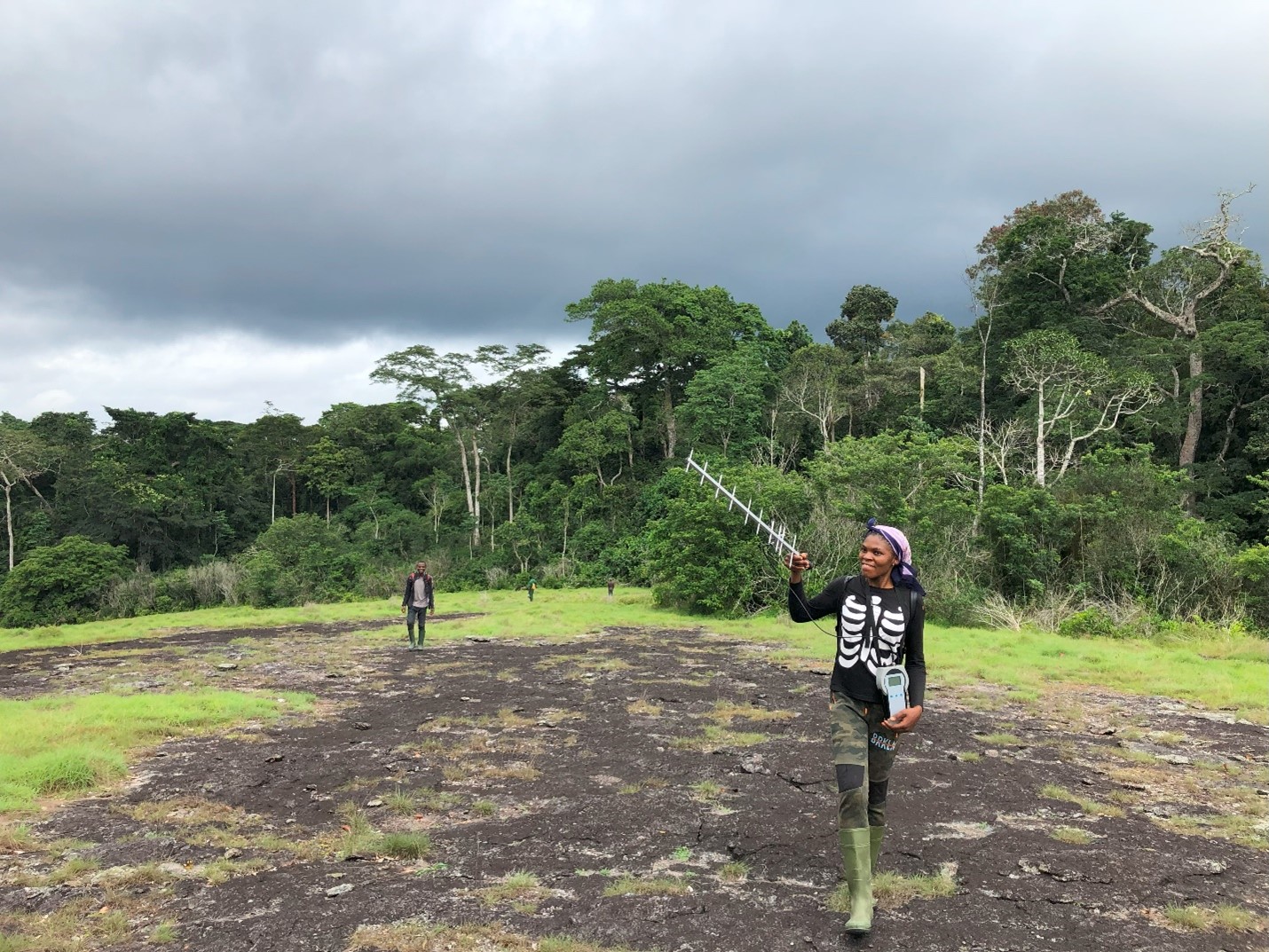
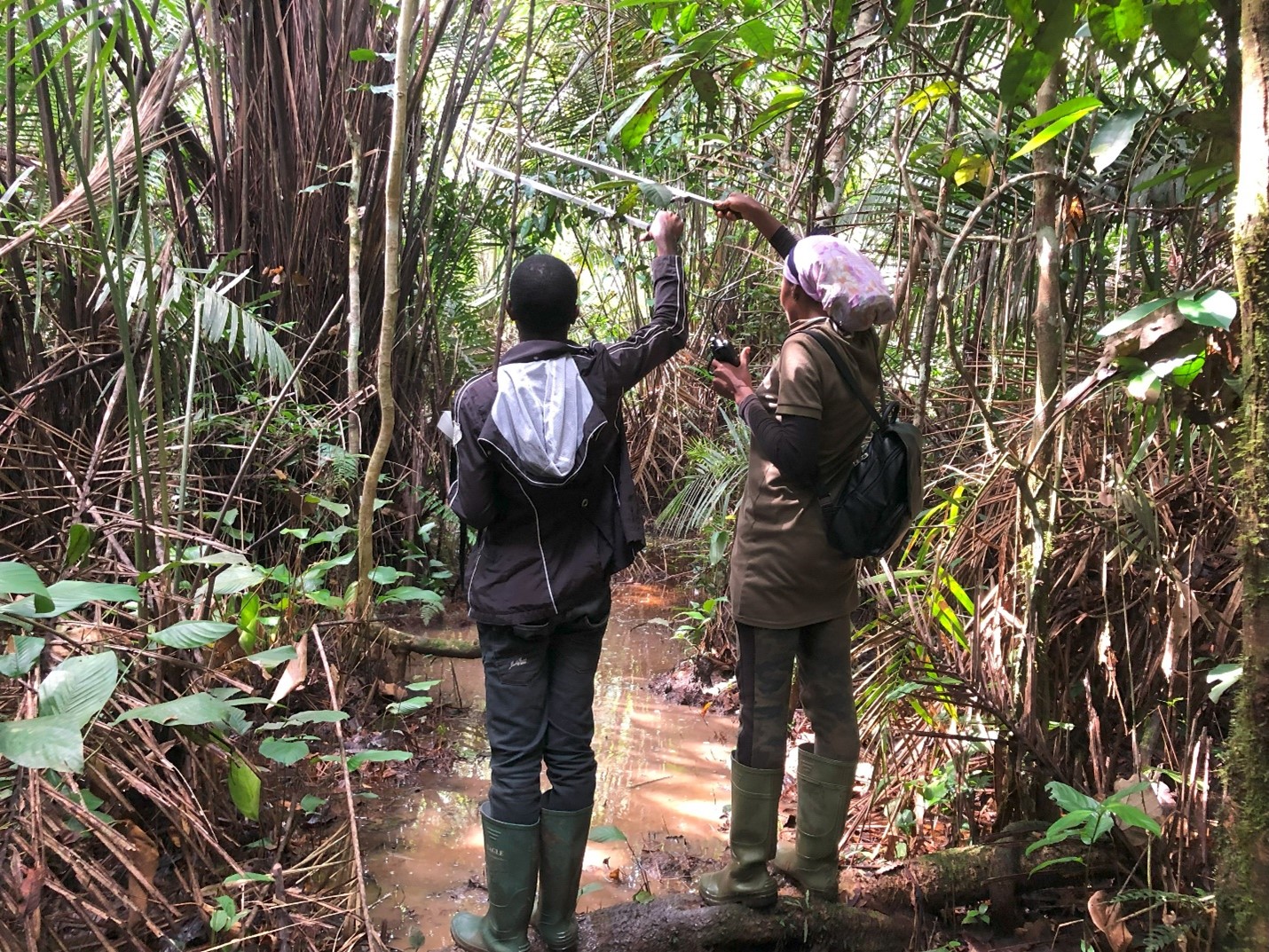
To retrieve the GPS and accelerometer data from the tags, a student assistant and I would slog up rocky outcrops, through boot-sucking mud and clouds of flies, familiarizing ourselves with each hornbill’s home range as we aimed our yagi antennas at the bird’s most probable location. Paper co-author and University of Bamenda PhD Student Docas Looh Nshom still returns to the Bouamir study site each month to track down hornbills and download the data. When the birds leave the Dja Faunal Reserve during Cameroon’s food-lean dry season, they encounter cell networks that relay the data to the Movebank data repository. Amazingly, all 21 tags are still functioning and transmitting data.
3D Structural Preferences
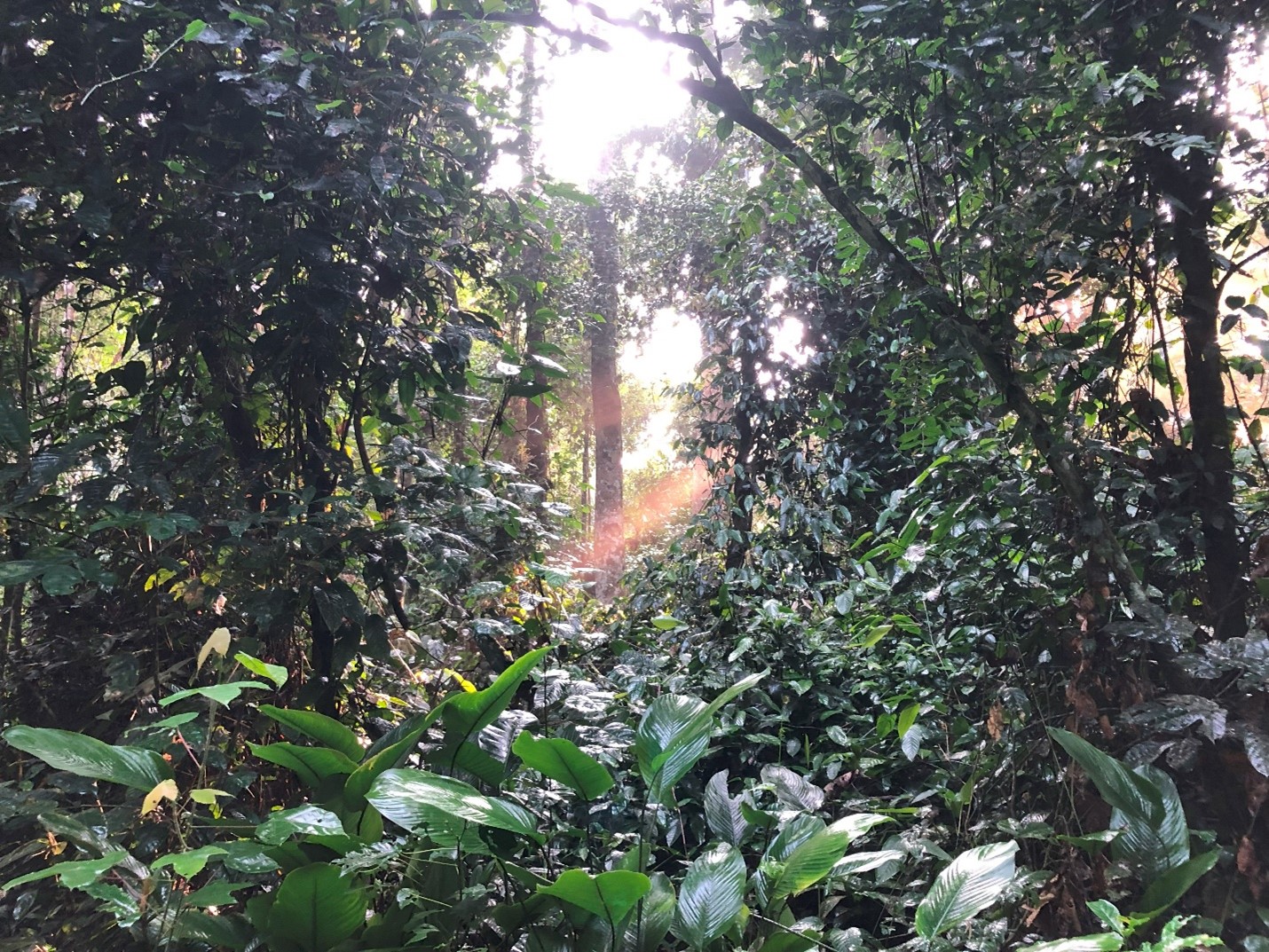
We predicted that several features of 3D vegetation structure would influence hornbill movements, including canopy height, vertical complexity, and distance to canopy gaps. Coauthors and collaborators at UCLA, Université de Montpellier, and the Jet Propulsion Laboratory produced these metrics over a 25 km2 study site with Light Detection and Ranging (LiDAR), a drone-mounted scanner that uses light pulses to characterize vegetation structure in 3D We used an integrated Step Selection Analysis to characterize hornbill habitat selection; this approach entails comparing hornbill movement steps—the straight-line distance between two GPS locations—to 10 randomly generated steps representing available habitat.
We found that both hornbill species preferred areas of greater canopy height, and white-thigheds preferred areas of greater vertical complexity. Interestingly, we detected both positive and negative selection towards canopy gaps, meaning that individuals of both species can either be canopy gap specialists or avoiders. Individual variation in movement behaviour is a fast-moving area of research, and it would be interesting to explore the diversity of movement behaviours exhibited by frugivore species and its consequences for seed dispersal patterns. Moreover, seed dispersal contributes to vegetation structure, thus closing a feedback loop between animal behaviour and vegetation. An interesting avenue for further research would be to characterize this feedback loop in different terrestrial ecosystems.
Swamps as a Cool Refuge
Black-casqued hornbills preferred swamp habitats during hotter temperatures, while white-thigheds appeared to avoid them altogether. This is an interesting niche difference between the two species. Accelerometer measurements helped us confirm that both species are less active during hotter temperatures, and that black-casqued hornbills are less active when they’re in swamps.
Swamps in southern Cameroon are shady habitats dominated by the palm Raphia monbuttorum,with dense vegetation and standing water year-round. Black-casqued hornbills may retreat to swamps to thermoregulate during hot temperatures. As climate change brings greater temperature and precipitation extremes to Congo Basin rainforests, Raphia swamps may play a significant role in future hornbill distributions. In addition, hornbills are some of the only long-distance dispersers of Raphia monbuttorum seeds due to their bill size and daily distances traveled. The relationship between hornbills and Raphia palms will be valuable for sustainable development in the Congo Basin because of the widespread use of Raphia parts and derivatives as building materials in rural villages.
A New Tool for Conservation
Finally, we modeled seed dispersal patterns based on hornbill habitat preferences, showing how 3D vegetation structure can influence the distances and directions of seed dispersal events. Our modelling framework simulated hornbill movements based on relationships between habitat covariates and movement behaviour. We assigned a probability of seed deposition along the length of each movement simulation based on gut passage times of seeds estimated from another study. The result was a spatially explicit map of predicted seed dispersal patterns for tree species dispersed by hornbills. The seed dispersal modelling framework can be used wherever scientists and practitioners have information about habitat selection of animal species and estimates for the time to occurrence of an event such as seed dispersal. For example, this technique can be applied to landscapes recovering from disturbance to estimate the potential seed rain contributed by animals. We consider this a crucial step towards preserving the Congo Basin’s biodiverse rainforests and swamps in a changing landscape.
Read the paper
Read the full paper here: Russo, N. J., Nshom, D. L., Ferraz, A., Barbier, N., Wikelski, M., Noonan, M. J., Ordway, E. M., Saatchi, S., & Smith, T. B. (2024). Three-dimensional vegetation structure drives patterns of seed dispersal by African hornbills. Journal of Animal Ecology, 00, 1–12. https://doi.org/10.1111/1365-2656.14202
 Animal Ecology in Focus