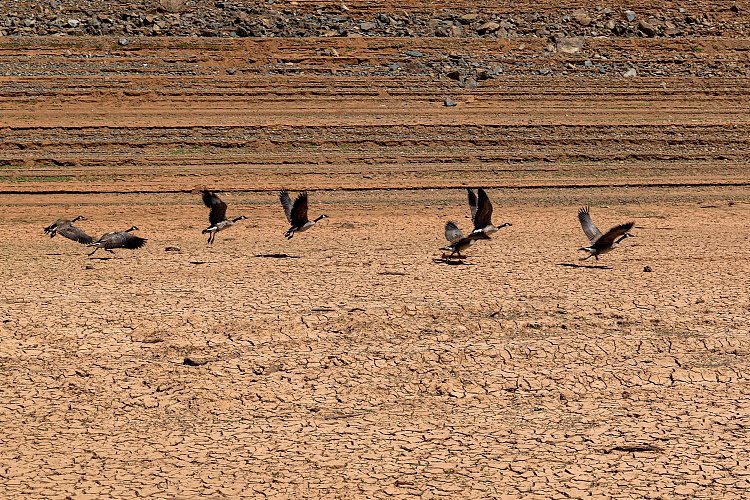
This blog post is provided by Lyu Bing Zhang and Yang Liu and tells the #StoryBehindThePaper for the paper “Biological traits and biome features mediate responses of terrestrial bird demography to droughts”, which was recently published in the Journal of Animal Ecology. In their study, Lyu Bing, Yang and colleagues conducted a meta-analysis of 204 species to find that droughts generally have a negative impact on bird individuals and populations, and that population responses to drought are influenced by factors concerning food resources and life history strategies.
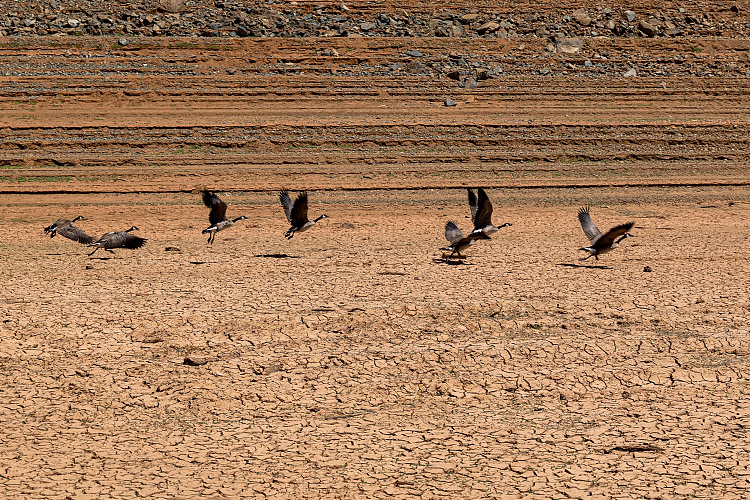
As the planet continues to warm due to climate change, we can expect more frequent and severe extreme climatic events (ECEs) by the end of the 21st century. These events—such as tropical cyclones, droughts, and heatwaves—pose significant threats to natural ecosystems. Understanding how species respond to these changes is crucial in identifying their vulnerability, but there is still much uncertainty about how these ECEs affect different levels of biological organization. This approach can facilitate the identification of factors that contribute to species vulnerability, offering valuable insights into animal ecology in the face of climate change and global biodiversity loss.
Droughts, in particular, are expected to increase in frequency, intensity, and duration over the next 50 to 80 years, posing a rising threat to wildlife. However, the impacts of droughts on biodiversity are highly variable. Understanding the factors that make certain species more vulnerable to these events is crucial for mitigating the risks posed by climate change. Recent studies in central and eastern North America have shown that birds—a group that is widely monitored—respond differently to short-term and long-term droughts. However, it remains uncertain if these results are applicable to other geographical areas or how the severity and duration of droughts influence bird individuals and populations.
To explore these questions, we analysed 319 observations from 29 peer-reviewed studies, covering 204 bird species across eight terrestrial biomes. We examined how droughts affected key demographic metrics such as population size and reproductive success. In addition, we took into account species traits, the intensity of drought, the duration of drought, and the characteristics of the landscapes in which these bird species inhabit.
Our meta-analysis revealed that droughts generally have a negative impact on bird individuals and populations, but the severity of this impact varies depending on several factors. For instance, individual birds in deserts and dry shrublands experienced significant declines in demographic rates, and species with smaller ranges tended to be more affected. One of the key findings of our research is that the way bird populations respond to drought seems to depend on their food resources and life-history strategies. Bird populations that rely on insects, fruits, nectar, or a mix of foods (omnivores) were more vulnerable to droughts. Large-bodied, long-lived species tend to reduce their reproductive efforts during droughts to ensure their own survival, resulting in lower population growth but higher survival rates for adults. These populations may be more resilient to droughts in the short term but recover more slowly due to their lower reproductive rates. In contrast, small-bodied, short-lived species with smaller clutch sizes (the number of eggs laid at one time) may experience higher mortality rates among young individuals during droughts but can recover more quickly if they reproduce at high rates (Fig. 2).
Interestingly, our study also suggested that the vulnerability of bird populations to droughts is influenced by the duration and intensity of these events. Although our results are subject to some limits due to the nature of published studies, our findings emphasize the need to focus conservation efforts on species with traits that make them more vulnerable to drought. This approach allows for more targeted conservation strategies rather than relying on a one-size-fits-all model based on general species traits.

Drought is a complex phenomenon that varies in intensity, duration, and geographical extent. Future research should focus on defining and measuring drought in ways that are consistent over time and across different regions. This would allow us to better understand how bird populations respond to drought and could help identify which species are most at risk. Additionally, it’s important to study how droughts affect not just avian population parameter but also their behaviour, morphology (physical characteristics), and physiology. These aspects may also contribute to a species’ vulnerability and could provide further insights into how to protect birds from the growing threat of climate change.
In conclusion, our study is a significant step forward in understanding how droughts and other extreme climatic events affect wildlife, particularly birds. By identifying the traits that make certain species more vulnerable to drought, we can develop better conservation strategies to protect them. However, more research is needed to comprehensively understand how droughts will impact bird populations in the future, especially as these events become more frequent and severe due to climate change. Our findings underscore the importance of continued monitoring and research to safeguard biodiversity in a rapidly changing world.
Read the paper
Read the full paper here: https://doi.org/10.1111/1365-2656.14195
 Animal Ecology in Focus