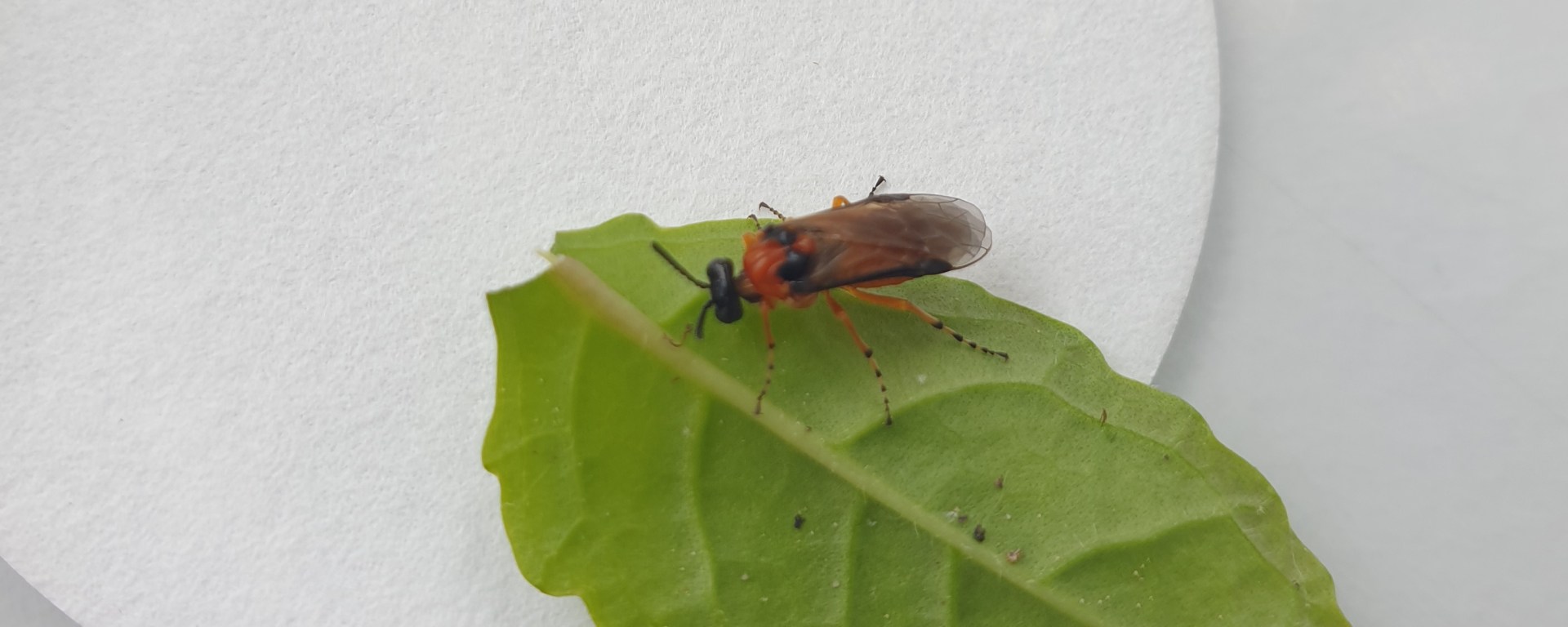
This blog post is provided by Pragya Singh and tells the #StoryBehindThePaper for the paper “Plant metabolites modulate social networks and lifespan in a sawfly” which was recently published in the Journal of Animal Ecology. Together with colleagues, Pragya explores how turnip sawflies acquire plant chemicals from non-food plants that not only boost their defenses but also, depending on group compositions concerning chemical access, reshape their social interactions and lifespans—unveiling the surprising trade-offs of chemical inequality within sawfly groups.
Plants are known to provide animals with food, shelter, and breeding grounds, but there is more to their relationship with animals than just nutrition. Many insects can take up plant compounds independently of feeding and utilize them for other purposes, such as chemical defence, self-medication, or pheromone synthesis—a phenomenon also known as “pharmacophagy” (= eating drugs).
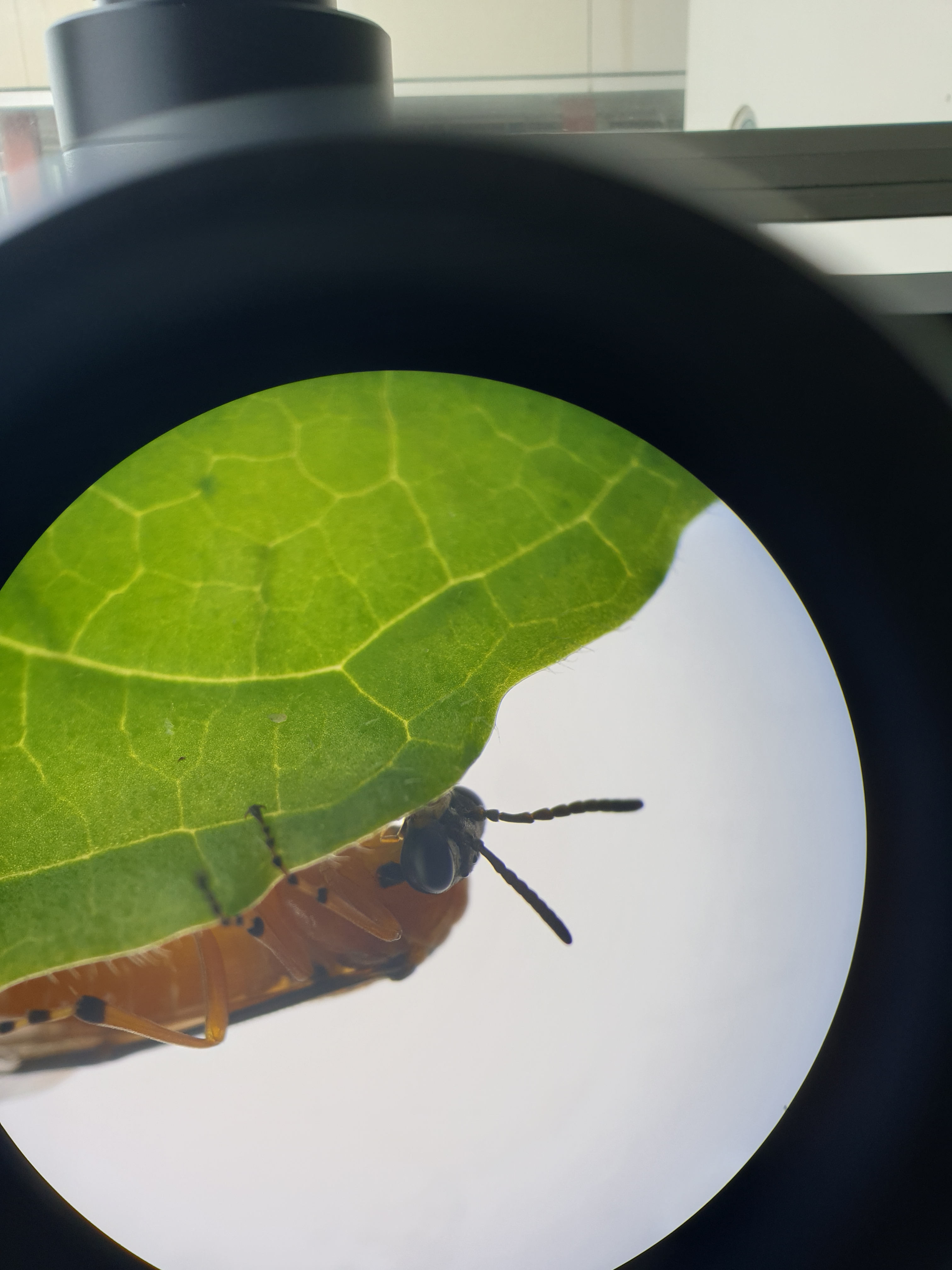
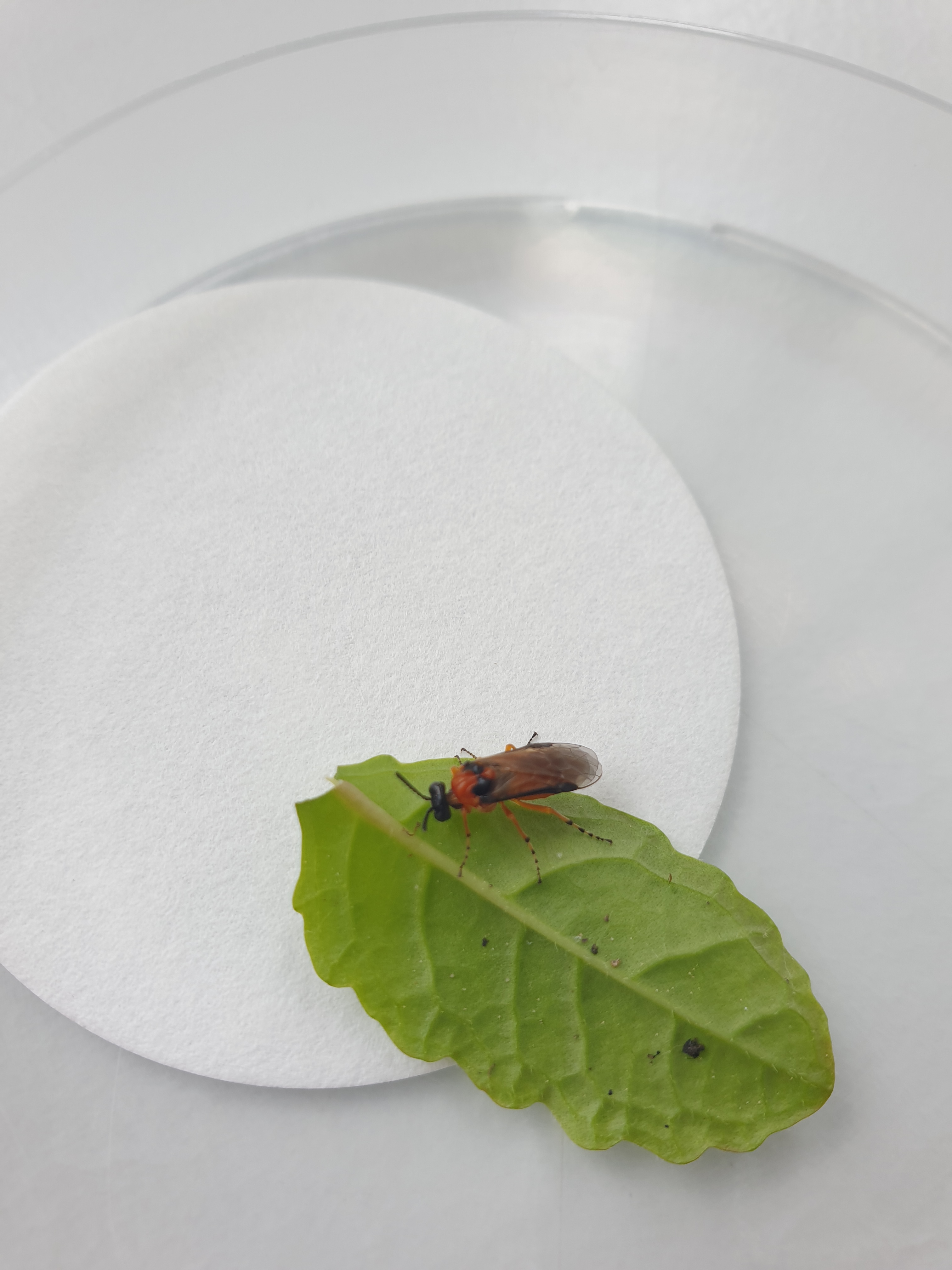
Our recent study in Journal of Animal Ecology explores this fascinating aspect of plant-insect interactions using the turnip sawfly (Athalia rosae) as a model. Turnip sawflies do not just feed on plants; the adults also engage in pharmacophagy, where they take up chemicals (clerodanoids) from non-food plants such as Ajuga reptans. These chemicals provide a dual function: they serve as a defence mechanism against predators and influence the complex social interactions within sawfly populations. Interestingly, clerodanoids can also be transferred from one sawfly to another through direct contact, such as “nibbling” behaviour between conspecifics, thus impacting not only the chemically-armed individual but also its social group.
Socially-Acquired Chemicals: A Double-Edged Sword
The ability of sawflies to acquire clerodanoids from non-food plants introduces a fascinating dynamic within their social groups. Our study revealed intraspecific variation in clerodanoid acquisition among sawflies, both in wild populations and in laboratory-reared individuals. Some sawflies had high clerodanoid levels, while others had low levels, and still others had none at all. This unequal access to clerodanoids creates “chemical inequality” within sawfly groups.
Our study found that sawflies without direct access to clerodanoids interact with conspecifics who have already taken up the plant compounds. This can be seen in increased mating interactions and also agonistic (conflict-driven) interactions, as sawflies engage in physical contact to obtain clerodanoids. Thus, while clerodanoid-rich individuals benefit from enhanced defence and mating success, pharmacophagy may also come with some costs. Social encounters with conspecifics become more frequent and aggressive, leading to potential fitness trade-offs.
Social Networks and Fitness
To quantify how clerodanoid acquisition affects social behaviour, we employed social network analysis examining the interactions within sawfly groups. Sawfly groups, in which some or all individuals had access to clerodanoids, exhibited far more social interactions than groups in which no individuals had access. These social networks were not only denser but also more complex, with individuals engaging in frequent interactions. The uneven distribution of clerodanoids created distinct social roles: individuals without clerodanoids were more likely to initiate aggressive interactions, while those with clerodanoids were often the target.
However, the increased social interactions came with a cost, especially for individuals with clerodanoid access. When grouped with clerodanoid-deficient individuals, sawflies with prior clerodanoid acquisition had shorter lifespans. This suggests that the energy expended in agonistic interactions to defend against conspecifics seeking clerodanoids can reduce overall fitness. Essentially, while clerodanoids enhance mating success and defence, the social costs of possessing these chemicals, particularly the increased frequency of social interactions, can lead to a reduced lifespan.
Costs of “Chemical Inequality”
One of the most striking findings of our study is the hidden cost of chemical defences. While clerodanoids offer clear advantages in terms of predator deterrence and increased mating success, they also impose a social burden. Sawflies with access to clerodanoids become focal points for social interactions within their groups, often engaging in more agonistic encounters as their conspecifics attempt to acquire these chemicals through nibbling.
The fitness cost is significant. Adult sawflies that acquired clerodanoids either directly from Ajuga reptans or through conspecifics had shorter lifespans when placed in mixed groups (i.e., groups in which some individuals had access to clerodanoids and others did not). This reduced lifespan appears to be driven by the increased frequency of social interactions, particularly agonistic ones, which may deplete energy reserves and lead to earlier mortality.
Interestingly, in symmetric groups—in which all or none of the individuals had access to clerodanoids—the social interaction frequency was lower, and the fitness cost was less pronounced. This suggests that it is the uneven distribution of clerodanoids within social groups that drives the increased social activity and subsequent fitness costs. In natural populations, this chemical inequality likely plays a crucial role in shaping the social niche of an individual and the social structure and behaviour of sawfly populations.
Why It Matters
The role of non-nutritive plant metabolites in shaping animal behaviour is likely more widespread than previously understood. Our study demonstrates that clerodanoids acquired from plants by Athalia rosae not only affect individual fitness but also shape the social networks of these insects. The social costs of chemical defences, such as reduced lifespan due to increased social interactions, highlight the complex trade-offs involved in the uptake of plant metabolites.
These findings have broad ecological implications. Social networks in animal populations influence a wide range of processes, from disease transmission to mating success. By modulating social behaviour, non-nutritive plant metabolites such as clerodanoids can indirectly influence these processes, suggesting that the ecological consequences of pharmacophagy extend far beyond individual fitness. For example, individuals with higher social activity due to clerodanoid acquisition may play a more significant role in disease spread within populations, or they may affect the reproductive success of others by altering the social structure.
Our study invites further exploration into how plant-animal interactions may shape social networks in the natural world—revealing that even small molecules can have profound ecological consequences. By uncovering the hidden social costs of pharmacophagy in Athalia rosae, we gain novel insights into the complex interactions between plants, insects, and their social environments.
Read the paper
Read the full paper here: Singh, P., Brueggemann, L., Janz, S., Saidi, Y., Baruah, G., & Müller, C. (2024). Plant metabolites modulate social networks and lifespan in a sawfly. Journal of Animal Ecology, 93, 1758–1770. https://doi.org/10.1111/1365-2656.14189
References
Brueggemann, L., Tewes, L.J. & Müller, C. (2023). Characterisation and localisation of plant metabolites involved in pharmacophagy in the turnip sawfly. PLoS ONE, 18, e0291180.
Paul, S.C. & Müller, C. (2021). Fighting over defense chemicals disrupts mating behavior. Behavioral Ecology, arab117.
Singh, P., Brueggemann, L., Janz, S., Saidi, Y., Baruah, G. & Müller, C. (2024). Plant metabolites modulate social networks and lifespan in a sawfly. Journal of Animal Ecology, 1365-2656.14189.
Singh, P., Grone, N., Tewes, L.J. & Müller, C. (2022). Chemical defense acquired via pharmacophagy can lead to protection from predation for conspecifics in a sawfly. Proc. R. Soc. B., 289, 20220176.
 Animal Ecology in Focus