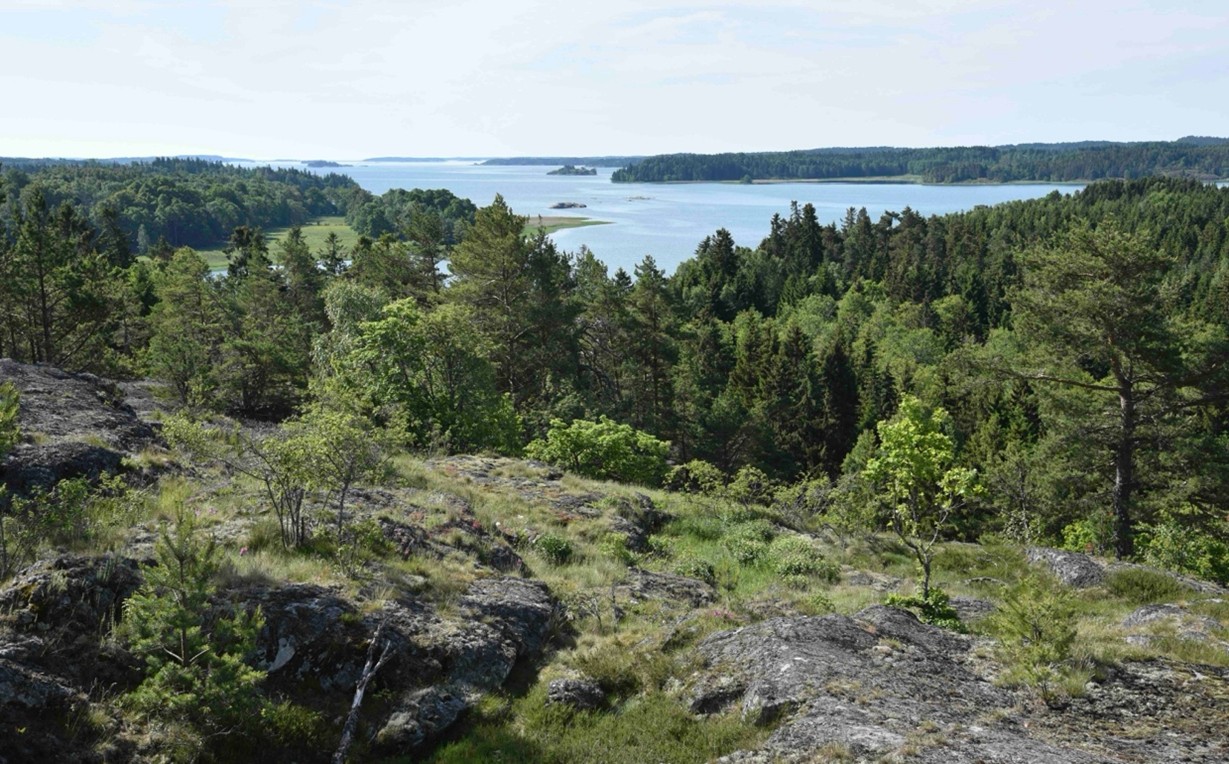
This blog post is provided by Christer Solbreck and tells the #StoryBehindThePaper for the article “Long-term population dynamics of an insect in a simple food web under a changing environment”, which was recently published in the Journal of Animal Ecology. In this post, Solbreck reflects on his time spent studying the seed-feeding bug Lygaeus equestris, and how research questions can evolve over the course of long-term ecological studies.
Jonas Knape and I just finished a long-term population study, painting a picture of the role of weather and climate change on the population dynamics of an insect.
I am the senior author who kept the data collecting going for 36 years, whereas Jonas is of a younger generation, great with statistics, and the person keeping me alert with penetrating questions. However, this is the old man´s story on the data collecting leading to the long-term study.
Long-term studies are not like ordinary hypothesis-testing work. You do not start with a clear question, go out in the field for a few decades, to return with the data to answer the original question. Unfortunately, the original question would probably be forgotten or at least outdated when you return. Ideas and fashion in ecology have high rates of turnover, whereas population dynamics often is a much slower process. The intellectual road to the final paper is rarely straight. It may be more like an expedition into unchartered territory.
The story begins in the 1970´s. We had ecology field courses at Tullgarn, a lovely area on the Baltic coast south of Stockholm. A mixed landscape of agricultural land and rocky outcrops with more natural vegetation. White swallowwort is a relatively common plant in this area. It is a very long-lived plant occurring as distinct and rather long-lived patches in the landscape – mostly on the rocky outcrops.
In those days, the minds of young ecologist were primed by ideas from island biogeography and metapopulation dynamics. Here was a nice patchy system amenable to study. One of the few insects feeding on the plant was Lygaeus equestris, a beautiful red and black seed-feeding bug. How was the insect distributed among the patches, what were its movements and how were patches populated? The large bug was easy to mark with a marking pen.
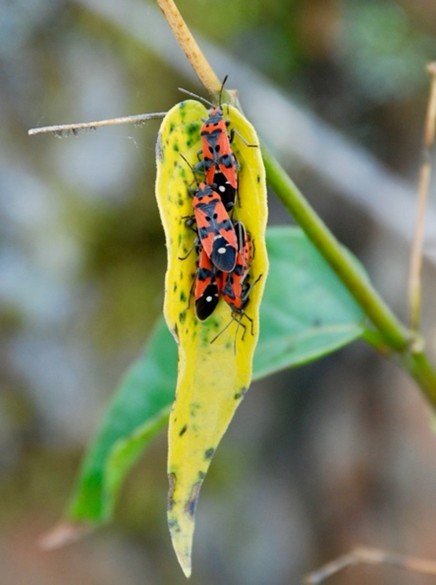
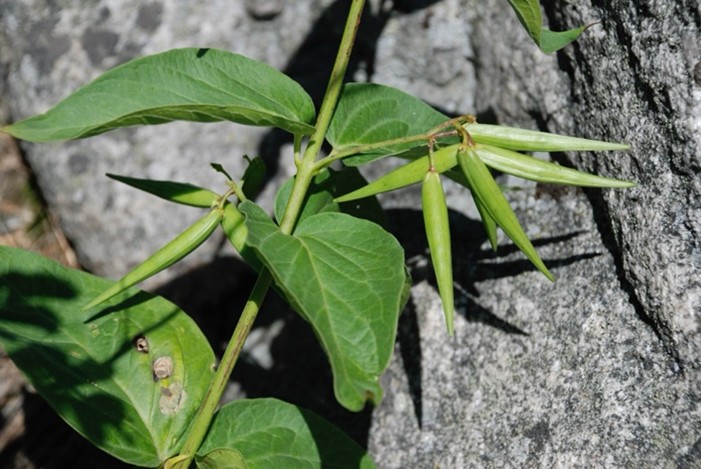
The food resource – the seed pods – were easy to count. I soon found out that there was a second seed feeder, the larva of a tephritid fly, which lived inside the seed pods. Pods could easily be counted and classified depending on whether they were unattacked orattacked by fly larvae.
It was soon realized that bugs did not form metapopulations. For example, they moved too much between plant patches during the summer, and to and from wintering sites, for the non-breeding season. Nevertheless, we obviously had all the components of a simple population system. The bug is aposematic and lacking enemies, and it was easy to monitor by mark – recapture. The mature pods could just be counted non-destructively on the plants in late summer, and easily classified into healthy and attacked. What, in general terms, was happening in this system? It was obviously a neat system to follow, but our theoretical questions were somewhat vague.
An important question today is what happens in a new warmer climate, but that was not on the agenda during the 1970´s and 80´s. For example, the summer of 1987 was the coolest for a long time and populations went locally extinct. I did not believe climate change was of importance at that time.
It was not until the 1990´s that I became aware of the role of climate change. The plant patch areas started to grow, a growth that was concomitant with a general increase in the length of the growing season.
Up to that time, I had been aware of weather effects on insect survival and on seed production, but I saw no role of climate. Metapopulation, as well as island biogeography ideas, were no longer on the table. Summarizing, it all started with rather fuzzy, or at least poorly focused, ideas of ecological questions.
However, there was always the idea that there was a distinct and easy-to-grasp ecological system. It was important to keep track of patch areas, of insect abundances and of food abundance. The insect had no enemies, but food resources were important. I had long realized that the amount of food resources was rarely measured in insect population studies.
Why did I carry on? Long-term studies yield very poor rates of paper production. However, it was a neat system. It was really very simple to monitor. A steel wire frame to measure patch area, a marking pen for estimating bug populations, pencil, and a field note-book. The number of seed pods (healthy and attacked by the fly larvae) could be directly counted.
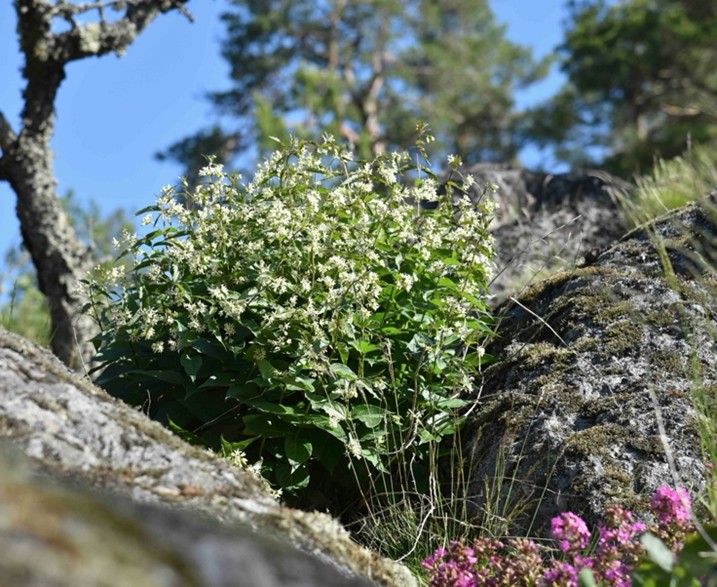
Simplicity is a key to endure long-term studies. Simplicity makes studies cheap, which is important because there are essentially no grants for long-term studies (perhaps except for some pests and fancy vertebrates). Studies need to be funded by leftovers from “short-sighted” studies or from your own pocket. A love of nature and an opportunity to work in a nice natural environment is not to be underestimated as a stimulus for continuing. The white-tailed eagle soaring above your head makes marking more fun.
Doing long-term studies you need some luck. Suppose there had been no change in climate and seed production patterns during the study. If the findings had been the same for the last 18 years as from the previous 18. I wonder if it could have been published in JAE!
Read the paper
Read the full paper here: https://doi.org/10.1111/1365-2656.70046
 Animal Ecology in Focus
Thank you, EDIE. It seems that the long-term study highlighted the importance of simplicity and perseverance in understanding insect dynamics.