
This blog post is provided by Li-Li Li and tells the #StoryBehindThePaper for the article “Asian elephants are associated with a more robust mammalian community in tropical forests”, which was recently published in Journal of Animal Ecology. This study provides insights into the role that Asian elephants play as “architects of abundance” in maintaining mammalian communities.
Deep within the incredibly complex and vibrant worlds of tropical forests, certain colossal creatures play a role far beyond just existing. These ‘megaherbivores’, like elephants, are essentially the master engineers of the landscape, constantly shaping their surroundings in ways that ripples throughout the entire ecosystem.
Yet, tragically, these magnificent ecosystem engineers are facing a global extinction crisis, often before we fully understand the depth of their ecological functions. While their well-documented roles – like modifying vegetation structure and dispersing seeds across vast areas – are understood, their profound influence on the assembly of other animal communities remains largely a mystery, especially in the complex environments of tropical forests. This critical knowledge gap isn’t just an academic curiosity; it directly hinders our ability to craft effective, function-oriented conservation plans to truly save these vital ecosystems.
Uncovering the Elephant’s Role
This pressing need drove our recent research, now published in the Journal of Animal Ecology. We set out to unravel the complex relationship between Asian elephants (Elephas maximus) and the rich mammalian communities residing in the tropical forests of southwest China. Our approach was rooted in long-term data collection, utilizing an extensive network of camera traps to observe and record mammalian wildlife over time. This allowed us to analyze interactions and patterns, not just at the broad community level, but down to individual species.

Our findings reveal a compelling association: the presence of Asian elephants was linked to a more robust co-occurrence network within mammalian communities. This means that in areas where elephants roam, more diverse mammal species are not only present, but also interact and coexist in a more stable and interconnected way. It suggests a healthier, more resilient ecological fabric.
More Than Just Big Eaters: Architects of Abundance
Beyond network structure, we also found a clear positive correlation between elephants and the overall abundance of mammal species, particularly for ungulates and primates. This isn’t just a coincidence. Elephants, through their natural behaviors – like creating open paths by trampling vegetation, enriching the soil with their dung, and even shaping water holes – likely create a mosaic of microhabitats that benefit a wide array of other species. They might be opening up access to food sources, providing clearings for movement, or even enhancing foraging opportunities.
Of course, the idea of a giant elephant stomping through the forest might conjure images of disturbance. So, we delved deeper, examining how individual mammal species responded to elephant presence in terms of their daily activities. Interestingly, while some mammals exhibited temporary avoidance behaviors, the majority largely retained their diel activity patterns (their schedules of activity throughout the day and night). This is a crucial finding. It could be because elephants are neither fierce predators nor intense competitors for most of these mammals. Instead, their relationship appears to be one of ecological facilitation, rather than direct conflict. They are, in essence, creating opportunities that outweigh any minor disturbances.
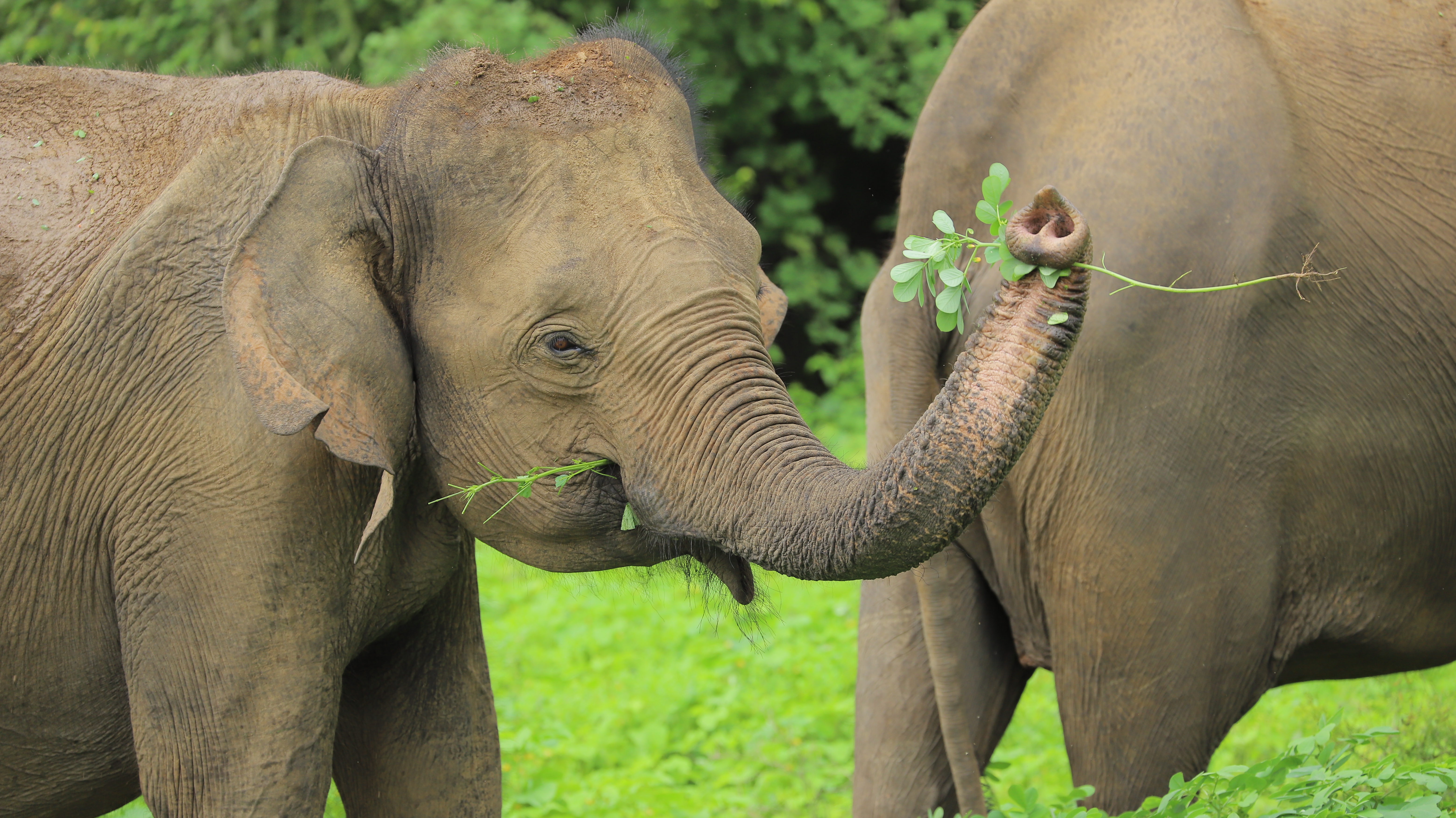
Protecting Elephants, Protecting Robust Mammalian Communities
Our study provides compelling evidence that Asian elephants are far more than just impressive herbivores affecting vegetation. They are intimately associated with – and likely crucial for maintaining – a thriving and interconnected mammalian community. They are, quite literally, the forest architects, building and maintaining the foundational conditions that allow a rich tapestry of life to flourish.
In the face of ongoing biodiversity loss, our results underscore a powerful message: protecting Asian elephants is not merely about saving an iconic species; it is a pivotal conservation action that directly contributes to the resilience and health of entire animal communities in Asian tropical forests. By safeguarding these gentle giants, we invest in the future of one of the planet’s most biodiverse and vital ecosystems.
Read the paper:
Read the full paper here: https://besjournals.onlinelibrary.wiley.com/doi/full/10.1111/1365-2656.70097
 Animal Ecology in Focus