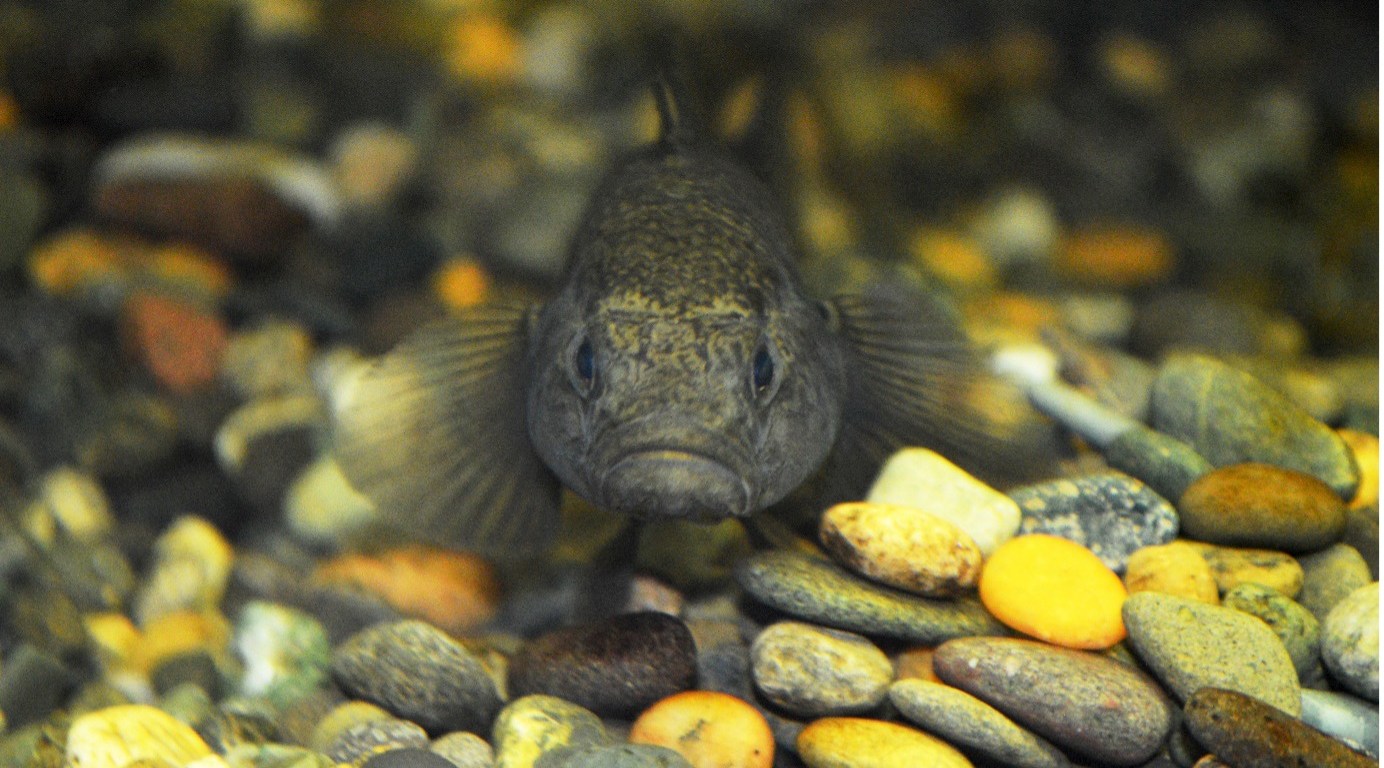
This blog post is provided by Marine Richarson and tells the #StoryBehindThePaper for the article “Effects of competition and predation risk from a life history intraguild predator on individual specialisation“, which was recently published in Journal of Animal Ecology. This study examined the effects of perch, which act as competitors and predators, on the dietary and habitat shifts of the common bully.
Humans are omnivorous – each one of us could eat anything edible, although I, for one, would personally rather explode than eat a raw onion. Call me an onion-free flexitarian. My food choices overlap with those of my gluten-free and my vegan friends to some extent, but they have more limited options than I do.
Being a diet generalist, or specialising in a certain type of prey, is a matter of ability, access and opportunity. It is surprisingly common among living organisms. It can affect how they fit within their ecosystems and how they respond to environmental changes. To the extreme, it might even be key to a species’ survival.
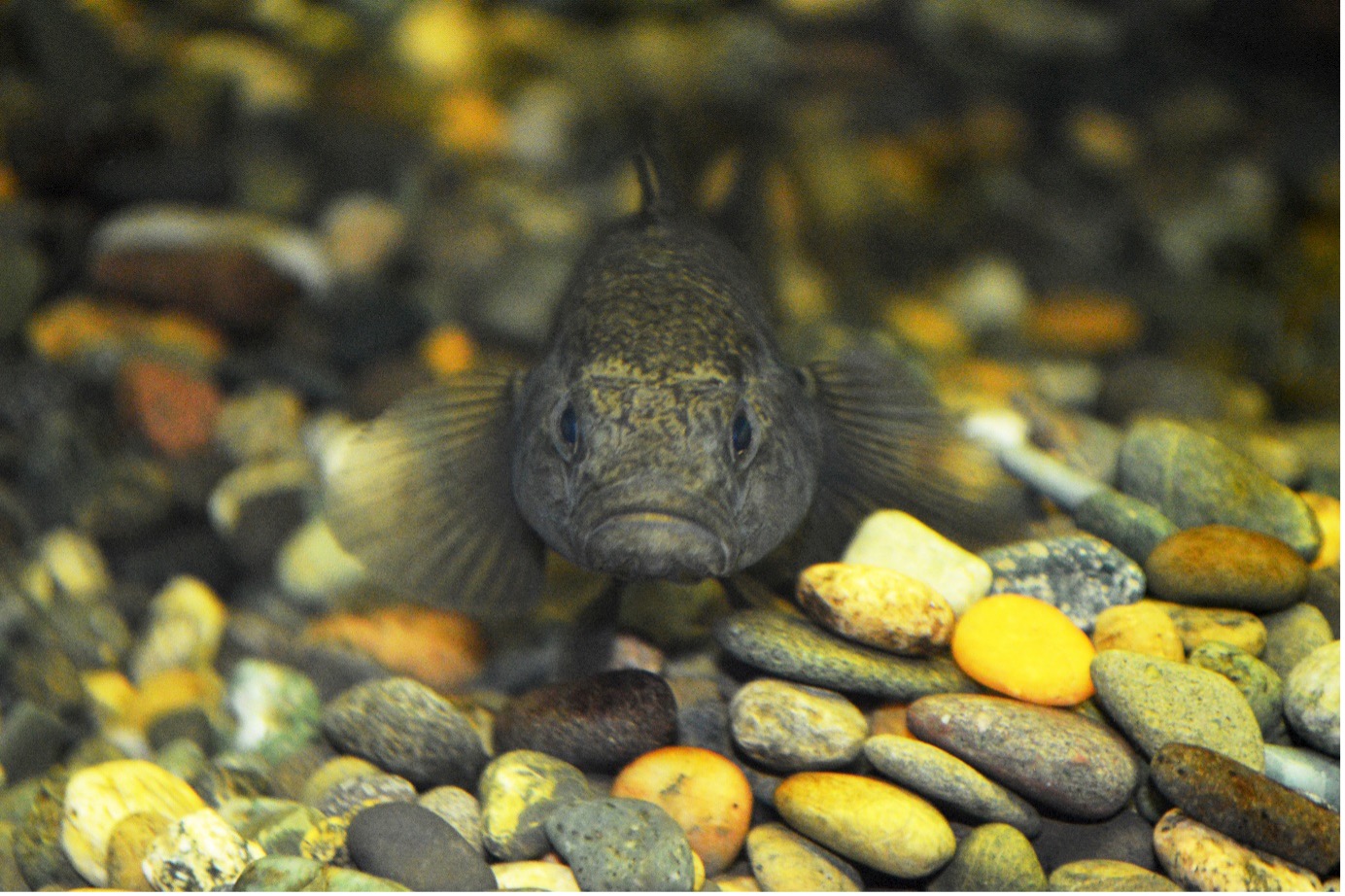
Take the common bully – the New Zealand native fish, not the high school nemesis kind. Even this humble little fish can display some preferences in what they put in their mouths: while most are easy in their dietary choices, some might favour juicy midge larvae; others tiny crunchy crustaceans.
But bullies don’t exist in a vacuum. The way a bully interacts with other organisms around them, including predators and competitors, might induce changes in how they use resources. This might affect the extent of differences between, say, the bullies that will eat anything, and the ones who tend to target tiny crunchy crustaceans.
In theory, competition from another species tends to constrain the pool of available resources – if individuals have less to choose from there is less scope for them to be different from one another. Meanwhile, predation can force you into safe spaces that have fewer resources, or push you to explore new horizons, depending on your risk tolerance.
Few manipulative studies have sought to disentangle what happens when predation and competition occur together, particularly coming from the same species. I set out to explore this question in the context of one of the many exotic species introduced to Aotearoa New Zealand. Perch is a Eurasian fish that was introduced to New Zealand in the late 1860s. In their early life, small perch compete with bullies for prey that live in the water column (including tiny crunchy crustaceans), shifting as they grow towards hunting smaller fishes including bullies.
I used a pond experiment to try and predict whether and how shifts in resource use and individual variation would happen in bully populations exposed to small competing perch and large potentially predatory perch. I set up outdoor tanks with habitats representative of local lakes – patches of aquatic plants, a few rocks, and a lot of sand to scratch a belly on – and established small populations of bullies in each tank. I then exposed those bullies to small perch, large perch (in a cage to provide threat of predation), or both, from January to March 2018 (the New Zealand summer).
Over those three months, I monitored the diet and habitat use of each fish. For the latter, I used instant focal surveys: sneaking up on unsuspecting fish to spot where they were and what they were doing for five minutes. Diet monitoring was a little more intricate: every fortnight I would sample what each bully had been eating using stomach flushing. Under the microscope, tiny crunchy crustaceans and juicy midge larvae are easy enough to identify – even partially digested.
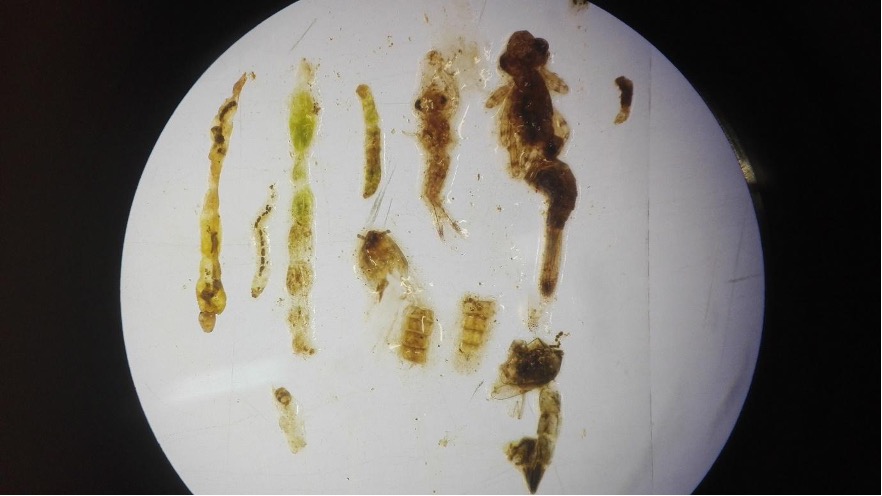
Every bit of leg, mouth part or shell was used to map the diet of each bully over time. This allowed me to identify which bullies were favouring which prey types.
As expected, the presence of perch induced dietary and habitat shifts in individual bullies – but the direction and magnitude of these shifts depended on which combination of small and large perch the fish had been subjected to. Bullies exposed to the threat of large perch showed more specialisation in their diet and lower specialisation in their habitat use. Meanwhile, competition with small perch led to a decreased specialisation in diet but had no effect on habitat use. When both small and large perch were present, bullies had lower individual diet specialisation but we noted no change in their degree of habitat specialisation.
Overall, my study confirms that individual variation can be shaped depending on the way individuals interact with other species – as competitors, prey, or both at the same time. It also highlights the importance of accounting for the variation among individuals when evaluating the impacts of introduced species on populations of native species.
Read the paper
Read the full paper here: https://besjournals.onlinelibrary.wiley.com/doi/full/10.1111/1365-2656.70090
About the Author
I currently work as a science advisor for the Department of Conservation in Aotearoa New Zealand. I focus on freshwater species, with a soft spot for migratory fish. This study was part of my PhD research with Travis Ingram at the Zoology Department of the University of Otago.
 Animal Ecology in Focus