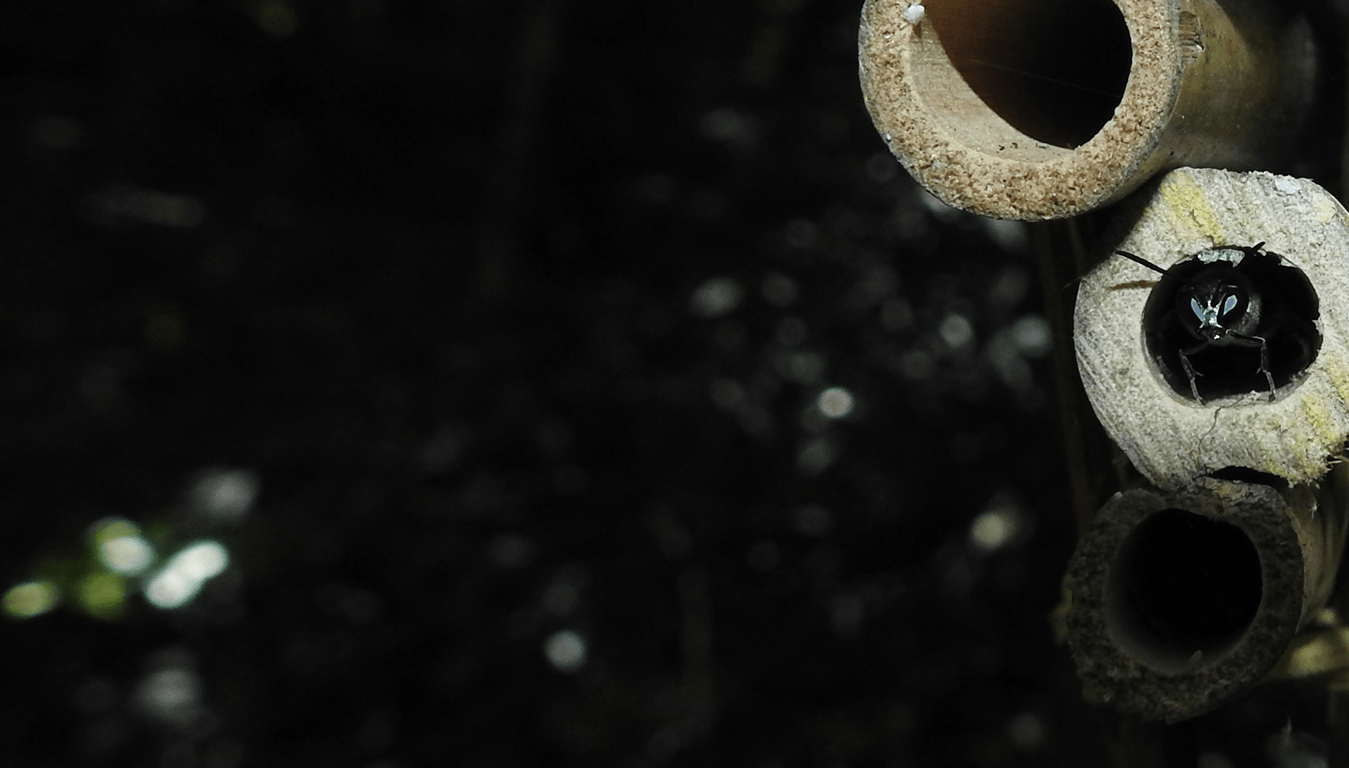
This blog post is provided by Henrique Negrello-Oliveira and tells the #StoryBehindThePaper for the article “Across the edge: Spatial segregation drives community structure in tritrophic multilayer networks at a forest-grassland edge”, which was recently published in Journal of Animal Ecology. This study set out to answer whether this transitional area would function as an ecological barrier or a continuum, given the spatial distribution of species interactions across the edge.
Forests and grasslands often seem like distinct ecological worlds — but what happens where they meet? This question guided our investigation into how species interact at habitat edges.
Habitat edges have long fascinated people — the stark contrast between continuity and change sparks curiosity in all kinds of nature enthusiasts, among whom ecologists are just another curious bunch. Why do species distributions shift across these edges? Are some species uniquely adapted to live at the border? Can distinct habitats be connected through the many organisms that call these in-between zones home?
Asking these very questions, I set out to study the edges between the Atlantic Forest and the Pampas Grasslands — which I coincidentally also call home. My hometown of Porto Alegre, in southern Brazil, sits right at the ecotone (a region of transition between two biological communities) where a tug-of-war between these two biomes has been playing out for millennia. The two biomes are as important as they are threatened: the Atlantic Forest, a biodiversity hotspot (a biogeographic region with high biodiversity and highly threatened by human activity) now covers less than 12% of its original extent, while the Pampas Grasslands, despite being the second smallest Brazilian biome (covering just over 2% of Brazil’s area), holds close to 9% of Brazil’s +140.000 species. As both habitats are under such high levels of threat, we wanted to understand if the habitat edge would function as an ecological barrier or continuum – in order to answer if and how disturbances affecting each could spillover between them.
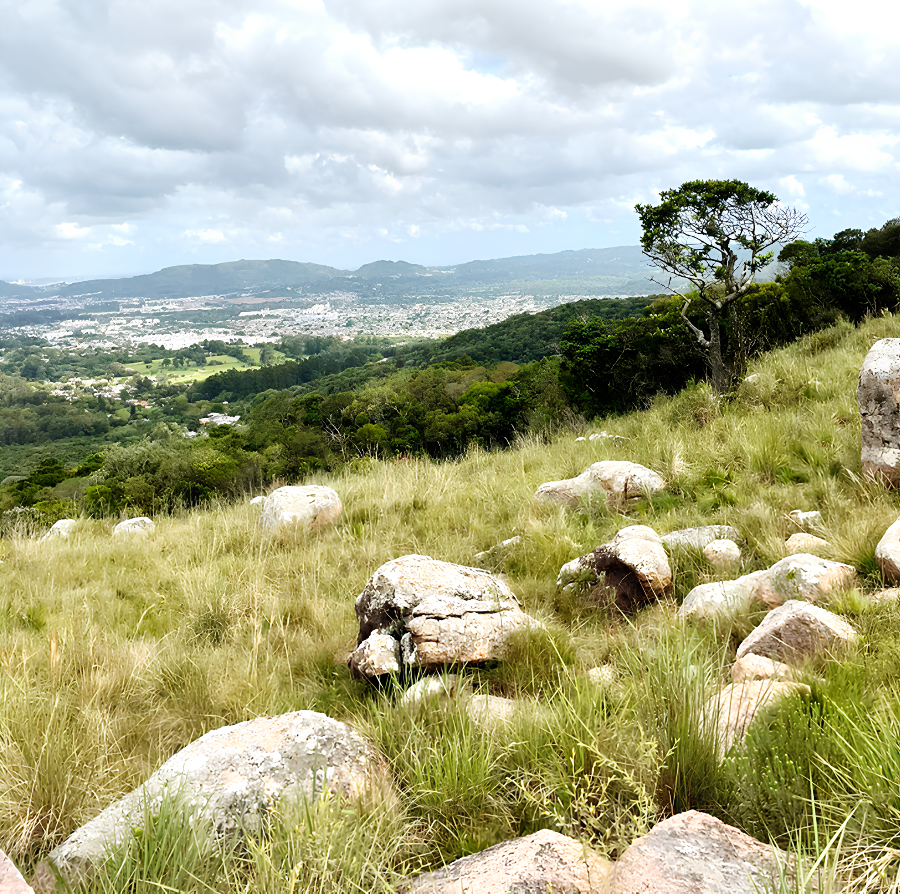
Now that the “relevantness” question is out of the way, we had yet to choose an ecological system that could provide us the necessary tools to get a ‘glimpse’ of the dynamics happening within this ecological arena. To do this, we sampled trap-nesting wasps – a remarkable yet overlooked group of animals that hunt and are hunted by a plethora of other species, such as spiders, crickets, caterpillars, and parasitoid wasps. Pay attention to the italicized terms here, as we’ll come back to them later.
These wasps nest at natural preexisting cavities, such as those left by wood-boring beetles and similar fauna. We can take advantage of this strategy by installing poles containing hollow bamboo stems in the field – which they promptly occupy and start provisioning it with paralyzed prey, for their offspring to eat while alive. After nest completion, parasitoids show up – ovipositing within the nests and effectively stealing the resources gathered by the nest builder. We then collected and opened these nests – revealing consumer-prey and host-parasitoid interactions in the most gruesome ecological unboxing you could imagine.

Our findings revealed that this particular forest-grassland edge functions as an ecological barrier, limiting species and their interactions to each habitat, regardless of the distance from the edge. However, we also saw a higher richness of both species and interactions closer to the edge, highlighting the ecological uniqueness and relevance of the edge itself. In other words, although the habitats are likely disconnected per se, the ecological dynamics happening at the boundary are where most of the fun is happening within each habitat – which could then affect more interior areas of both grasslands and forests.
During the herculean task of identifying hundreds of species among the thousands of sampled specimens for this study, I took a special focus on the parasitoid wasps, a group yet poorly known taxonomically, especially in megadiverse tropical countries such as Brazil. This effort paid off – we ended up collecting the first males of two parasitoid species previously only known from females, Messatoporus elektor and Messatoporus opacus. As if this was not good enough news, we also discovered an entirely new species – Messatoporus bisignatus – which happened to live just a few hundred meters from the very house in which I grew up.

As an ecologist, I found it deeply rewarding to unravel the ecological dynamics that govern how species interact, and how different habitats may or may not be connected through them. Doing so while building on knowledge that could help safeguard their existence only deepened that sense of purpose. As a biologist, however, stumbling upon a new species is pure magic — the kind of wonder that first drew me to nature, and a dream every naturalist carries in their heart — and to have it happen just a few hundred meters from where I grew up made it a deeply personal and once-in-a-lifetime homecoming.

About the Author
I am an ecologist currently working at the Federal University of Rio Grande do Sul – Brazil. My focus is on ecological networks, with a soft spot for arthropods and bats. Both studies cited here were part of my master’s research at the same university.
References:
Aguiar, A. P., Supeleto, F. A., Mendonça Jr, M. S., & Negrello, H. (2024). New Species, Host Record, and Male Discovery for Three Messatoporus Cushman (Hymenoptera, Ichneumonidae, Cryptinae) from Brazil. Zootaxa, 5471(1), 83-98.
Read the paper:
https://besjournals.onlinelibrary.wiley.com/doi/full/10.1111/1365-2656.70120
 Animal Ecology in Focus