This blog post is provided by Letícia Gonçalves Ribeiro and tells the #StoryBehindThePaper for the article “Belowground effects of ground-dwelling large herbivores in forest ecosystems“, which was recently published in Journal of Animal Ecology. This study reviewed the ways that various types of herbivores affect forest soils in different contexts.
A famous quote is “Seeing is believing”, but when we spot a deer or a tapir feeding on plants, we do not realize that they are affecting not only the plants but also the soil beneath. It is well known that large ground-dwelling herbivores can change plant communities, yet there is much happening beneath their feet that is overlooked, and it is just as important. These herbivores influence the forest floor through trampling, their excreta, and foraging, affecting the litter layer and soil properties. By doing so, large herbivores influence nutrient cycling, the process by which essential elements like carbon, nitrogen, and phosphorus are reused and recycled in ecosystems, supporting plant growth and sustaining the forest.
Despite the abundance of domestic and wild herbivores, we know surprisingly little about their effects on belowground processes in forests. Most studies have focused on African and temperate grasslands, where herbivores often stimulate plant growth and accelerate nutrient cycling under certain soil conditions. In forests, however, herbivores tend to feed selectively on plant parts that are easier to digest, leaving behind food that takes time to decompose. This can slow down nutrient cycling, but, as our research suggests, the effects vary depending on the type of forest and the species of herbivore involved.

Across the globe, forests differ greatly in their nutrient cycling dynamics. Temperate forests, with their mix of deciduous and evergreen trees, produce seasonal litter that decomposes at moderate rates due to climate constraints and seasonality. Boreal forests, dominated by cold-tolerant conifers, have soils that are often frozen or waterlogged, slowing decomposition but storing large amounts of organic matter. In contrast, many tropical forests experience warm temperatures and abundant rainfall, leading to rapid litter decomposition and fast nutrient turnover.
Considering these differences among forest types, the effects of herbivores are also not expected to be the same across all of them. Some herbivores may decelerate nutrient cycling in one forest type while accelerating it in another. Their influence also depends on their species composition, feeding habits, physiology, and behavior. Despite decades of research, our understanding of these processes remains limited, especially in tropical forests, which despite homing the highest diversity of herbivores, remain poorly studied.
In this blog post, we summarize our literature review findings about how large herbivores influence litter, soil, and nutrient cycling in forests.
How Large Herbivores Differ Across Forest Types
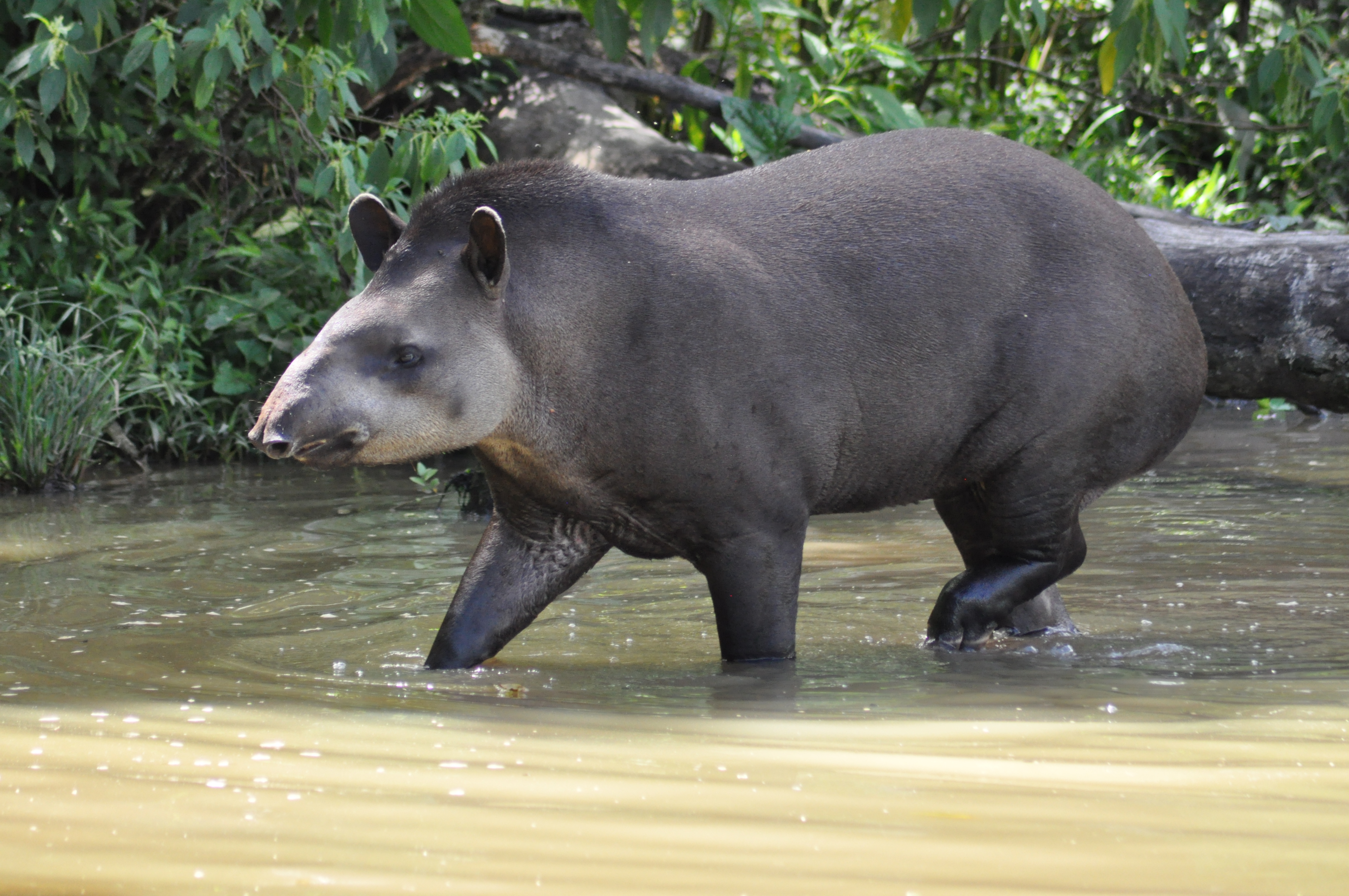
Large herbivores vary widely in their physiology and feeding strategies, and these differences have important consequences for forests’ ecosystem functionality. Some herbivores, like ruminants (e.g. deer, bovines, caprines), have complex stomachs that allow them to digest high-quality plant material efficiently. On the other hand, non-ruminant herbivores (e.g. tapirs, wild pigs, elephants), have simpler digestive systems and process larger amounts of lower-quality food at higher speeds than ruminants. These differences affect what they eat and how nutrients return to the soil.

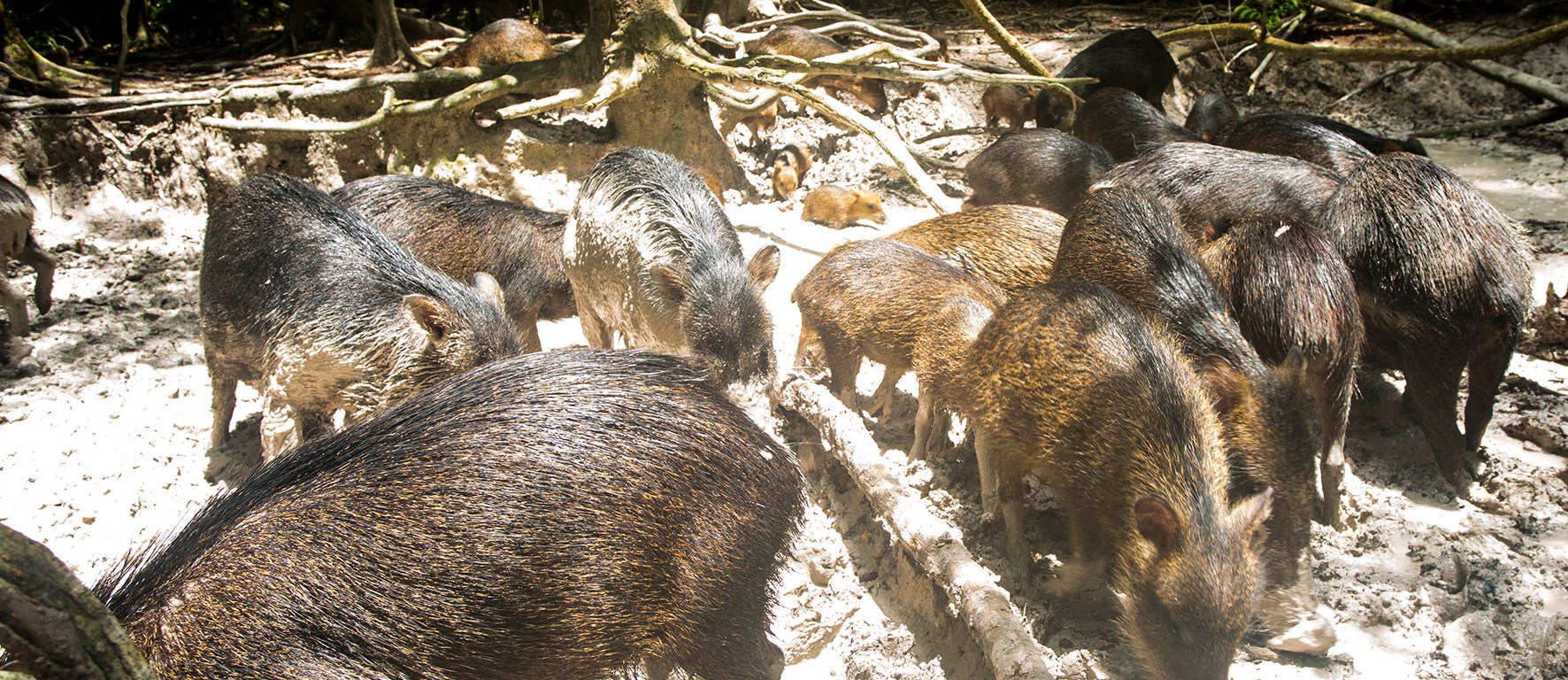
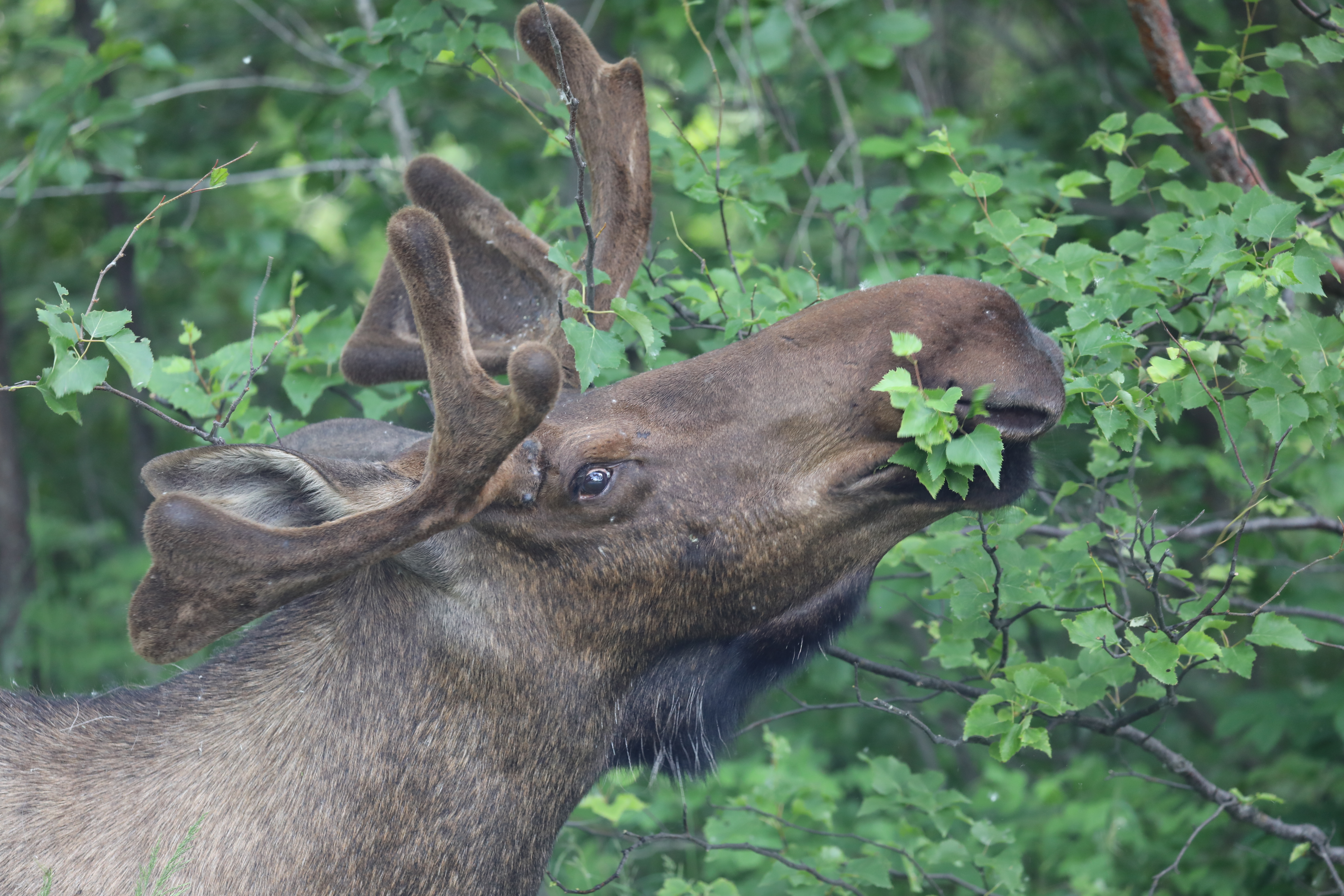
Herbivores also differ in feeding habits. Some are grazers (e.g. bison), feeding mainly on grass; others are browsers (e.g. moose), eating leaves and shoots; and some are mixed feeders (e.g. red deer). To the surprise of many readers, in tropical forests, most herbivores are frugivores (e.g. lowland tapir, peccaries), consuming fruits and seeds that fall to the forest floor. Seasonal fluctuations in resource availability can force herbivores to shift their diets; for example, frugivores may switch to leave browsing during periods of fruit scarcity.
Body size matters too
Larger species consume more food and retain it longer in their digestive system, which can improve nutrient assimilation and influence the quantity and quality of their excreta, an important source of nutrient return to the soil. Bigger animals are also more vulnerable to hunting and habitat loss, which has reduced populations of some of the largest herbivores.
How Large Herbivores Affect the Forest Floor
The effects of large herbivores on forests are context-dependent and vary according to multiple factors, such as animal physiology and the forest type. In our review, most studies focused on temperate and boreal forests, and the focal species were primarily cervids with predominantly mixed-feeding or browsing habits.
As for general patterns, we found that in temperate and boreal forests, ruminant species tend to negatively affect litter and soil, ultimately decelerating nutrient cycling. By selectively feeding on palatable plants, they reduce both litter quality and quantity. Their trampling further compacts the soil, decreases moisture, and increases temperature. These changes negatively impact microbial communities, soil invertebrates, and seedling growth.
In contrast, non-ruminant species generally have positive effects on litter and soil properties across temperate and tropical forests. They are also more diverse and abundant in tropical systems. Species such as wild boar, peccaries, and tapirs spend much of their time foraging on the forest floor, where their digging and rooting disturb the soil surface, mix organic matter, and increase aeration. These physical changes stimulate microbial activity and can possibly accelerate nutrient cycling, highlighting how different herbivore groups can shape nutrient dynamics in distinct ways, even within the same type of forest.

Broader Implications
Large herbivores affect forests not just aboveground, but belowground, influencing litter, soil, and nutrient cycling. However, studies remain strongly biased toward temperate and boreal forests, overlooking the higher diversity of large herbivores in tropical forests and their potential impacts on nutrient cycling.
Considering the functional diversity of herbivores is key to understanding their roles in different ecosystems, and can help guide conservation, rewilding, and forest restoration efforts to maintain forest resilience. Overall, looking beneath the forest floor shows that conserving herbivores benefits not only the animals themselves but also the functioning of entire forest ecosystems.
About the author:
I am a PhD student at São Paulo State University (UNESP) and member of the Center for Research on Biodiversity and Climate Change (CBioClima) in Rio Claro, Brazil. This study is part of my doctoral thesis, in which I investigate how large herbivores influence litter and soil, and how these changes affect nutrient cycling in tropical forests.
*The featured image for this blog is provided by João Paulo Krajewski
Read the paper:
https://besjournals.onlinelibrary.wiley.com/doi/10.1111/1365-2656.70193
 Animal Ecology in Focus