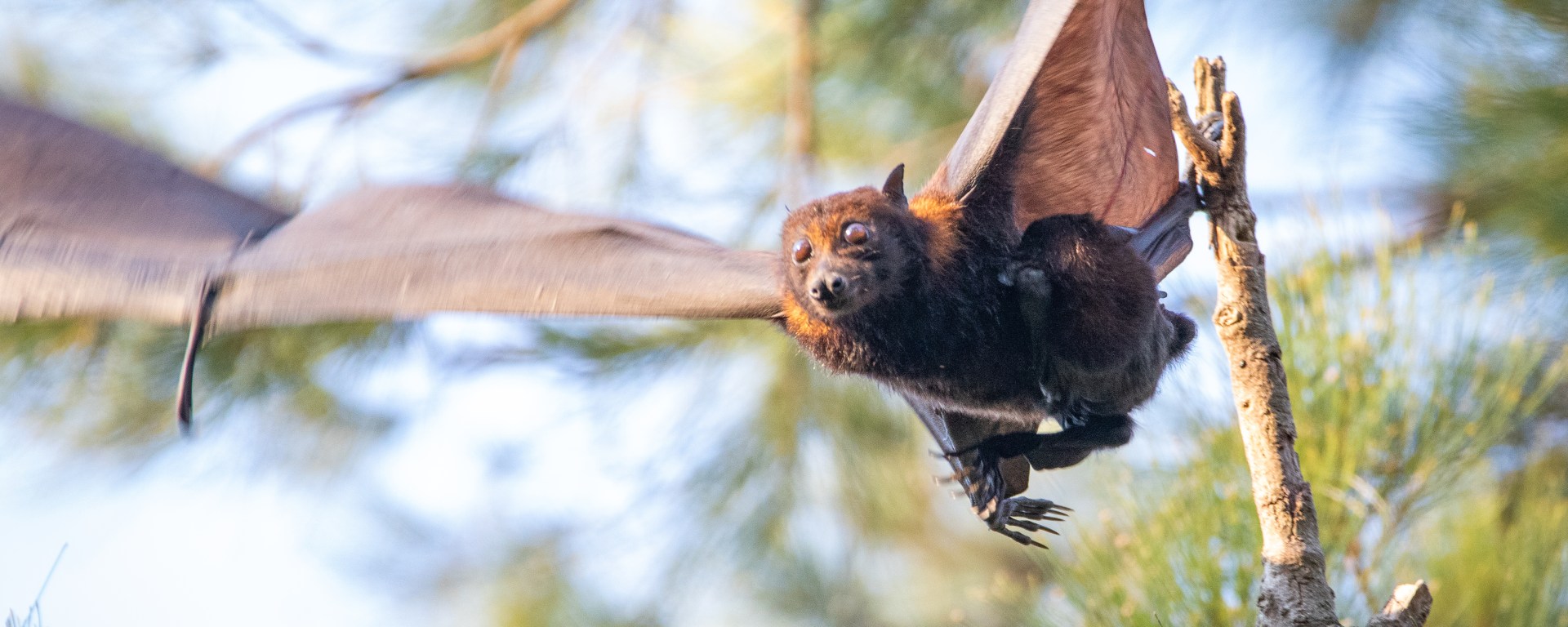
This blog post is provided by Dan Crowley and tells the #StoryBehindThePaper for the article “Cohorts of immature Pteropus bats show interannual variation in Hendra virus serology”, which was recently published in Journal of Animal Ecology. Every winter, Hendra virus spills over from Australian flying foxes to horses and humans. The authors of this study spent four years tracking juvenile bats to test whether they drive these seasonal outbreaks.
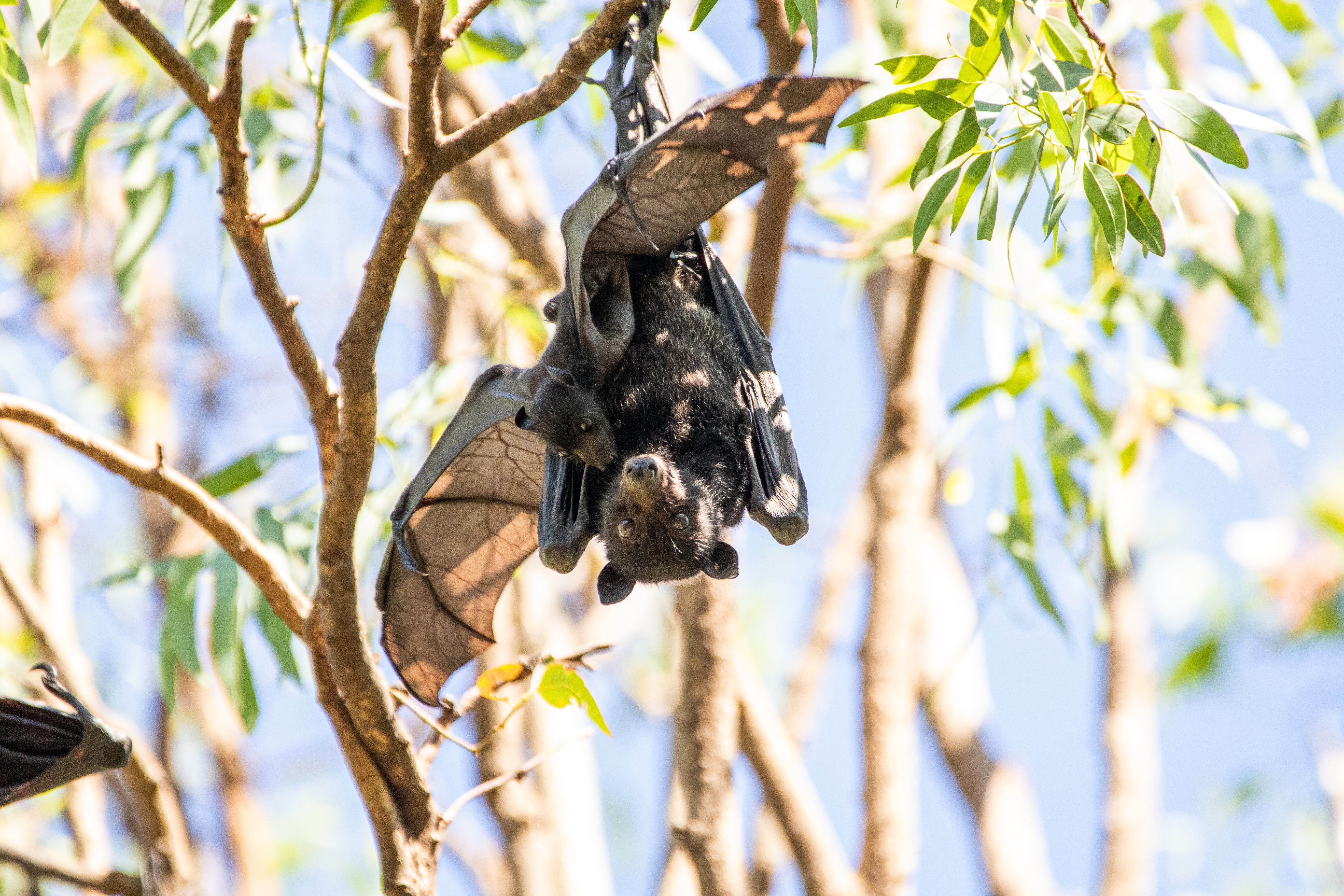
Every November, hundreds of thousands of flying fox bats are born on the east coast of Australia. Like all mammals, we assume these bats are born with their mother’s antibodies—proteins that provide critical protection against pathogens. While this has long been an assumption, we really understand very little about how these bats protect themselves against pathogens.
Most mammals receive antibodies from their mother and these wane over the first year of life. As these antibodies wane, the vulnerability to pathogens increases. Until the immune system matures and generates endogenous antibodies, young mammals exist in this window of susceptibility.
For many populations, the sudden pulse of susceptible individuals after a synchronized birth pulse has dramatic impacts on pathogen dynamics. For flying foxes, we were particularly interested in how this influx of susceptible individuals would impact Hendra virus dynamics. Hendra virus is a harmless pathogen for these bats, but it often “spills over” to horses and humans (cross species transmission), where it can be deadly.
We suspected Hendra virus dynamics might be driven, in part, by this influx of susceptible juveniles. Hendra virus spillover events tend to occur in winter. This is also when we predicted these juvenile bats would lose their maternal antibodies. If there was a synchronized waning event, this could introduce sufficient susceptible individuals into the population to cause a spike in transmission.
However, more happens in winter than just waning maternal antibodies. While Hendra virus spillover events occur in winter, they are especially common in winters with insufficient food. It was previously suggested that adult bats are starving and immunocompromised, unable to control Hendra virus replication, and shedding the virus in their urine—which then infects horses.
So, which matters more: the juveniles, or the food shortages? This question had not yet been investigated.
New serological tools and statistical methods let us tackle this question directly. By sampling Australian flying foxes over several birth cohorts, we tracked how antibodies developed in juveniles as they aged, data that’s normally out of reach in wild populations.
So, what did we find? We didn’t see the clean signal we expected: no consistent maternal antibody waning, and more strikingly, no clear wave of juveniles generating their own antibodies as they became exposed. These results were confusing and unexpected.
Fortunately, we also had data on Bartonella, a bacterial infection transmitted by bat flies. Bartonella became our control, a way to measure what “normal” transmission looks like in these bats. Like Hendra, it requires close contact to spread.
Unlike Hendra, Bartonella was remarkably consistent across cohorts. Every year, juveniles were born uninfected, and by about nine months of age, nearly all had acquired it—at the same rate, year after year. This told us something important: the inconsistency in Hendra wasn’t because bats were behaving differently. Contact opportunities were stable. Something else was driving the variation.
So, what does this mean for Hendra virus spillovers? We didn’t find a clear window of susceptibility in winter that could be driving spillover events. The lack of synchronized seroconversion suggests juveniles aren’t playing a major role in Hendra transmission. Together, these results point us back to the food shortage hypothesis. It appears that adults, not juveniles, are the drivers of Hendra virus shedding. While additional work is needed to establish food shortage as the causal trigger, this study represents one more step towards understanding the mechanisms driving viral shedding in this complex system.
Read the paper:
https://besjournals.onlinelibrary.wiley.com/doi/10.1111/1365-2656.70213
 Animal Ecology in Focus