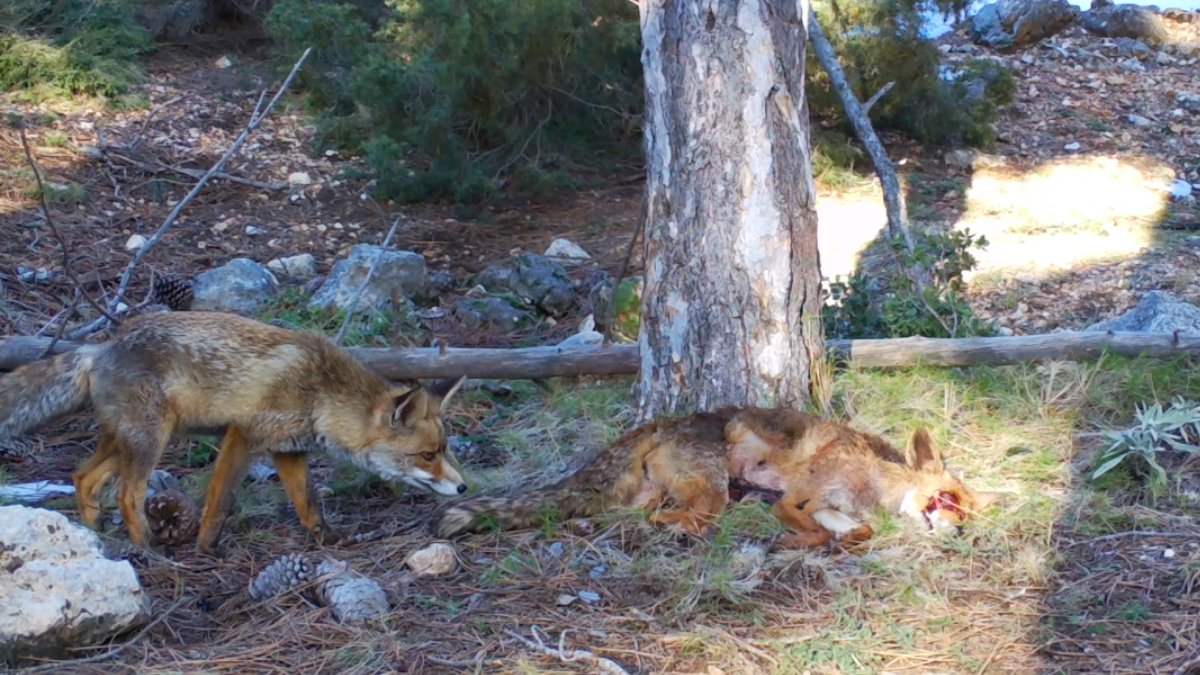
This blog post is provided by Adrián Colino Barea and tells the #StoryBehindThePaper for the article “Herbivore and mesocarnivore carcasses trigger divergent short-term changes in soil properties“, which was recently published in Journal of Animal Ecology. This study explored the differences in scavenger activity and soil properties at mesocarnivore and herbivore carcasses.
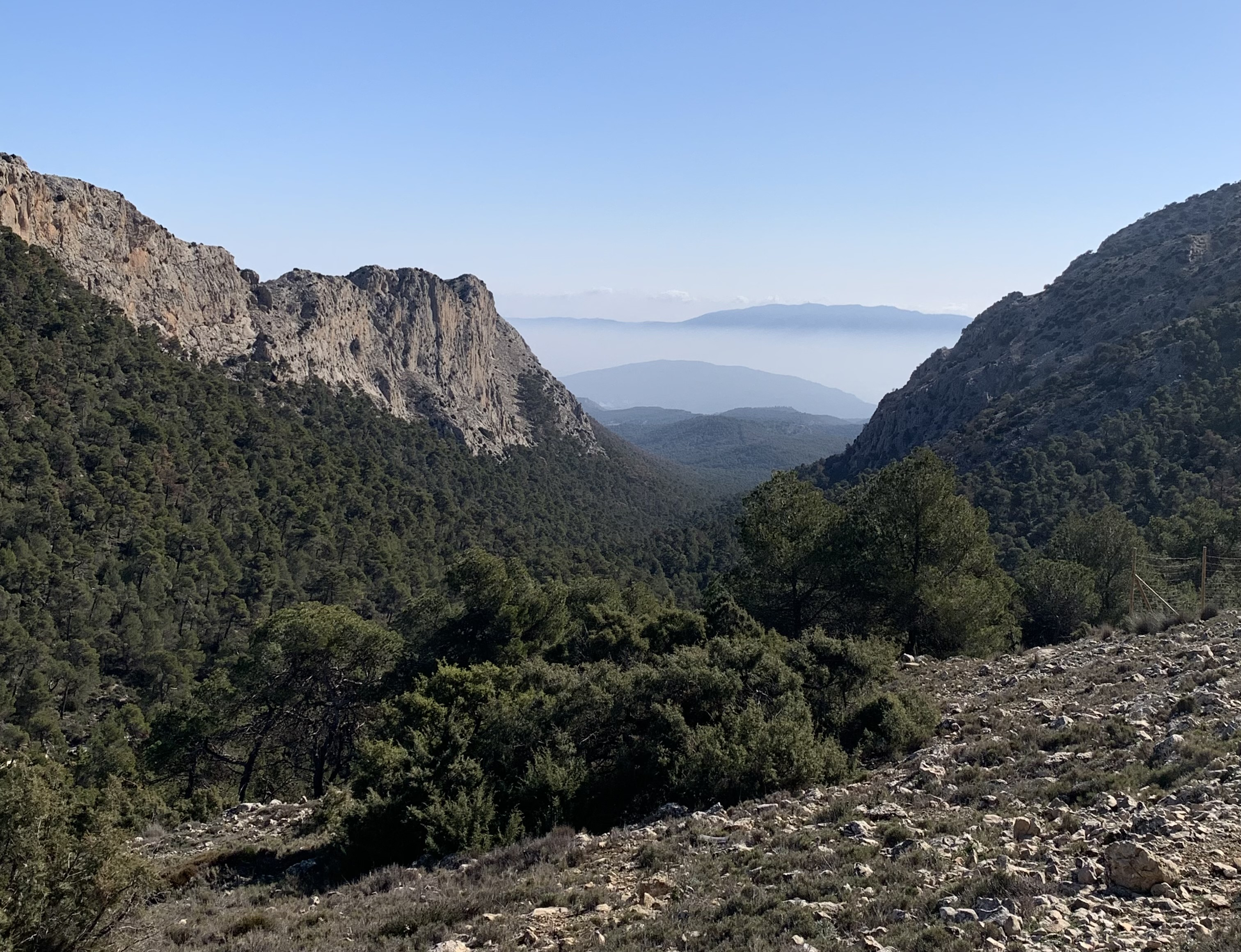
At dawn in Sierra Espuña Regional Park (Murcia, Spain), the landscape feels austere and quiet. The scent of rosemary fills rocky slopes covered in esparto grass and Aleppo pines — a land shaped by heat, cold, drought and time. Soils are chronically poor in nutrients. Life here persists under tight constraints, and death is an unavoidable fate. However, ends turn into new beginnings: an animal corpse becomes a valuable resource input in an ecosystem where every drop counts.
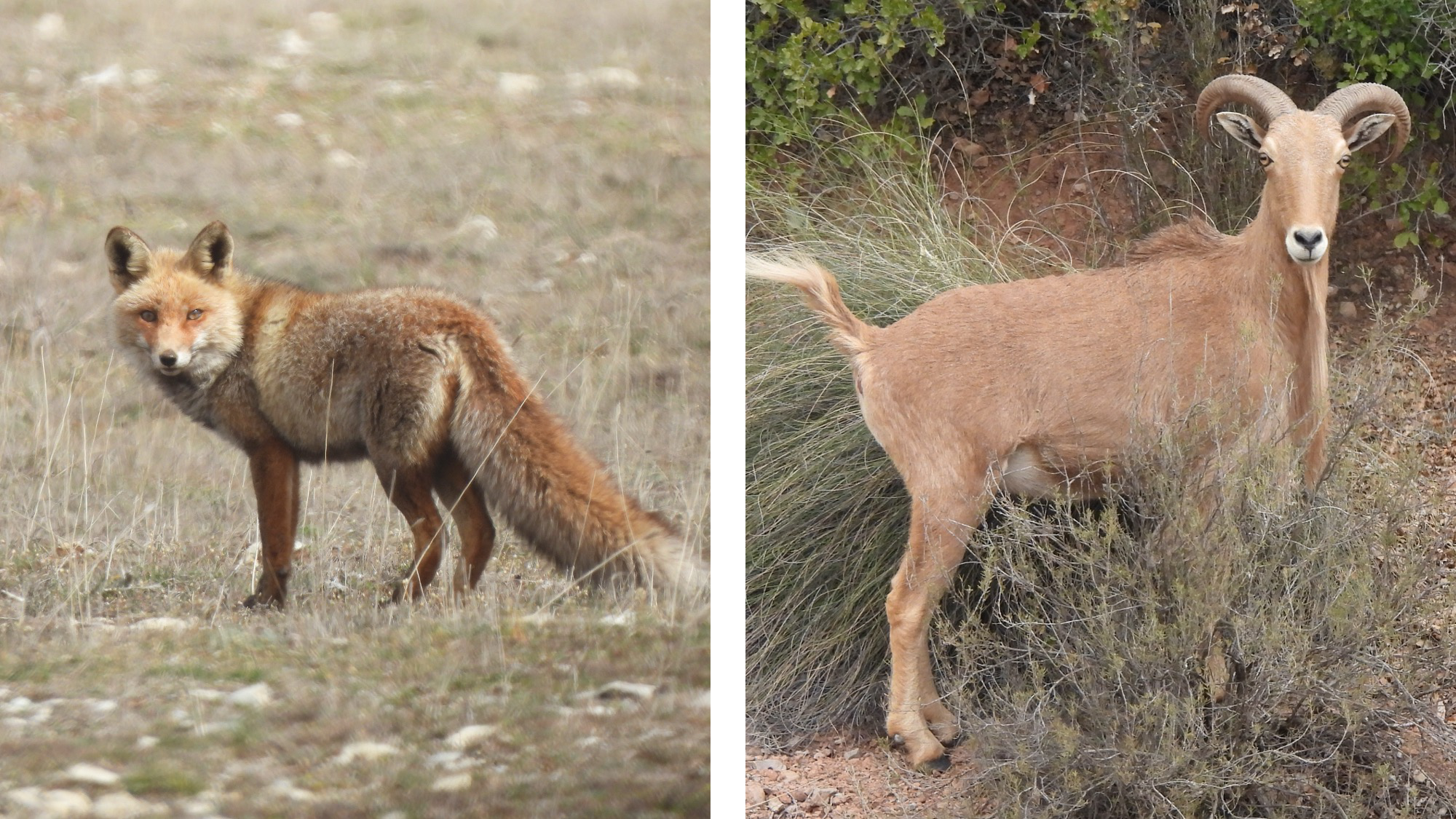
During fieldwork, our team spent early mornings visiting sites where animal carcasses had been placed. While checking camera traps, we kneeled beside patches of soil that days earlier were indistinguishable from their surroundings. Some of the carcasses we installed and monitored were large — aoudads (Ammotragus lervia), herbivores introduced decades ago from North Africa. Other carcasses instead were much smaller — red foxes (Vulpes vulpes), small carnivores familiar to anyone who has walked out in the field at dusk virtually anywhere in the Northern Hemisphere. At first glance, these deaths might seem ecologically equivalent. But we soon discovered that who dies matters — deeply — at the soil level.
Carcasses as pulses of nutrients
Animal carcasses are not only the end of an individual life. Ecologically, they represent an intense pulse of organic matter and nutrients. Carrion triggers microbial activity and alters soil chemistry. Moreover, a diverse community of scavenger animals consume carrion, potentially depleting this nutrient source and redistributing the input elsewhere. This is a textbook example of zoogeochemistry: animals shaping biogeochemical cycles.
In dryland ecosystems, such pulses are particularly important. Nutrients arrive sporadically and biological activity often responds in short bursts. A carcass in Sierra Espuña is not just food for scavengers, but a localized, live experiment in nutrient redistribution.
However, not all carcasses are equal. Carnivores and herbivores differ in body composition, size and, crucially, in how scavengers respond to them. Previous studies have shown that carnivore carcasses tend to persist longer in the environment than those of herbivores, often because vertebrate scavengers consume them more slowly. This raised a simple but powerful question: Do these differences in carcass type and consumption translate into different effects on soils?
Exploring the link between scavengers and soils
To address this, we deployed 39 carcasses across Sierra Espuña: 20 red foxes and 19 aoudads. Each carcass was monitored with camera traps to record scavenger visits and consumption patterns. At the same time, we sampled the soils beneath the carcasses before and five months after deployment to track changes in different physical, chemical and biological properties.
Our cameras quickly revealed two very different stories. Aoudad carcasses attracted a rapid and intense response from scavengers, arriving early and often removing the carcass within a short time. Fox carcasses, by contrast, lingered. They were visited by an equally diverse assemblage of scavengers, but consumption was slower and more fragmented. Weeks later, remains were still present. Despite being smaller in size, fox carcasses lasted in the environment for longer periods. And therefore, they interacted with the soil below longer than aoudad remains.
These patterns were not just behavioural curiosities. While scavengers left visible signs — tracks, feathers, scattered bones —, the most enduring effect of their consumption took place underground. All carcasses increased the electrical conductivity, nutrient availability and microbial activity in the soil. However, the magnitude and nature of these responses largely depended on the carcass type.
Soils respond differently depending on carcass type
Despite their smaller size, fox carcasses generated stronger and more persistent increases in biochemical soil properties than aoudad carcasses. Their longer persistence in the environment enhanced microbial respiration and enzymatic activity beneath mesocarnivore carrion. In contrast, the large herbivore carcasses delivered a more intense but shorter pulse. Nutrients arrived quickly and were rapidly redistributed or removed, leaving a weaker biochemical footprint below herbivores over time.
One of the most striking findings was the role of scavenger communities themselves. The richness of scavenger species visiting a carcass modulated soil responses, particularly soil aggregate stability and phosphatase activity. Within our study frame, the physical structure of soils was not affected by the presence of carcass or its type, but by who fed on it.
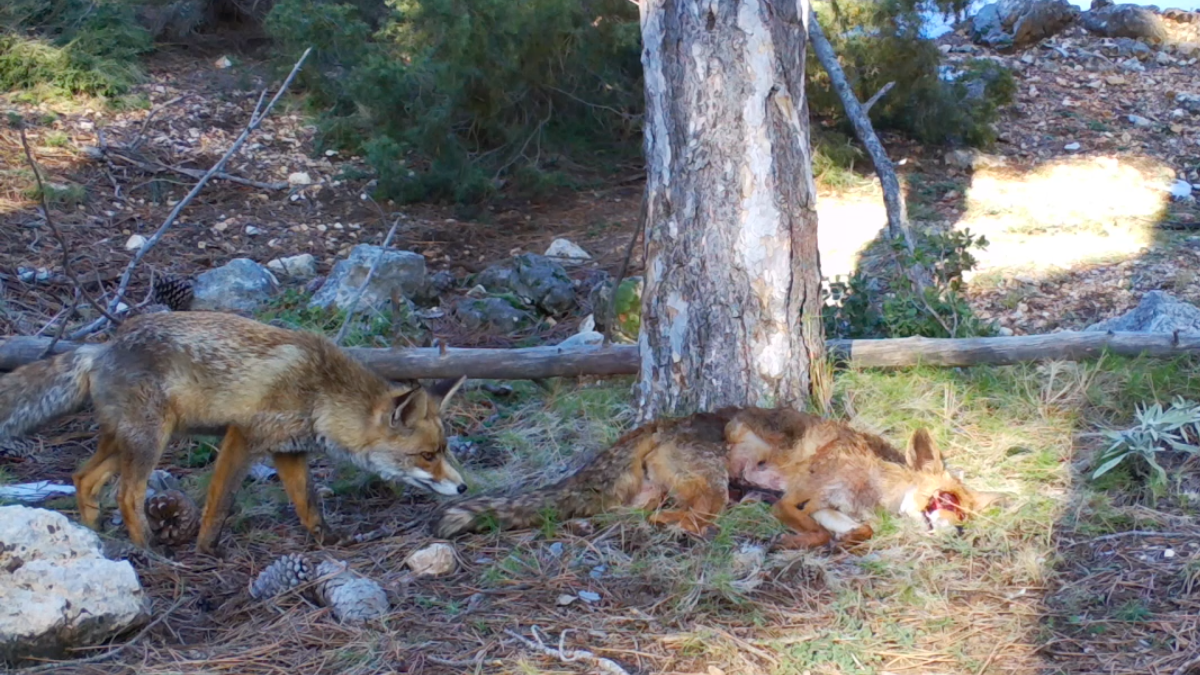
Scavengers influence how a carcass is broken down, how much material is incorporated into the soil and how nutrients are spatially redistributed. Through trampling, defecation, and partial consumption, they actively shape the interface between carrion and soil. Our results highlight scavengers as overlooked regulators of belowground processes, linking aboveground biodiversity to soil functioning.
Overall, our findings suggest that mesocarnivore and herbivore carcasses play distinct yet complementary roles in dryland ecosystems. This is particularly relevant in nutrient-limited systems, where ecosystem functioning depends on the timing, magnitude, and diversity of resource inputs. Even after death, carnivores exert a disproportionate influence on ecosystem processes.
Read the paper:
https://besjournals.onlinelibrary.wiley.com/doi/full/10.1111/1365-2656.70214
 Animal Ecology in Focus