Begging for funding?

Understanding ecological systems takes time. While some experimental ecological work, performed under controlled lab conditions, can be conveniently fitted into the short-term periods beloved of funding bodies, much of ecology requires a longer-term perspective. Why is that? First, life-histories frequently operate at generational scales approaching decades. To have any hope to make sense of patterns of inheritance, selection or demography we need data spanning multiple generations, and that may mean multiple decades. Second, almost all ecological studies reveal heterogeneity among individuals – frequently in terms of vital rates, or detection probability, or other aspects of life-histories. Such heterogeneity makes it very hard to extrapolate from cross-sectional observations to understand the true sources of variation driving a population. Continue reading “Begging for funding?”

Transparency and Evidence-Based Policy: An Open Letter to Defra from Journal of Animal Ecology

As a scientific journal, we are in the business of independently assessing the rigour of work conducted by the research community, including the methods it uses to collect, analyse and interpret appropriate data. We are therefore well placed to judge the merits of relevant scientific endeavour and to provide constructive feedback. On October 30th 2014, the UK’s Shadow Farming Minister, Huw Irranca-Davies, called for an independent review of the methods being used to assess the outcomes of the ongoing pilot badger culls in England 1. Such a review requires a detailed understanding of the behaviour, dynamics and management of wild animal populations – disciplines that are at the heart of the field of animal ecology. As the UK’s leading animal ecology journal, we hereby offer our services to the Secretary of State to provide an independent assessment of the methods and data collected as part of this year’s badger cull. Continue reading “Transparency and Evidence-Based Policy: An Open Letter to Defra from Journal of Animal Ecology”

Solving the skewed sex ratio problem in science

In 2003 Milner-Gulland et al. wrote a paper on extreme adult sex ratios in saiga antelope. Males had become so rare in some years that the behavior of the system became dysfunctional and population performance suffered catastrophically. The only other environments where I know of heavily skewed adult sex ratios are university science faculties. Except here the skew is in the other direction, with females being rare. Social scientists have shown that skewed sex ratios in the workplace can negatively impact many performance metrics (e.g. Fenwick and Neal 2001).

Many scientists are rightly concerned by the paucity of women on the faculty of many science departments, and there has been much contemplation on the causes of attrition as more men progress from Ph.D. to post-doc to a faculty position to full professor than women. There are hypotheses proposed to explain this ranging from men being more likely than women to express the traits thought to aid success in academia including self-belief and an ability to brush off criticism, through to a lack of adequate home life provision. However, identification of these causes does not seem to be having much of an effect on reducing the skewed sex ratio. For example, of 43 researchers offered prestigious Royal Society University Research Fellowships this year, 41 were men (see here). I am not entirely surprised by this. Many ‘solutions’ I have heard proposed to address the skewed sex ratio problem seem unlikely to succeed. For example, one popular call is for women’s groups to be set up. No one has ever succeeded in explaining to me how that is supposed to lead to change. Continue reading “Solving the skewed sex ratio problem in science”

Where have all the insects gone?

armyworm
Recently, we commissioned one of Journal of Animal Ecology‘s most experienced Associate Editors, Simon Leather, to compile a Virtual Issue on his great passion – insects. The journal has published many classic insect ecology papers over the years and Simon does a great job of highlighting some of these as well as many new papers that we hope will go on to become classics themselves. In his preface to the VI, Simon bemoans the fact that back in the 1970s, when he first began subscribing to the journal, there were many more papers on insects than there are now and that the journal has perhaps become vertebrate-centric in recent years.

This got me thinking – is this really true? And if it is, then why do we publish fewer entomological papers now than back then? Are we alone in this trend or is it common across other general ecological journals? And, either way, should we be worried about the taxonomic distribution of our papers? Continue reading “Where have all the insects gone?”

Name: UK government. Animal ecology test score: 0

© Andrew Byrne
© Andrew Byrne

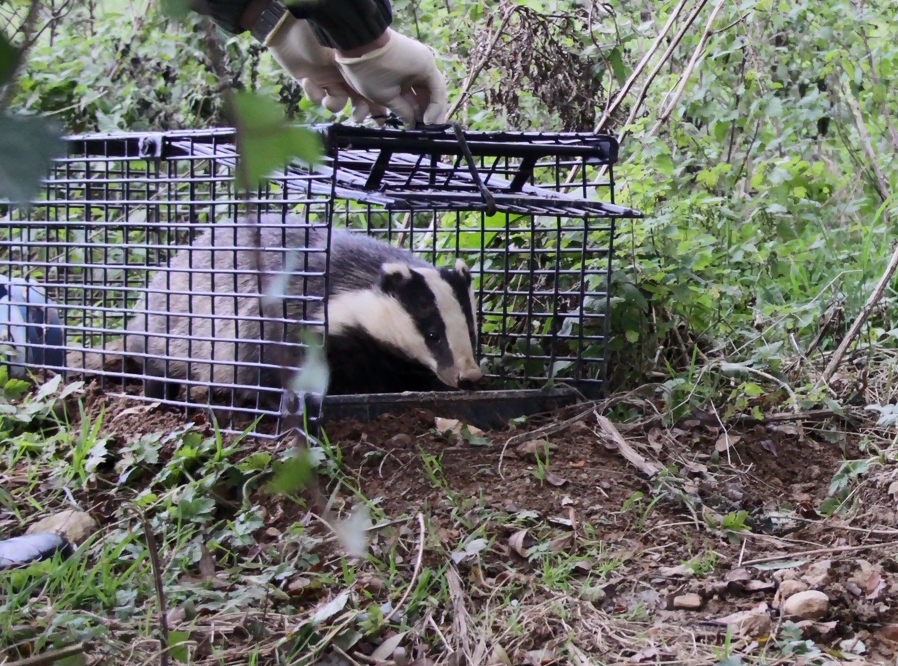
Every now and again animal ecology findings make it into the news. Press coverage often focuses on cases where a species is on the edge of extinction, has erupted to plague proportions, or exhibits some quirky behaviour. One of the positive things about such coverage is that the public appreciates that animal ecology is a mature field of study that uses high-tech methods of data collection, cutting-edge statistical methods and mathematically elegant models. But all too often animal ecology stories are little more than a curiosity, chosen to fill the ‘And finally…’ slot. Occasionally animal ecology research influences government policy – something that has happened with the control of tuberculosis (TB) in cattle. However, this particular case is not a good news story – sound animal ecology advice is being ignored by the current UK government. The reason? A cynic might speculate that it is because following best animal ecology practice might lead to conclusions at odds with what the government seems unjustifiably determined to do. Continue reading “Name: UK government. Animal ecology test score: 0”