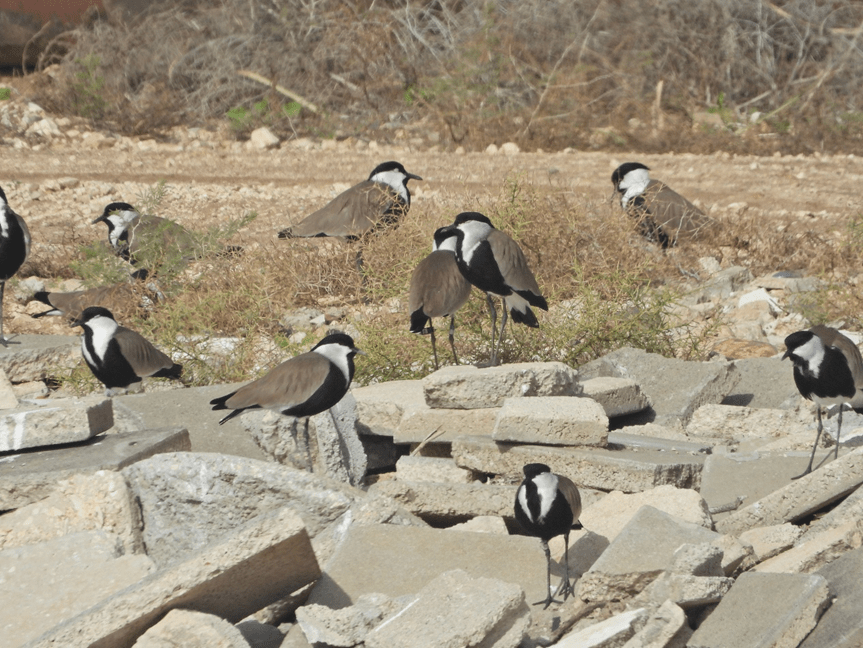
Beyond simple habituation: Anthropogenic habitats influence the escape behavior of spur-winged lapwings in response to both human and non-human threats

This blog post is provided by Bar-Ziv Michael, Sofer Aran, Gorovoy Adel and Spiegel Orr and tells the #StoryBehindthePaper for the paper “Beyond simple habituation: Anthropogenic habitats influence the escape behavior of spur-winged lapwings in response to both human and non-human threats“, which was recently published in Journal of Animal Ecology. In their paper they use a unique “Jack-Truck” to simulate a jackal predator, and explore … Continue reading Beyond simple habituation: Anthropogenic habitats influence the escape behavior of spur-winged lapwings in response to both human and non-human threats

מעבר להתרגלות: סביבה אנושית משפיעה על התנהגות הבריחה של סיקסקים בתגובה לאדם ולתן

בלוג זה מסופק על ידי בר-זיו מיכאל, סופר ארן, גורובוי אדל ושפיגל אור ומספר את #הסיפורשמאחוריהמאמר למאמר “מעבר להתרגלות פשוטה: בתי גידול עירוניים משפיעים על תגובת הבריחה של סיקסקים מאיום אנושי ולא אנושי“, שפורסם לאחרונה בעיתון של Journal of Animal Ecology. במאמר שלהם הם השתמשו בשיטה יחודית עם “ג’יפ-תן” כדי לחכות טורף מסוג תן, וחקרו איך סיקסקים מגיבים לאיום מסוג חדש וכך גם לאדם. Click here for the … Continue reading מעבר להתרגלות: סביבה אנושית משפיעה על התנהגות הבריחה של סיקסקים בתגובה לאדם ולתן

Dispersal mode and competition type matter for outcomes of the competition-colonization trade-off

This blog post is provided by Ilia Maria Ferzoco and Shannon McCauley and tells the #StoryBehindthePaper for the paper “Breaking down the components of the competition-colonization trade-off: New insights into its role in diverse systems“, which was recently published in Journal of Animal Ecology. In their concept paper they explore how dispersal and competition might impact how species compete and coexist, depending on how they … Continue reading Dispersal mode and competition type matter for outcomes of the competition-colonization trade-off

Determinants of community structure: parasites fight the environment, their hosts and each other

This blog post is provided by Joshua Brian and tells the #StoryBehindthePaper for the paper ‘Factors at multiple scales drive parasite community structure’, which was recently published in Journal of Animal Ecology. In the study, they look at how parasite communities differ depending on host species and spatial scale.   At the heart of ecology are a set of quite simple questions. One of the … Continue reading Determinants of community structure: parasites fight the environment, their hosts and each other

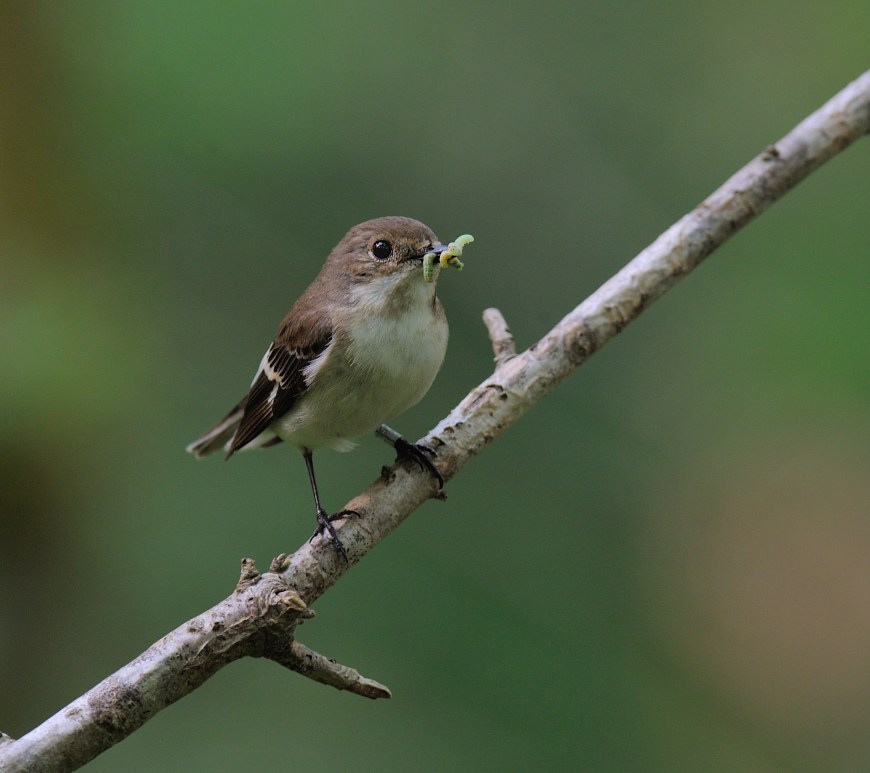
Survival and dispersal drive population dynamics of UK breeding Pied flycatchers

This blog post is provided by Malcolm Burgess and Chloé Nater and tells the #StoryBehindthePaper for the paper ‘Spatial consistency in drivers of population dynamics of a declining migratory bird‘, which was recently published in Journal of Animal Ecology. In their study, they used long-running nest monitoring and individual mark-recapture data collected mainly by citizen scientists and shared through the SPI-Birds Network and Database. They … Continue reading Survival and dispersal drive population dynamics of UK breeding Pied flycatchers

Why do birds of a feather flock together?

This blog post is provided by Shannon Buckley Luepold and tells the #StoryBehindthePaper for the paper “Habitat detection, habitat choice copying, or mating benefits: what drives conspecific attraction in a nomadic songbird?“, which was recently published in Journal of Animal Ecology. The authors explored why wood warblers settle near each other, comparing hypotheses about other birds acting as a signal of good habitat, simply copying … Continue reading Why do birds of a feather flock together?

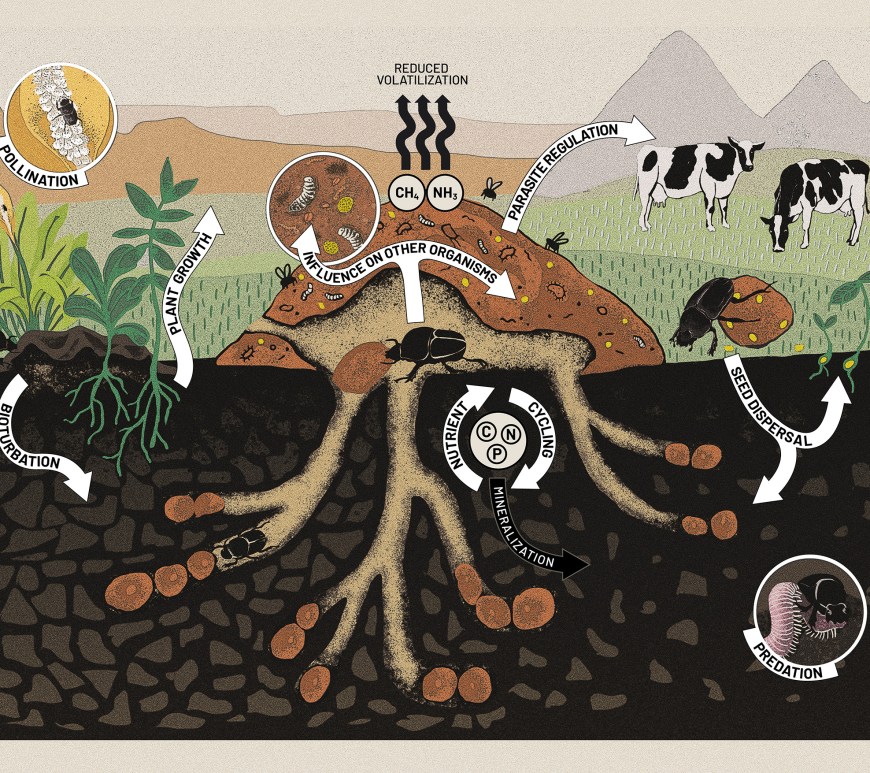
What do dung beetles actually do?

This blog post is provided by Joaquín Hortal and Indradatta deCastro-Arrazola and tells the #StoryBehindthePaper for the paper ‘ A trait-based framework for dung beetle functional ecology’, which was recently published in Journal of Animal Ecology. In this blog post you can read how a group of dung beetle ecologists came together to establish a framework for the study of the functional ecology of dung … Continue reading What do dung beetles actually do?

Historical data show serious threats facing freshwater mussels in major UK river

This blog post is provided by Isobel Ollard and tells the #StoryBehindthePaper for the paper ‘Declines in freshwater mussel density, size and productivity in the River Thames over the past half century‘, which was recently published in Journal of Animal Ecology. The authors replicated a survey of freshwater mussels in the River Thames from the 1960s and mussel populations had declined to less than 10% … Continue reading Historical data show serious threats facing freshwater mussels in major UK river

César Marín: building a flourishing career in soil ecology amidst Colombia’s political conflict

Following Black History Month, the British Ecological Society (BES) journals continue to celebrate the work of Black ecologists from around the world and share their stories. The theme for UK Black History Month this year has been Time for Change: Action Not Words. César Marín—a professor at Universidad Santo Tomás, Valdivia, Chile—shares his story below. How did you get into ecology? My name is César Marín … Continue reading César Marín: building a flourishing career in soil ecology amidst Colombia’s political conflict

Do birds build bigger nests when it’s cold?

This blog post is provided by Karina Vanadzina and tells the #StoryBehindthePaper for the paper ‘Global drivers of variation in cup nest size in passerine birds‘, which was recently published in Journal of Animal Ecology. In their study they find that nest size in passerine bird species is closely linked to the conditions in their breeding habitat. A parent bird tending to their chicks in … Continue reading Do birds build bigger nests when it’s cold?