Cascatas tróficas dentro e entre ecossistemas: atributos dos recursos basais e consumidores modulam os impactos desencadeados por múltiplos predadores de ecossistemas adjacentes

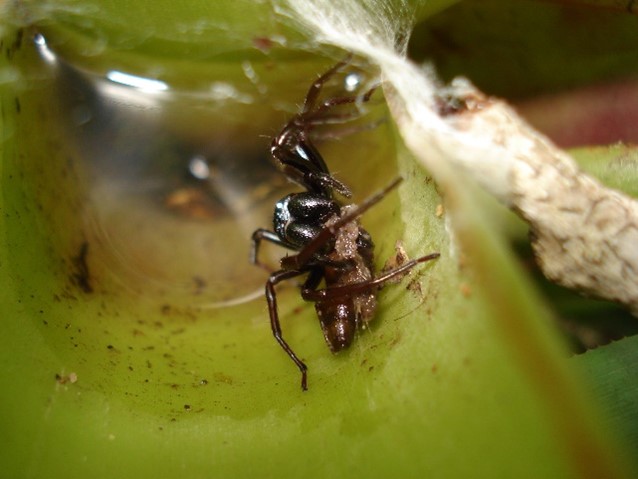
Este post é da autoria de Pablo Augusto P. Antiqueira e conta a #StoryBehindthePaper do artigo “Trophic cascades within and across ecosystems: the role of anti-predatory defences, predator type, and detritus quality”, publicado recentemente no Journal of Animal Ecology. Utilizando a bromélia-tanque como sistema modelo, Antiqueira e colegas investigam os efeitos de predadores inter-ecossistemas (aranhas mergulhadoras) sobre as presas, outros predadores e os ecossistemas que utilizam. … Continue reading Cascatas tróficas dentro e entre ecossistemas: atributos dos recursos basais e consumidores modulam os impactos desencadeados por múltiplos predadores de ecossistemas adjacentes

Trophic cascades within and across ecosystems: resource and consumer attributes modulate the impacts triggered by multiple predators from adjacent ecosystems

This blog post is provided by Pablo Augusto P. Antiqueira and tells the #StoryBehindthePaper for the paper “Trophic cascades within and across ecosystems: the role of anti-predatory defences, predator type, and detritus quality”, which was recently published in Journal of Animal Ecology. Using tank-bromeliad as a model system, Antiqueira and colleagues investigate the effects of cross-ecosystem predators (diving spiders) on prey, other predators and the … Continue reading Trophic cascades within and across ecosystems: resource and consumer attributes modulate the impacts triggered by multiple predators from adjacent ecosystems

The Elton Prize is awarded each year for the best paper in the Journal of Animal Ecology written by an early career author at the start of their research career.

The overall winner is selected by the Senior Editors of the journal, and will be announced in the coming weeks. Watch this space! This year’s shortlisted candidates are announced below. The shortlisted candidates are: Miguel Gomez; interactions between fitness components across the life cycle constrain competitor coexistence Garben Logghe; arthropod food webs predicted from body size ratios are improved by incorporating prey defensive properties Sarah … Continue reading The Elton Prize is awarded each year for the best paper in the Journal of Animal Ecology written by an early career author at the start of their research career.

Journal of Animal Ecology: International Women’s Day

To celebrate International Women’s Day 2024, we are excited to share a collection of blog posts showcasing the work of some of our new Associate Editors. In each post, our editors discuss their experiences in ecology, as well as what this year’s theme, ‘Inspire Inclusion‘, means to them. Dr Natacha Chacoff What work do you do? My name is Natacha Chacoff; I am a mother … Continue reading Journal of Animal Ecology: International Women’s Day

Addressing the stability of freshwater mussel assemblages

This blog post is provided by Garrett Hopper and Carla Atkinson and tells the #StoryBehindthePaper for the paper “A test of the loose-equilibrium concept with long-lived organisms: evaluating temporal change in freshwater mussel communities”, which was recently published in Journal of Animal Ecology. In their study, they used long-term monitoring datasets for mussel beds from rivers in the USA to assess the stability of mussels … Continue reading Addressing the stability of freshwater mussel assemblages

Prey Depletion and Source-Sink Dynamics in Endangered African Wild Dogs

This blog post is provided by Johnathan Reyes de Merkle and tells the #StoryBehindthePaper for the paper “An integrated population model reveals source-sink dynamics for competitively subordinate African wild dogs linked to anthropogenic prey depletion”, which was recently published in Journal of Animal Ecology. In their study, they investigated the effects of anthropogenic prey depletion on the coexistence and persistence of the African wild dog, a … Continue reading Prey Depletion and Source-Sink Dynamics in Endangered African Wild Dogs

Small details affect the big picture: The response of populations to changing environments depends more on individual organisms than we can see in classical models

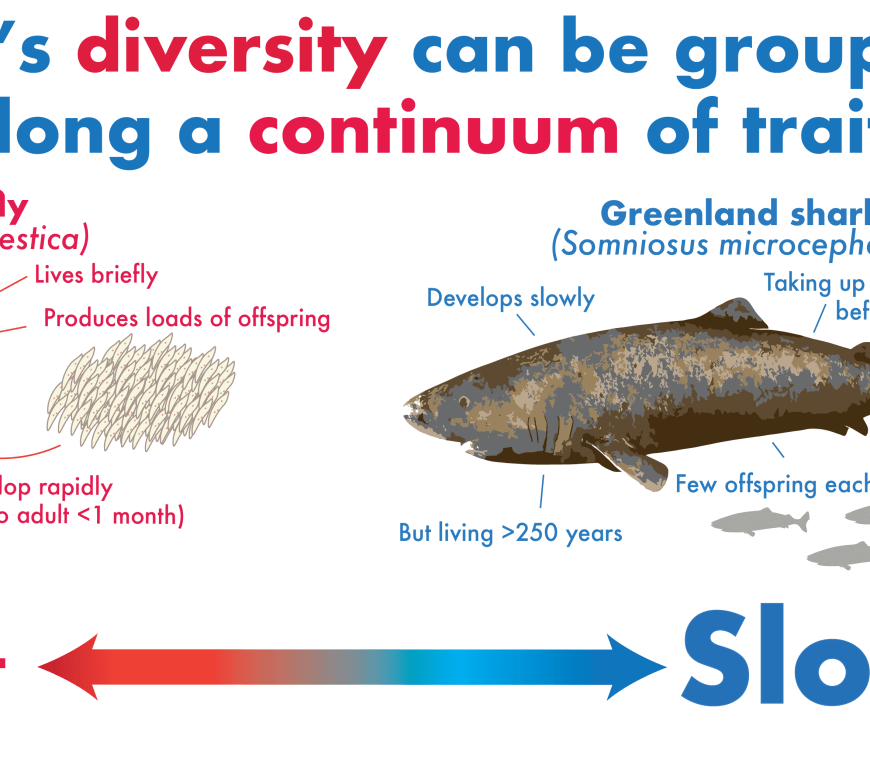
This blog post is provided by Mark Rademaker, Anieke van Leeuwen and Isabel Smallegange and tells the #StoryBehindthePaper for the paper “Why we cannot always expect life history strategies to directly inform on sensitivity to environmental change“, which was recently published in Journal of Animal Ecology. In their paper, they explore individual-level tradeoffs, and how these affect trait patterns and population responses, finding that compared … Continue reading Small details affect the big picture: The response of populations to changing environments depends more on individual organisms than we can see in classical models

Defining and making inference on the diel niche

This blog post is provided by Brian D. Gerber and Mason Fidino and tells the #StoryBehindthePaper for the paper “A model-based hypothesis framework to define and estimate the diel niche via the `Diel.Niche’ R package”, which was recently published in Journal of Animal Ecology. In their paper, they present the ‘Diel.Niche’ R package and demonstrate how this package can be used to evaluate hypotheses of … Continue reading Defining and making inference on the diel niche

La coordinación en el aprovisionamiento de los pollos aumenta el éxito reproductor en una ave de cría cooperativa

Esta entrada de blog proviene de Eva Trapote y nos cuenta la #HistoriaDetrásdelArtículo ‘Fitness benefits of alternated chick provisioning in cooperatively breeding carrion crows’, que fue recientemente publicado en Journal of Animal Ecology. Trapote y su equipo investigaron el aprovisionamiento al nido en cornejas negras cooperativas para comprender si el grado de alternancia al nido por parte de los cuidadores aumenta su éxito reproductivo y, … Continue reading La coordinación en el aprovisionamiento de los pollos aumenta el éxito reproductor en una ave de cría cooperativa

Coordination in chick provisioning increases reproductive success in a cooperative breeding bird

This blog post is provided by Eva Trapote and tells the #StoryBehindthePaper for the paper ‘Fitness benefits of alternated chick provisioning in cooperatively breeding carrion crows’, which was recently published in Journal of Animal Ecology. Trapote and colleagues investigated brood provisioning in breeding carrion crows to understand whether the degree of alternation at the nest by caregivers increases their reproductive success and is thereby favoured … Continue reading Coordination in chick provisioning increases reproductive success in a cooperative breeding bird