Jeremy Van Driessche (he/him) provides the story behind his paper, “Water economics of African savanna herbivores: how much does plant moisture matter?“, which was shortlisted for this year’s Elton Prize. We also hear a little about his journey into animal ecology.
About the paper:
What is your shortlisted paper about, and what are you seeking to answer with your research?
Water is the only non-substitutable limiting resource for most animal populations, yet it has been grossly neglected in studies of many taxa. These include large mammalian herbivores, which are disproportionately influential in ecosystems and also disproportionately threatened. Moreover, climate change is increasingly disrupting hydrological regimes worldwide, accentuating the urgency of research on water economics. Our study advanced understanding of how large herbivores may respond to climate change by revealing previously underappreciated interspecific variation in surface-water dependence, even among obligate browsers traditionally considered to be water independent. To our knowledge, our study is the first to test whether individuals of different species adjust dietary water intake in response to environmental pressures, and whether this relaxes their dependence on surface water, a key constraint in savanna herbivore communities.
Were you surprised by anything when working on it? Did you have any challenges to overcome?
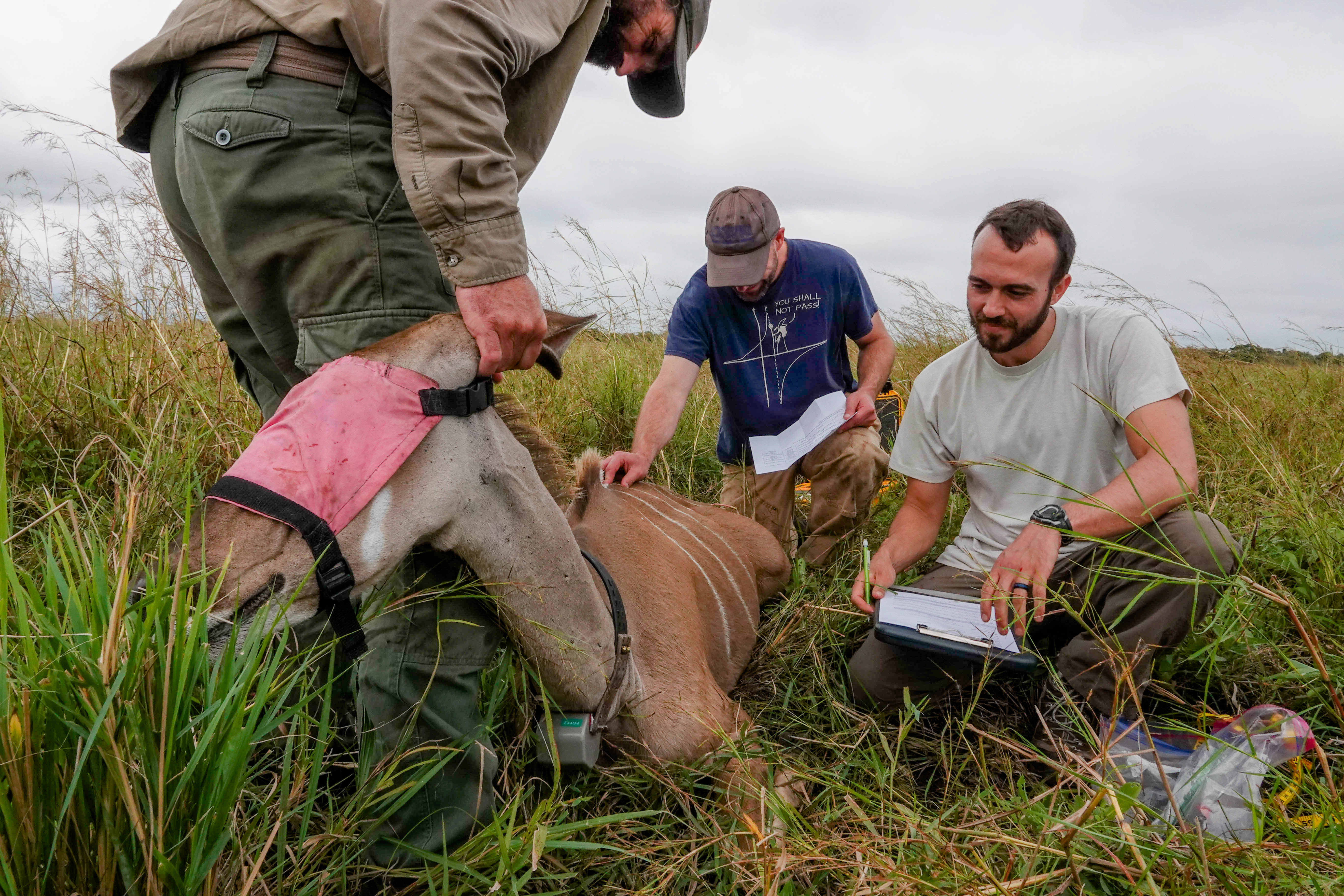
We tested the hypotheses that browsing antelopes would respond to declining plant water content during the dry season by adjusting their diets, and that the consequences of those adjustments would differ between species owing to physiological traits and requirements that scale with body size. Although we observed differences in diet composition and habitat selection between bushbuck and kudu, those differences often were not in the direction we expected. Our results indicate that bushbuck are more dependent on surface water than kudu, refuting our interspecific predictions and supporting the proposition that body size alone is insufficient for predicting surface water dependence in diverse large-herbivore communities.
What is the next step in this field going to be?
Our work challenged simple guild-based assumptions about water requirements and highlighted mechanisms likely to influence species distributions and community composition under increasing temperature and drought conditions. Our conceptual and methodological framework for quantifying water dependence in free-ranging herbivores offers a foundation for generating more mechanistic predictions of population and community responses to future climate change and suggests that capitalizing on recent advances in methods for monitoring herbivore behavior and physiology (e.g., bio-logging technology) may provide novel insights into herbivore ecology across levels of organization.
What are the broader impacts or implications of your research for policy or practice?
Africa is one of the most vulnerable parts of the world to climate change, and a thorough understanding of how large herbivores cope with such changes is imperative for predicting population- and community-level responses. Our results demonstrate that considerable variation in surface water dependence exists even within a guild, let alone across the browser-grazer continuum. This variation has likely been underappreciated owing to the technical challenges of quantifying drinking behavior in free-ranging large herbivores. Because interspecific differences in surface water dependence could have important effects on large-herbivore communities as the climate warms, protected areas like Gorongosa would likely benefit from efforts to quantify those differences and integrate them directly into conservation planning.
About the author:
How did you get involved in ecology?
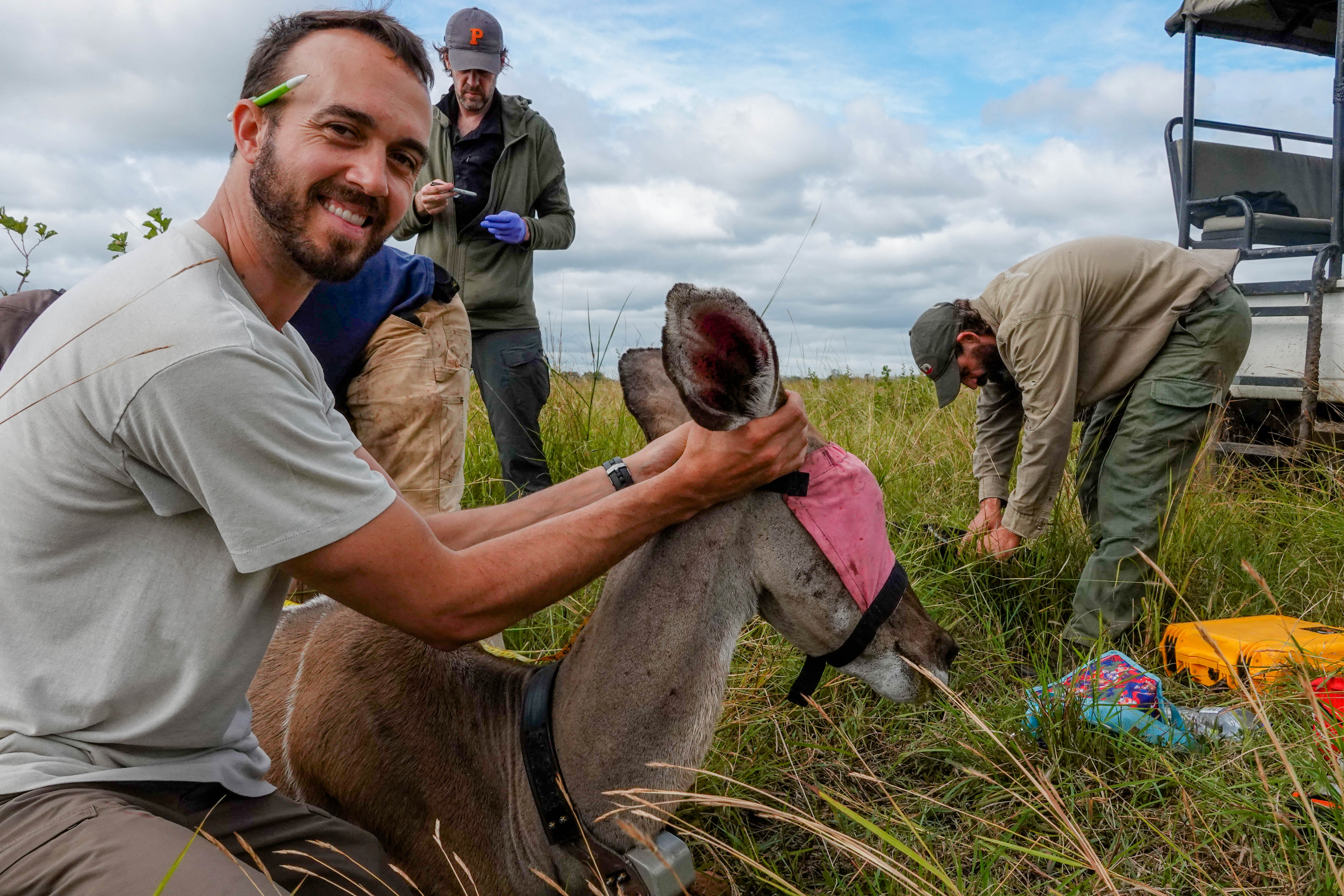
From a young age I have been fascinated by the natural world and could often be found exploring the hills surrounding my childhood home. As an undergraduate I moved to Colorado and was fortunate to experience a range of diverse ecosystems along the Front Range of the Rocky Mountains. During this time, a mentor challenged me to observe the world more closely, introduced me to fieldwork, and provided me with the opportunity to study wildlife. This experience ignited a deep passion for the field that has continued to grow. While my professional journey has occasionally led me away from ecology, I’ve consistently found ways to stay connected throughout my career. Prior to my PhD studies in Mozambique, I contributed to a variety of projects, including studies of coyotes, mule deer, amphibians, and herbivorous tropical fish. These experiences reinforced my commitment to understanding and preserving the natural world.
What is your current position?
I have accepted a position as an Assistant Professor of Biology at the United States Air Force Academy, where I will begin working in June 2026. I am excited to return to my undergraduate alma mater and have the opportunity to mentor and inspire the next generation of ecologists, just as I was inspired during my own academic journey.
What one piece of advice would you give to someone in your field?
My advice would be to embrace collaboration. In our field, cultivating strong professional relationships is essential for success. Recognizing that others bring unique expertise to the table can significantly enhance the quality and impact of your work. Approach collaborations with humility and respect, understanding that the collective knowledge and perspectives of a team are invaluable. While hard work is always necessary, it is the synergistic effort of diverse individuals that often drives meaningful advancements in research and practice.
 Animal Ecology in Focus