
Jordan Cuff provides the story behind his paper, “Networking nutrients: How nutrition determines the structure of ecological networks“, which was shortlisted for this year’s Elton Prize. We also hear a little about his journey into animal ecology.
About the Paper
What is your shortlisted paper about, and what are you seeking to answer with your research?
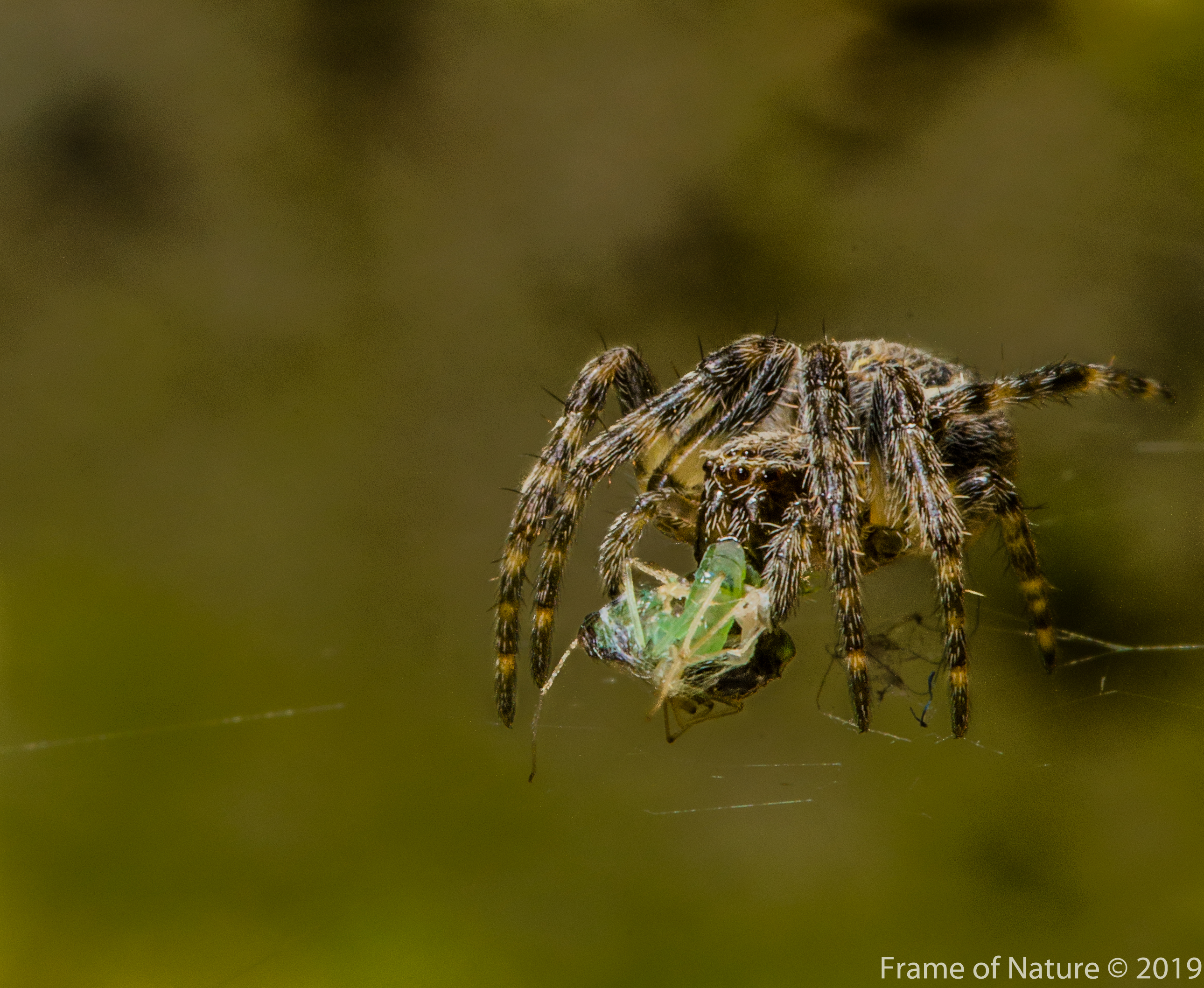
Nutrients are the fundamental currency of trophic interactions (and many other interaction types), yet they remain poorly represented in network ecology. This hinders our ability to determine how nutrients structure food webs and determine the healthy functioning of our ecosystems. We set out to define and demonstrate how integrating nutritional data into ecological networks can illuminate key ecological processes and the importance of different nutrients across whole ecological networks. Using a spider-prey network, we show that this approach can reveal some intuitive and exciting insights into the drivers and structure of interaction networks.
Were you surprised by anything when working on it? Did you have any challenges to overcome?
There are a few different ways in which nutrients could be integrated into ecological networks (e.g., as nodes, links or traits), which we discuss in the paper. Throughout the development of the paper, we gradually discovered each of these and ultimately favoured a framework completely different from our original idea. This exploratory development was really exciting and we feel it yielded a generalisable and intuitive approach that can be applied across a broad range of contexts.
What is the next step in this field going to be?
Having developed this new analytical approach, we are really pleased to see it being applied already to everything from marine food webs through plant-pollinator interactions all the way to social-ecological contexts. Since publishing the work, we are beginning to apply it to increasingly ambitious network analyses to investigate indirect interactions like competition and ecosystem services like biocontrol, with exciting new approaches for null modelling of nutritional networks emerging from this.
What are the broader impacts or implications of your research for policy or practice?
The integration of nutrients into networks allows us to investigate ecosystem health from a much more detail-oriented perspective than traditional network approaches based on just interaction frequencies. By understanding how nutrients flow through ecological networks, we can better manage resources for biodiversity and improve our predictions of interactions. Beyond enhancing our understanding of nutrition as a driver of interactions, fitness and ecosystem health, we can also begin to integrate this approach with human food systems to understand how ecological systems dictate the nutrition and health of human populations too.
About the Author
How did you get involved in ecology?
I was (reluctantly) assigned an undergraduate project on earthworm community ecology and discovered a deep love for invertebrate ecology (which I subsequently discovered from childhood drawings and writing – including a field guide to wasps complete with poem and board game written at age 7 – was probably always there).
What is your current position?
I am a Newcastle University Academic Track Fellow – a five-year fellowship in which I’m establishing and building my own research group, the Foraging Ecology Research Group.
Have you continued the research your paper is about?
Since drafting this paper, we have been generating data in different systems and contexts (e.g., plant-pollinator interactions) and we will soon be running some increasingly ambitious analyses to explore how competition is driven and structured by nutrients.
What one piece of advice would you give to someone in your field?
I think the importance of ideas cannot be overstated in science, and the best way to develop good ideas is by first having a lot of bad ones! Thinking critically about research and discussing ideas with supportive and encouraging mentors (many of whom for me are co-authors of this paper) has been crucial for me.

 Animal Ecology in Focus