Marco Fioratti Junod (he/him) provides the story behind his paper, “Herbivory mediates the response of below-ground food-webs to invasive grasses“, which was shortlisted for this year’s Elton Prize. We also hear a little about his journey into animal ecology.
About the paper:
What is your shortlisted paper about, and what are you seeking to answer with your research?
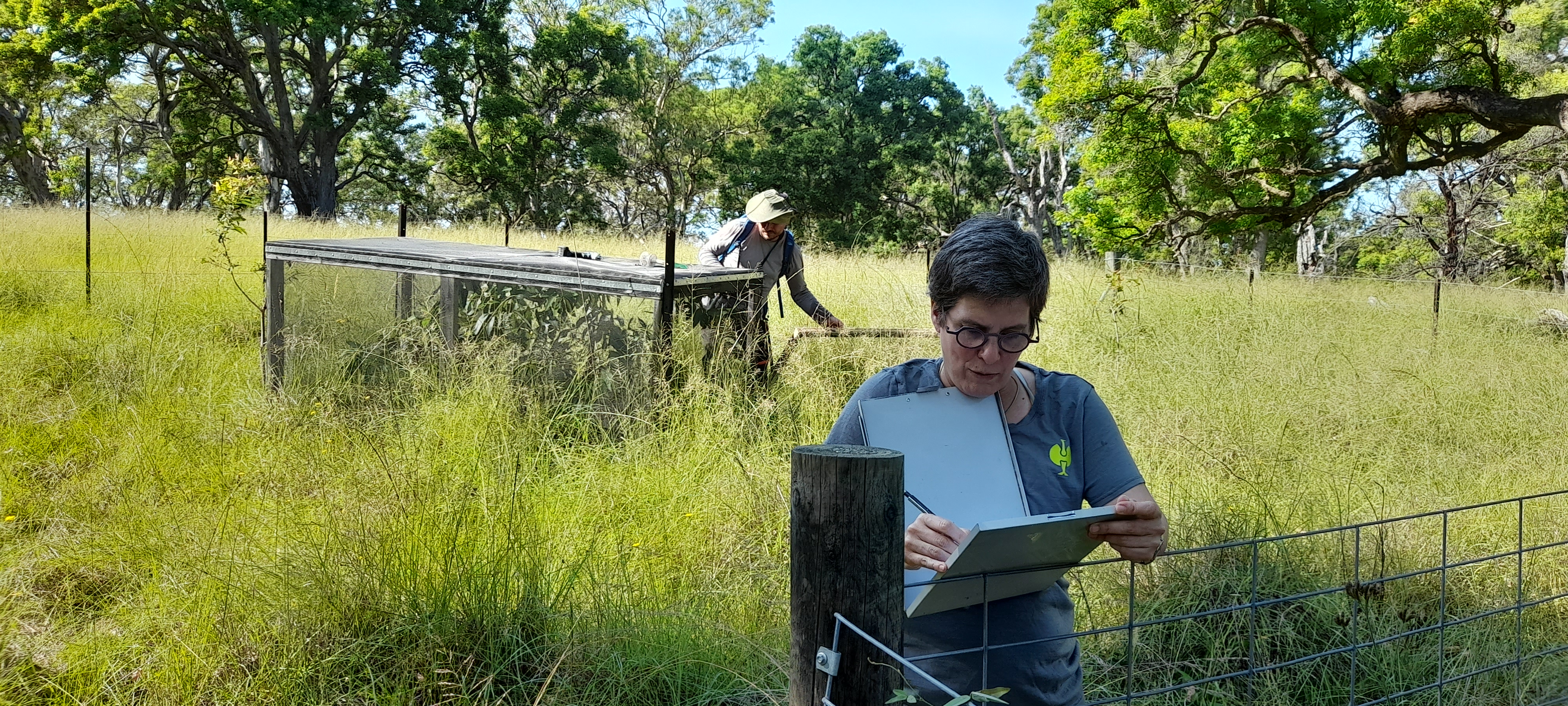
The study deals with the combined effects of the expansion of an invasive grass grass species and the activity of different guilds of herbivores on the below-ground food webs of a threatened Australian grassland ecosystem. It does so through the establishment of a system of nested exclosures on active extensive dairy farms in New South Wales. Our ultimate goal is ascertaining whether feedback mechanisms that could facilitate the further expansion of the invasive grass exist and whether the coexistence of livestock with native mammals have beneficial effects in such an ecosystem.
Were you surprised by anything when working on it? Did you have any challenges to overcome?
Most ecologist love fieldwork. Some, like me, also enjoy laboratory work and data analysis. But a large unglamorous task for ecologists working on projects with logistics spanning continents is dealing with compliance and bureraucratic requirements to allow the scientifically exciting part of the research to proceed smoothly. Export and import permits for biological samples, coordination of transfer and processing of sampling across laboratories in different countries absorbed more time and generated more frustration and funny anecdotes than I had originally expected.
What is the next step in this field going to be?
As plant invasion and changes in herbivory regimes are very current themes in grassland biology and have only rarely been approached together in a structured way, there is still large scope for incremental discovery. Robert Buchkowski, in his Research Highlight article on the Journal of Animal Ecology, makes a brilliant case for some solid paths to carry the research forward. On one hand, the use of isotopic tracers could help quantify energy transfer paths between key components in the soil food web. On the other, the resulting data could help fit reality-based sophisticated parametrised models.
What are the broader impacts or implications of your research for policy or practice?
Landscapes that are to a large extent man-made in their current form present a pivotal terrain for conservation, as biodiversity protection cannot anymore be exclusively relegated to ever shrinking pockets of pristine ecosystems. Understanding if, how and to what extent integrating viable economic activities like livestock farming in novel ecosystems of conservational value can help preserving also other ecosystem services will be a crucial move forward. Not only for scientists, but for farmers, land managers and planning authorities.
About the author:
How did you get involved in ecology?
As somebody who retrained later in life, my journey was a long and serendipitous one, with frequent course corrections. Having originally trained as a diplomat, once a lateral career change pushed me into science, the move to ecology was a natural one. Dealing with wide networks of interacting players and identifying the crucial links to investigate in the face of astounding complexity is a crucial transferrable skill linking the two fields. The choice to focus on agricultural and pastoral ecosystems and tradeoffs between production and biodiversity made the transition smoother than it may appear on the surface.
What is your current position?
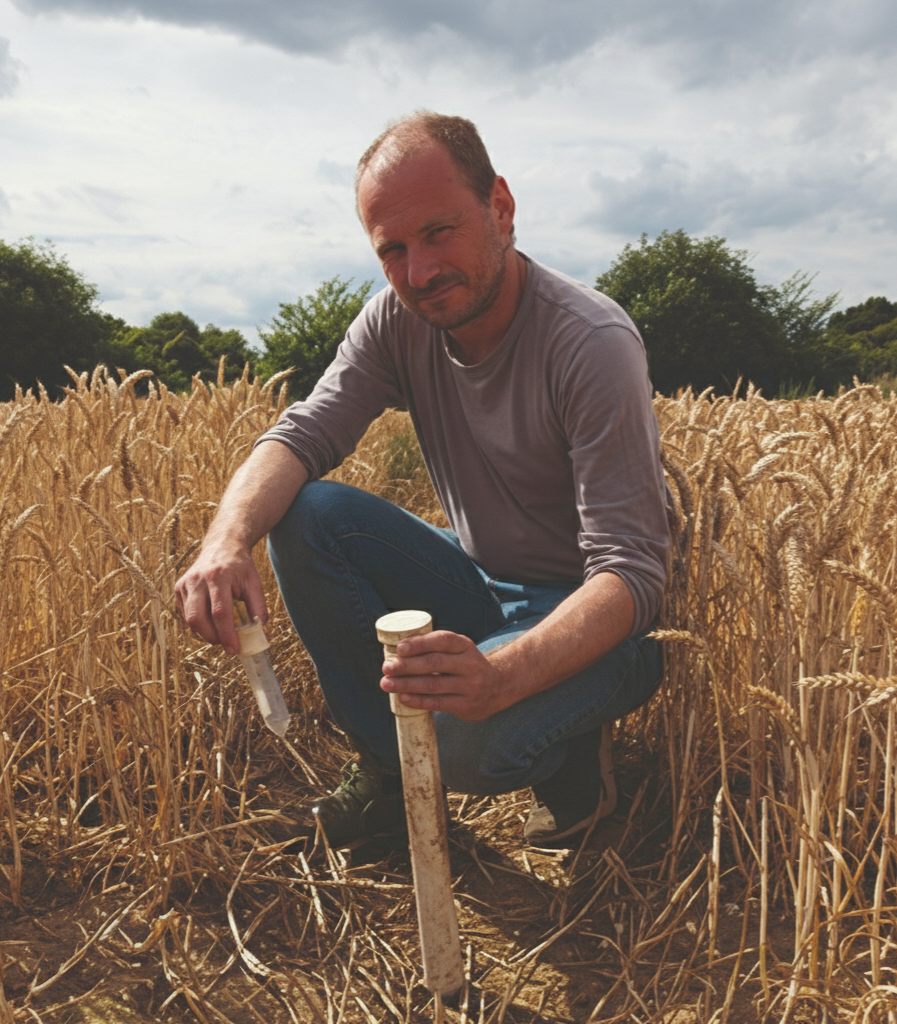
I am currently at my second postdoc appointment, working for Agroscope, the agricultural research institute of the Swiss government. I am still looking at biodiversity in agricultural contexts, but through completely different lenses. I – momentarily – put my auger, microscope and pipettes in storage and embraced powerful processors and coding for the assembly of a very large European database of biological observations in cultivated and ecotone areas. In the second stage of the project, this will serve as a foundation for our multidisciplinary team to model the impact of pesticides on biodiversity at a continent scale.
Have you continued the research your paper is about?
Our team at WSL is particularly interested in how the pathogen profile and the phyllosphere communities of native and invasive grasses are linked, and how herbivory can shift the competition balance. The long-term and large scale exclosure setup that was established was a perfect terrain to test our hypotheses. Fortunately, resources were secured for a new focused sampling campaign to shed light on this aspect and we are now getting ready to share our exciting findings with the scientific community.
What one piece of advice would you give to someone in your field?
In field and experimental ecology, we often grow attached to century-old tools and techniques that link us to the dawn of ecology as a science. But they shouldn’t be seen as endpoints of development. I encourage colleagues to think whether the instruments they use are the best available for their specific task. And if not, to play with widely available materials and affordable technologies to strive and achieve a better fit – which often mean simplification rather than fancy additions. After endless prototyping of pitfall traps and cow-trampling simulators, I can testify that it is both useful and great fun.
 Animal Ecology in Focus