Lizard population responses to climate and fire regimes: new pathways to ecological resilience

This blog post is provided by Heitor Sousa and Rob Salguero-Gómez and tells the #StoryBehindThePaper for the paper “Severe fire regimes decrease resilience of ectothermic populations”, which was recently published in the Journal of Animal Ecology. In their study, Heitor, Rob and colleagues found that intermediate fire regimes may be the most conducive to resistance for several Cerrado lizard species, and that variation in life … Continue reading Lizard population responses to climate and fire regimes: new pathways to ecological resilience

Citizen Science Podcast: Heather Williams

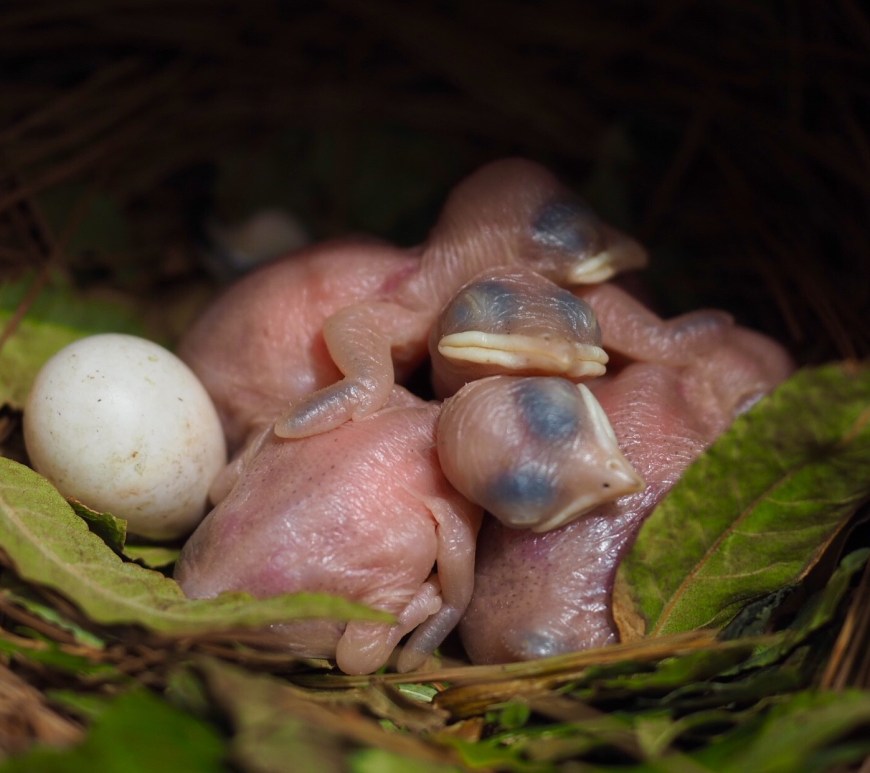
The fourth episode in our Citizen Science Special Issue podcast is live. Heather Williams tells us about their paper Support for a relationship between demography and modeled habitat suitability is scale dependent for the purple martin Progne subis, which was part of the Citizen Science Special Feature. Featured image: Purple martin nestlings (about 2 days old). © Adam Wilson. COMING UP: 25/02/2021 – Journal of Animal Ecology: Citizen Science … Continue reading Citizen Science Podcast: Heather Williams

Can traits of individuals inform on how populations respond to change?

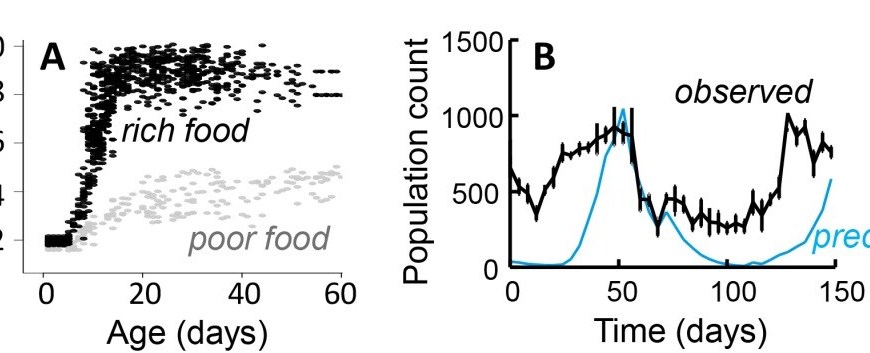
We are in great need of an integrative framework that allows ecologists to predict life history strategies from functional traits that inform on population performance. The aim of a recent British Ecological Society cross-journal Special Feature is to link organismal functions, life history strategies and population performance. Here, Dr Isabel Smallegange discusses a test published within this Special Feature that shows how a recently developed dynamic energy … Continue reading Can traits of individuals inform on how populations respond to change?

The wandering albatrosses of the Crozet Islands

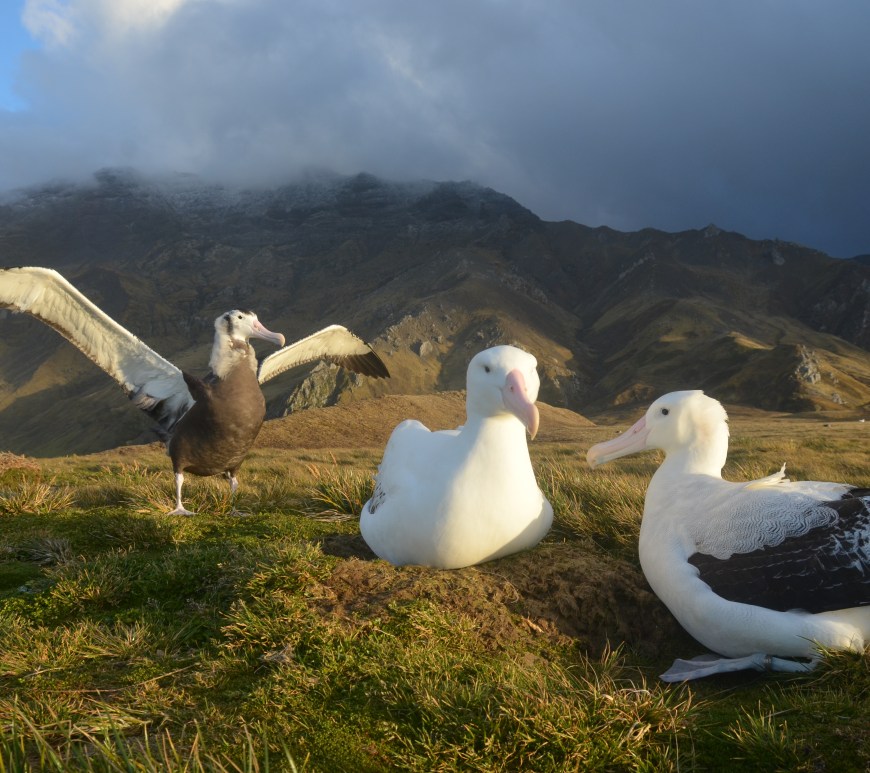
Henri Weimerskirch has been studying the wandering albatrosses that nest on the Crozet Islands for over 50 years. Out in the current issue of the journal is a new Synthesis paper Linking demographic processes and foraging ecology in wandering albatross—Conservation implications by Henri giving an overview of this unique 60-year study system. The paper presents the work carried out on albatross addressing questions on the links … Continue reading The wandering albatrosses of the Crozet Islands

Giving a hoot about owl populations

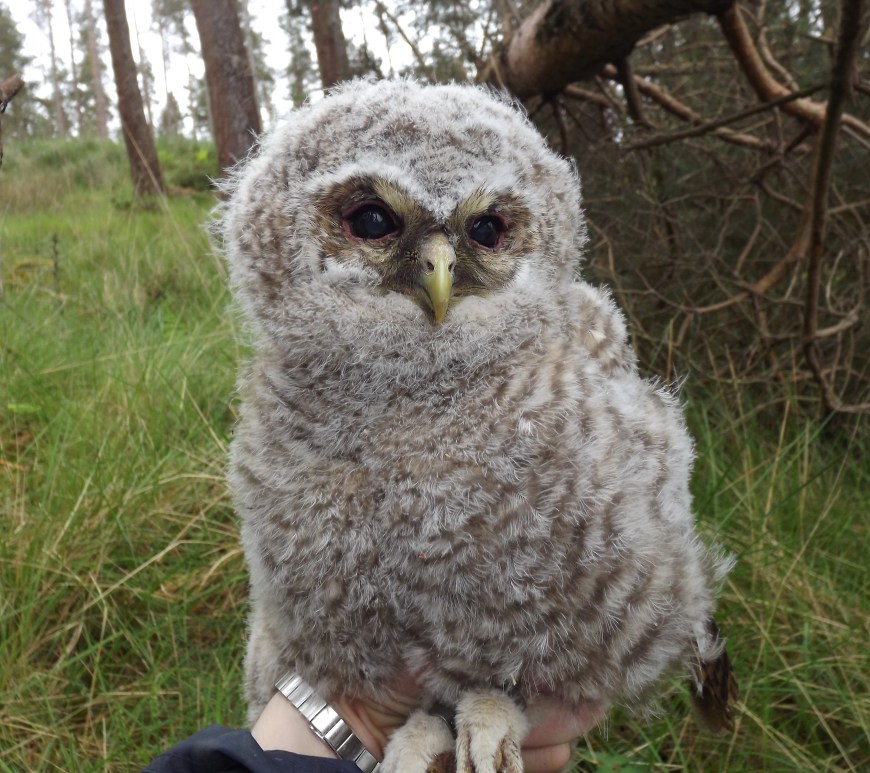
International Owl Day – who gives a hoot?  Dr Sarah Hoy sure does!  Sarah completed her PhD at the University of Aberdeen, which studied how the demography and dynamics of tawny owls have changed over the last 30 years in response to changing environmental conditions.  She is now a researcher in the School of Forest Resources and Environmental Science at Michigan Technological University, working with the … Continue reading Giving a hoot about owl populations

Volume 86:3 slideshow

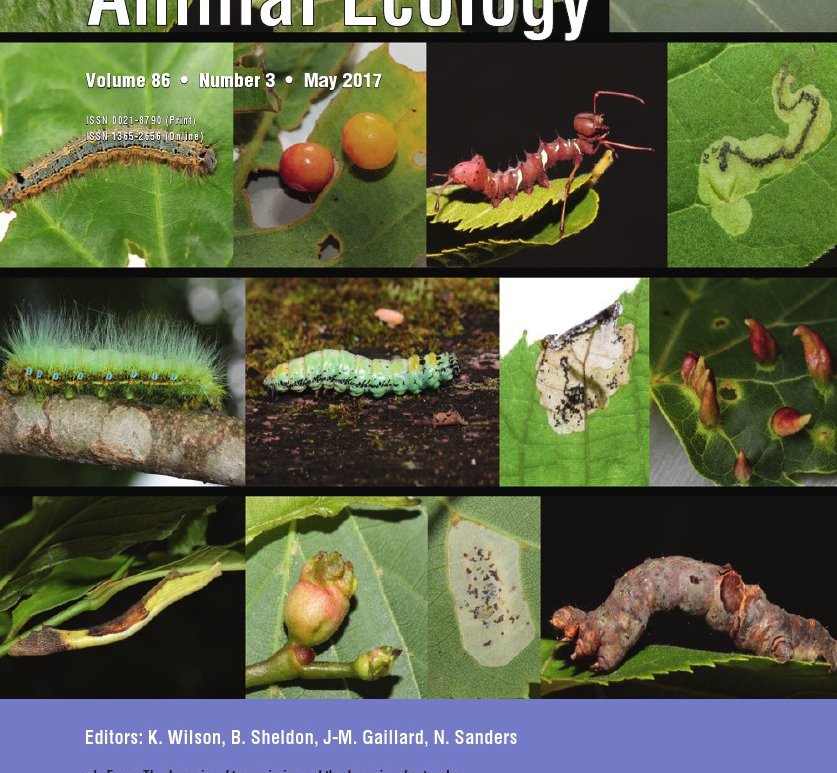
Issue 86:3 is now out. The In Focus in this issue is by Damien Farine and looks at the paper by Andrea Springer on “Dynamic vs. static social networks in models of parasite transmission: predicting Cryptosporidium spread in wild lemurs”. We also have papers on community ecology, trophic interactions, behavioural ecology, population ecology, spatial ecology and demography. As always to make the most of all … Continue reading Volume 86:3 slideshow

Demography beyond the population: Integrated demography comes of age

Assessing variation in population abundance over time and across space is a long-standing goal of population ecologists. Up to now, two main approaches have been mostly used to identify the factors driving observed fluctuations in population abundance. First, a pattern-oriented approach, based on the monitoring of population size, involves the analysis of time series of counts. In the most recent applications, these analyses lead to partitioning observed changes in population growth into different contributing factors, like current or past population density, environmental conditions, or demographic stochasticity. Second, a process-oriented approach, based on the monitoring of demographic parameters, involves the construction of age- or stage-structured demographic models. The steady increase of case studies aiming to monitor known-aged recognizable animals over most of their lifespan, the availability of statistical methods allowing reliable estimates of demographic parameters to be obtained from field data, and the development of a powerful framework to build a large range of matrix population models have all led to this process-oriented approach becoming a standard tool of population ecologists. It has become the gold standard in the context of both the management of exploited populations and the conservation of endangered populations. However, analyses of detailed monitoring of individuals have also revealed the existence of marked individual differences in most life history traits studied so far, which have been mostly ignored until now when using population-scale demographic modelling. To account for such sources of within-population variation, a trait-based demographic approach is required. Nowadays, Integral Projection Models (IPMs) provide a way to obtain more realistic demographic models that encompass the association between demographic parameters and, for instance, phenotypic traits. In their most extended version, IPMs include the four biological functions that are necessary and sufficient to obtain the distribution of a given continuous trait in a population at a given time from the distribution of the same trait in the same population one time-step before. These functions are the survival function linking survival probability to the trait value, the recruitment function linking the number of recruits to the trait value, the growth function linking the trait value at time t+1 to the trait value at time t, and the inheritance function linking the trait value of the offspring to the trait value of the parents.

Following the British Ecological Society Symposium “Demography Beyond the Population” that was held in Sheffield about one year ago, four papers derived from this symposium have just been published in Journal of Animal Ecology as part of the British Ecological Society Cross Journal Special Feature: Demography Beyond the Population. From the analysis of the contents of these four papers it appears that a new, integrated demography, comes of age. Continue reading “Demography beyond the population: Integrated demography comes of age”

Global demography in the animal kingdom

Today the paper that introduces the COMADRE Animal Matrix Database was published in Journal of Animal Ecology (Salguero-Gómez et al. 2016). This is an international effort in collaboration with ca. 10 other institutions. Our main goal was to replicate the impact that its sister database, the COMPADRE Plant Matrix Database (Salguero-Gómez et al. 2015) has had for plant ecology and evolution, but in the rich animal kingdom. Open access to the database itself can be gained from the COMADRE website.

comadre logo Continue reading “Global demography in the animal kingdom”