Small details affect the big picture: The response of populations to changing environments depends more on individual organisms than we can see in classical models

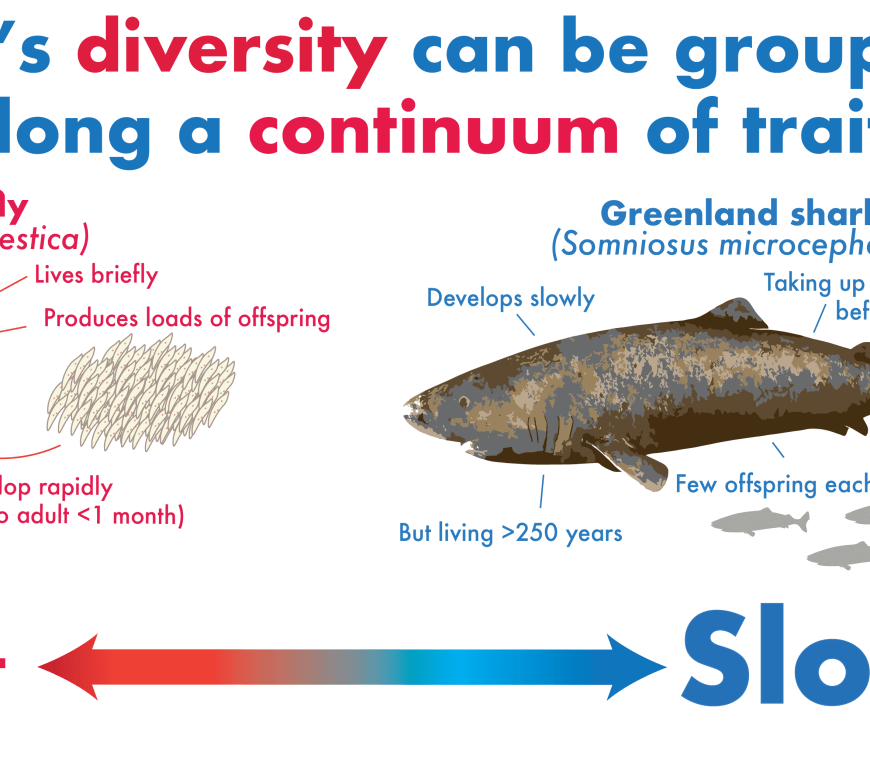
This blog post is provided by Mark Rademaker, Anieke van Leeuwen and Isabel Smallegange and tells the #StoryBehindthePaper for the paper “Why we cannot always expect life history strategies to directly inform on sensitivity to environmental change“, which was recently published in Journal of Animal Ecology. In their paper, they explore individual-level tradeoffs, and how these affect trait patterns and population responses, finding that compared … Continue reading Small details affect the big picture: The response of populations to changing environments depends more on individual organisms than we can see in classical models

Key Concepts in Ecology: Complex interactions and foodwebs  

This blog post on ‘Complex interactions and foodwebs’ is part of the BES ‘Key Concepts in Ecology’ series, designed to help ecologists in learning the key topics in ecology! Take a look at the full blog series for a list of key topics you might typically find in an ecology textbook, each providing a quick introduction to the topic, and a list of suggested papers … Continue reading Key Concepts in Ecology: Complex interactions and foodwebs  

Frogs and Herbicides: A Gut Feeling

Dr. Sarah Knutie led a study to explore whether a commonly-used herbicide affects the gut microbes of frogs and if the gut microbes could mediate the effect of the herbicide on infection risk by the amphibian chytrid fungus. She conducted the work as a Post-doctoral Researcher at the University of South Florida and is currently an Assistant Professor at the University of Connecticut. Here, she … Continue reading Frogs and Herbicides: A Gut Feeling

Badgers and Disease Ecology

Traditionally one of the UK’s most charismatic (and certainly distinctive) mammals, the badger has received mixed attention in recent times as a result of their involvement in disease transmission.  To celebrate National Badger Day, Dr Andy Robertson  describes the long-term study of these animals in Woodchester Park.  Dr Robertson is a NERC Knowledge Exchange Fellow at the University of Exeter’s Environment and Sustainability Institute, and … Continue reading Badgers and Disease Ecology

Field reports with Nathan Sanders

For the first episode of our podcast, I interviewed Nathan Sanders, a ‘former professional wrestler’ and an ecologist at the University of Vermont. We talk about his first fieldwork experience, ants, plants, a skunk, why study biodiversity, WARM and SALT projects that he is involved in, advice for students, and many personal stories. More about Nate: http://www.natesanders.org     Here is a short video teaser for the … Continue reading Field reports with Nathan Sanders

What makes a great paper for Journal of Animal Ecology?

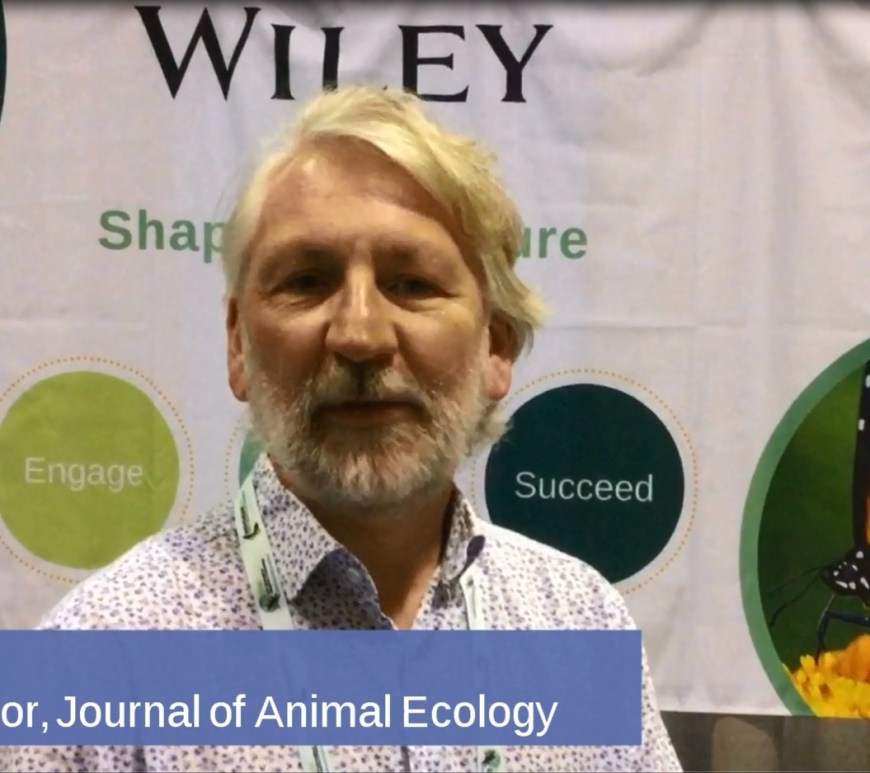
In this video Executive Editor Ken Wilson discusses what he is looking for from a great paper for Journal of Animal Ecology. The message from Ken is that papers must have a clear structure, clear message, clear narrative & be genuinely novel. Ken goes onto discuss our popular feature papers including Synthesis and ‘How to…’ papers. Ken discusses how synthesis papers are reviews focused on … Continue reading What makes a great paper for Journal of Animal Ecology?