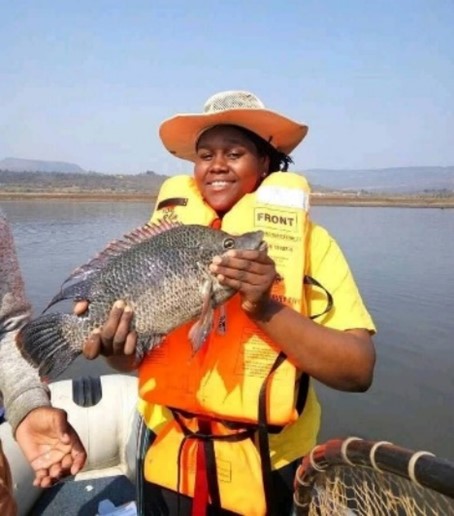
For Black History Month 2023, the British Ecological Society (BES) journals are celebrating the work of Black ecologists from around the world and sharing their stories. In this blog, Mahlatse Fortunate Mashaphu from South Africa shares her story and journey in academia.
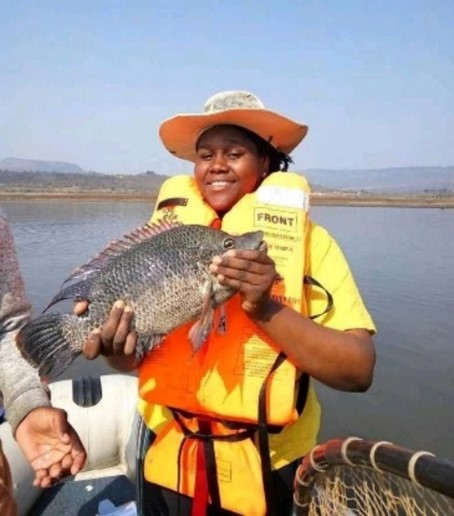
Name: Mahlatse Fortunate Mashaphu
Affiliation: University of KwaZulu-Natal
Ecology interests: Fisheries, Conservation genetics, Freshwater
Your story – How did you get into ecology?
Reflecting on my journey into ecology, I marvel at the path that brought me here and the determination that sustained me. I’m a black woman in science, and this is how I found my passion in ecology.
My name is Mahlatse Mashaphu, originally from a village named Madiga in Limpopo Province, South Africa. I am currently a PhD candidate at the University of KwaZulu-Natal. My journey started after finishing high school when I pursued an undergraduate degree in Molecular and Life Sciences at University of Limpopo, majoring in Biochemistry and Microbiology, sparking my interest in molecular biology. Initially aiming for an honors degree in biochemistry, but fate took me to aquaculture due to space constraints. This shift proved fortunate as it connected my scientific knowledge to real-world impact. Aquaculture allowed me to merge biology with sustainable food production, introducing me in the world of aquatic ecosystems and fisheries.
Post my honours degree, I worked as an environmental science intern, exposing me to the complexities of environmental conservation and the need for sustainable freshwater resource management. Subsequently, I secured a bursary for a Master’s in Ecology, where I researched on conservation genetics in fisheries, aiming to bridge my passion for molecular biology and environmental preservation. I focused on managing wild fish genetic resources and freshwater ecosystems to promote conservation and sustainability of freshwater resources.
My journey was uniquely challenging as a black woman in a predominantly male field, often plagued by self-doubt. However, the unwavering support of my family, supervisors, and peers, coupled with my faith in God kept me going. The Bible scripture I hold dear is Job 42:2, which says, “I know that you can do all things, and that no purpose of yours can be restrained.” It consistently uplifts me during both my failures and achievements on this journey. Today, I’m grateful for the opportunities that led me to the molecular biology and ecology fields. My journey exemplifies resilience and the boundless nature of science. I desire to inspire others by showcasing how diversity enriches science. As I continue my work in ecology and fisheries conservation, I carry the conviction that science can drive positive change in the society. My passion for sustainable resource management, commitment to conservation, and belief in diversity’s significance in science propels me forward in the field of ecology.
What are you researching/working on right now?
I have expanded my research beyond my MSc project, focusing on the conservation genetics of the Mozambique tilapia (Oreochromis mossambicus) in various South African provinces. This freshwater fish species holds significant global importance in the realm of freshwater aquaculture. Its potential to enhance freshwater aquaculture practices in South Africa is immense. However, it faces a critical threat due to hybridisation with introduced invasive Oreochromis species in South Africa, a phenomenon that has led to its classification as “vulnerable” on the IUCN Red List. The core objective of my project is to comprehensively assess the genetic diversity and population structure of this vulnerable species. This undertaking is essential for ensuring its long-term sustainability. To achieve this, I am investigating which populations have been affected by hybridisation with the introduced species and assessing various anthropogenic factors that pose a significant threat to Mozambique tilapia wild populations.
One of the key outcomes of my research will be the formulation of improved management practices for the conservation of wild populations of Mozambique tilapia. These practices will not only contribute to the long-term sustainability of the species but will also pinpoint specific populations that have the potential for utilisation in the development of tilapia farming in South Africa. In essence, my research is a critical step towards safeguarding the Mozambique tilapia populations and the broader biodiversity of freshwater ecosystems in South Africa. By shedding light on the genetic patterns of this species and identifying viable management strategies, I aspire to play an important role in preserving this valuable resource for future generations while promoting sustainable aquaculture practices.
What do you enjoy most about your work or ecology in general?
What I find most rewarding and enjoyable about my work in ecology, particularly in the realm of conservation genetics and freshwater fisheries, is the profound sense of purpose it provides. The opportunity to contribute to the preservation of biodiversity and the sustainable management of our natural resources is incredibly fulfilling. Working with the Mozambique tilapia and searching into the intricate web of its genetics and population dynamics is like unlocking the secrets of nature. It’s a constant journey of discovery and understanding, and every piece of data I gather brings us closer to effectively conserving this vulnerable species. Moreover, ecology, as a field, has a direct and tangible impact on the environment and the communities that depend on it. By studying the genetic diversity and population structure of the Mozambique tilapia, I am not only gaining valuable insights into the species itself but also shaping the future of freshwater aquaculture in South Africa. The prospect of improving the sustainability of our natural resources and contributing to food security is both inspiring and motivating. As a black woman in science, I also find great satisfaction in breaking down barriers and demonstrating that diversity enriches the scientific community. My work serves as a testament to the importance of inclusivity and the belief that anyone, regardless of their background, can make a significant difference in the world of science. In a nutshell, what I cherish most about my work in ecology is the opportunity to blend my passion for biology with my commitment to conservation. It allows me to make a meaningful impact on our environment while striving for a more equitable and sustainable future.
Are there any aspects of your academic career / personal journey as a Black ecologist that you wish to share?
My academic journey as a black ecologist has been a mix of challenges and triumphs. It’s essential to share these experiences to inspire others, raise awareness, and advocate for greater diversity and inclusion in science. As a Black woman in science, I have faced stereotypes and biases that sometimes made me doubt my abilities. Self-doubt crept in, especially when I compared myself to my peers who seemed to excel effortlessly. However, I persevered and used these challenges as motivation to break down barriers.
It’s crucial for aspiring scientists from underrepresented backgrounds to know that perseverance and self-belief can overcome these obstacles. Throughout my journey, mentors and allies have played an important role in my personal and professional development. Professors Sandi Willows-Munro, Colleen Downs, and Gordon O’Brien have consistently exhibited patience and unwavering support from the very beginning, never doubting my abilities. I have also been extremely fortunate to benefit from the guidance of mentors like Dr. Céline Hanzen and Dr. Matthew Burnett, whose invaluable contributions enriched my skills and expertise in conducting research in the field of ecology. My family, especially my parents, Moloko and Matome Mashaphu, and my little sister, Queen Mashaphu, have been my greatest cheerleaders, offering encouragement and prayers during times of failure and celebrating with me during times of winning.
I encourage others to seek mentors and allies who can provide guidance and support. Surround yourself with people who believe in your capabilities. My experiences reinforce my commitment to promoting diversity and inclusion in science. By sharing my story, I hope to inspire more individuals from underrepresented backgrounds to pursue ecology and related fields. Diversity enhances research quality and enriches perspectives. My research not only focuses on conservation genetics but also addresses equity and justice in environmental science. Ecological research should consider its impact on communities, especially those disproportionately affected by environmental changes.
Being a black woman in ecology means acknowledging the intersectionality of my identity and advocating for equity on all fronts. My journey highlights the importance of resilience, mentorship, and a commitment to diversity and inclusion. By sharing my experiences and advocating for change, I hope to inspire others to pursue their passions in ecology and contribute to a more equitable and sustainable world.
Are there any ongoing issues in the ecological / academic landscape that you would like to highlight or have experienced?
In the ecological and academic landscape, several ongoing issues demand attention. Biodiversity conservation and sustainable aquaculture are paramount concerns, given the global challenges of biodiversity loss and overexploitation of aquatic resources. My research contributes by preserving the genetic diversity of vulnerable species while advocating for sustainable aquaculture practices. Invasive species pose a substantial threat to ecosystem resilience, and my work on hybridization with introduced species sheds light on this issue, highlighting the potential consequences for biodiversity and ecosystem stability. Furthermore, as a Black woman in science, I am acutely aware of the pressing need for equity and inclusion in STEM fields, where minorities and women remain underrepresented. Securing research funding and support, fostering data sharing and collaboration, engaging with environmental policymakers, and enhancing science communication are all crucial aspects of addressing these challenges and driving positive change within the scientific community. Ultimately, our research efforts not only advance the field of ecology but also advocate for equitable practices, biodiversity conservation, and sustainable resource management, all vital for the well-being of our planet.
If you could see one change in academia to positively impact Black ecologists, what would that be?
To positively impact Black ecologists in academia, one change I would advocate for is the establishment of more inclusive and accessible mentorship and support networks. Mentorship is pivotal for the success and advancement of scientists, and it can significantly enhance the experiences of Black ecologists.
Creating structured mentorship programs designed to ensure that Black ecologists have access to mentors who understand their unique experiences and challenges is crucial. This entails pairing them with mentors who have successfully navigated similar academic and professional journeys. Moreover, offering resources and support for professional development, such as guidance on securing research funding, navigating the academic landscape, and advancing in their careers, can be transformative.
Facilitating networking opportunities that connect Black ecologists with peers, mentors, and allies within the field can help build a sense of community and provide access to valuable support systems. Therefore, encouraging academic institutions and organizations to actively promote diversity and inclusion in ecology and related fields is essential. This involves advocating for policies and practices that address systemic biases and promote equitable opportunities.
Mentorship should start at the undergraduate level and continue throughout an individual’s academic and professional journey. Early exposure to mentorship can help aspiring Black ecologists navigate the challenges they may face. By fostering a culture of mentorship and support that is inclusive and tailored to the needs of Black ecologists, academia can help break down barriers and empower individuals to thrive in the field.
This change would not only benefit Black ecologists but also contribute to a more diverse, equitable, and innovative scientific community overall.
Shout out your peers! Any black ecologists or groups who are doing work you admire?
I would like to extend a heartfelt shoutout to some remarkable individuals and groups who have been a constant source of inspiration and admiration:
Lehlohonolo Adams, Nasiphi Bitani, Dr. Cavin Shivambu, Dr. Ndivhuwo Shivambu, Dr. Nqobile Ndhlovu, and Dr. Vuyisile Dlamini – Your exceptional resilience and determination in pursuing your academic journeys serve as shining examples of the power of perseverance and passion in ecology. Your achievements not only advance our understanding of the natural world but also promote diversity, equity, and inclusion in academia and the broader scientific community. Special recognition goes to Dr. Rendani Luthada-Raswiswi for your unwavering dedication to aquaculture research and your commitment to improving livelihoods. I also want to celebrate the remarkable Black women in science who continually break barriers and make significant contributions to ecology. Your leadership and accomplishments serve as an inspiration to us all. Thank you for your incredible contributions to the field and for paving the way for a more inclusive and diverse scientific community.
Follow Mahlatse Fortunate Mashaphu on Facebook, Instagram and Twitter.
Discover more black ecologists on our Black History Month page on the British Ecological Society website.

 Animal Ecology in Focus