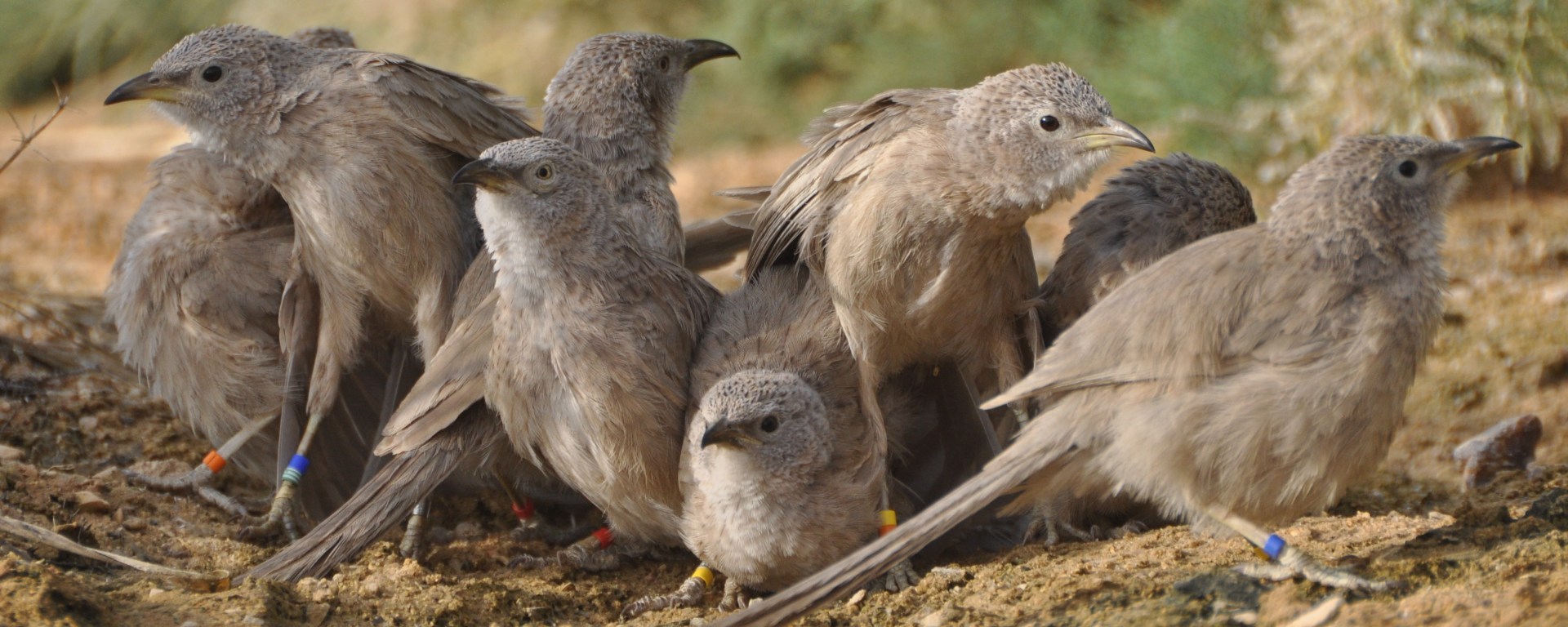
This blog post is provided by Maike Woith and tells the #StoryBehindThePaper for the article “An integrative, peer-reviewed and open-source cooperative-breeding database (Co-BreeD)“, which was recently published in Journal of Animal Ecology. This publication presents the Co-BreeD database, a collaborative tool for studying cooperative breeding across mammals and birds.
From wild dogs to warblers, animals across the globe share the work of raising young. But the patterns are more complex, and more widespread, than we often imagine. Cooperation doesn’t follow a single rulebook: it shifts across species, populations, and environments, revealing a diversity of social strategies.
For over a century, scientists have been intrigued by cooperative breeding – where individuals help care for offspring that aren’t their own. This alloparental care continues to challenge our understanding of how social behaviour evolves. Comparative studies across species have offered valuable insights into the ecological and evolutionary roots of cooperation.
Still, many studies have relied on binary, species-level classifications that label species as either “cooperative breeders” or not. But such broad classifications can obscure key patterns. Take two species: one where nearly every offspring is raised with help from others, and another where helping is seldom. Both are considered “cooperative breeders.” Or consider a species where some populations always have helpers, while other populations show alloparental care only occasionally. These differences, between species and across populations, are important if we want to understand the drivers of cooperation across species.
These issues motivated us to develop Co-BreeD, a population-level database designed to capture the parameters necessary for studying cooperative breeding across birds and mammals. The core idea was simple but powerful: gather population-level data (multiple samples per species), link each sample to location, time, and sampling effort, clearly define “potential alloparents,” and build a resource that is peer-reviewed, updatable, and transparent. After more than two years of reviewing the thousands of papers, standardizing data, and reaching out to hundreds of field researchers around the world, we’re excited to share the first Co-BreeD dataset. It focuses on how prevalent alloparental care is within populations. With this kind of data, cooperative breeding can be treated as a continuous trait, namely the proportion of breeding events that had alloparents in a defined time and space. Having this data, on a population-level, means we can go beyond broad comparisons and ask more detailed questions, like how environmental pressures or evolutionary history influence cooperation within species. Already, Co-BreeD reveals that cooperative breeding is more widespread than previously thought. We point out evidence of alloparental care in several species that hadn’t been classified as cooperative breeders before, suggesting that cooperation, in one form or another, is way more common than previously estimated.
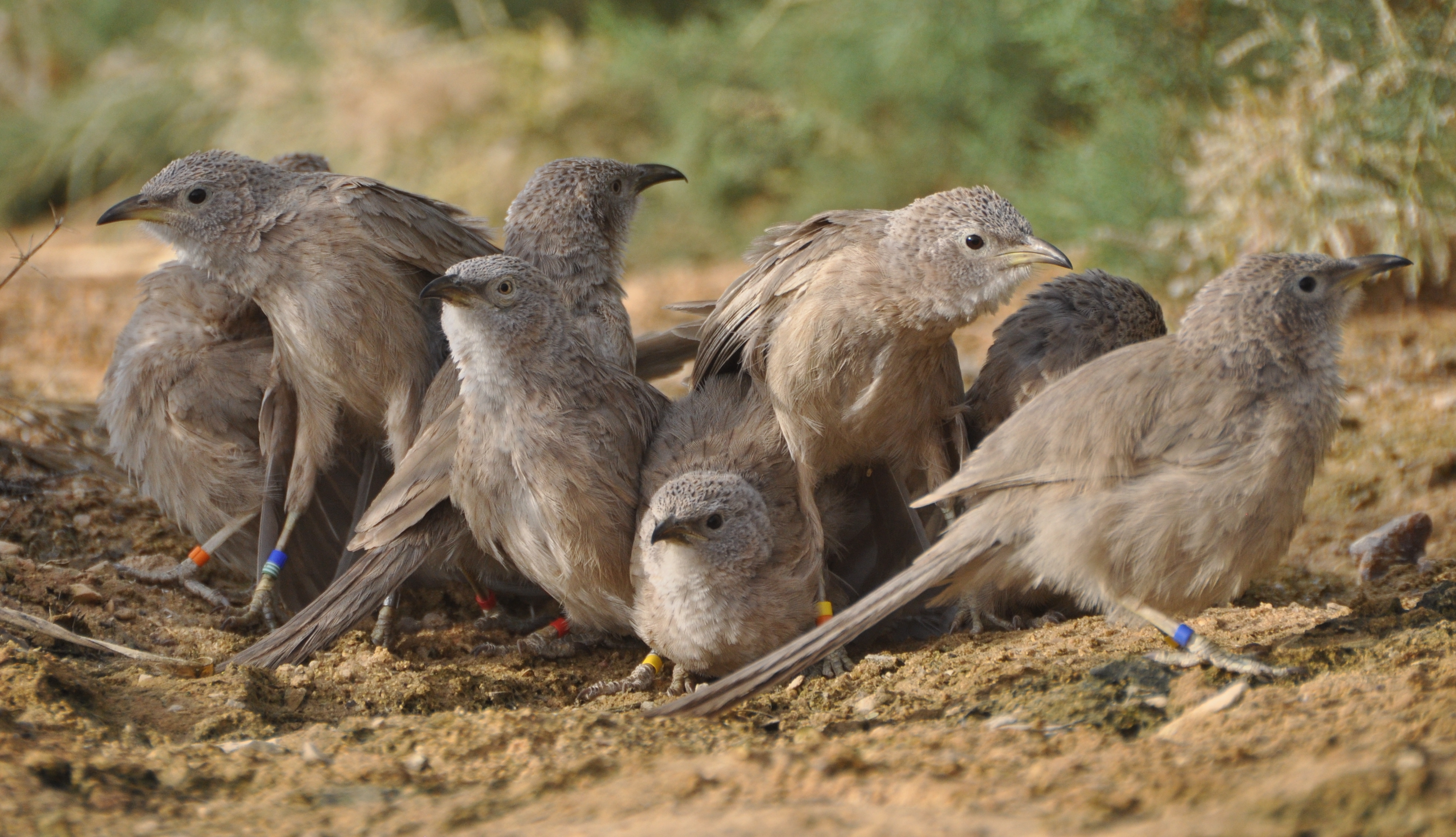
Co-BreeD isn’t a static archive. It is designed to grow as new data come in and to be refined when needed. Future updates will expand beyond new populations and species, and include compatible datasets on related traits, starting with allonursing in mammals. Just as important as the data itself is how the database is built: every release is versioned for transparency, and data contributors are credited through co-authorship. Co-BreeD is not just a scientific tool, it’s a collaborative effort that values open science and recognizes the researchers whose work makes it possible, and their insights strengthen the accuracy of the database.
In the end, Co-BreeD extends the work of many before us, offering a practical tool for exploring cooperation with greater detail and clarity. By enabling comparisons across populations and contexts, we aim to support a more refined understanding of cooperative behaviour – built on transparency, collaboration, and mutual respect.
Read the paper:
https://besjournals.onlinelibrary.wiley.com/doi/full/10.1111/1365-2656.70154
 Animal Ecology in Focus