Effects of a maternal stress hormone across life stages

Anthropogenic disturbance is a growing threat, and the physiological consequences of exposure to such stressors is gaining increasing attention. A recent paper published in the Journal of Animal Ecology explores the consequences of stress-relevant hormones for mothers and their offspring. David Ensminger, lead author of the study, is finishing up his PhD with Dr. Tracy Langkilde, taking an integrative approach to examining the role stress-relevant … Continue reading Effects of a maternal stress hormone across life stages

Biologging around the clock

The understanding of the interplay of movement, behaviour and physiology that biologging offers has applied relevance for a range of fields, including evolutionary ecology, wildlife conservation and behavioural ecology. In recognition of this, the Journal of Animal Ecology has an upcoming Special Feature on Biologging  (submissions due 20th September). A great advantage of biologging is that it allows data collection from some of the toughest environments on Earth. … Continue reading Biologging around the clock

A Collaborative Approach to Mapping Marine Megafauna Movements

The understanding of the interplay of movement, behaviour and physiology that biologging offers has applied relevance for a range of fields, including evolutionary ecology, wildlife conservation and behavioural ecology. In recognition of this, the Journal of Animal Ecology has an upcoming Special Feature on Biologging  (submissions due 20th September). One of the issues when studying the movements of large animals is the fact that they cover large distances. … Continue reading A Collaborative Approach to Mapping Marine Megafauna Movements

Who Cares?

Following our #DiversityInEcology theme, this blog post talks about balancing childcare with a career in academia. Isabel Smallegange is an Associate Professor of population biology at the University of Amsterdam. She regularly blogs about the topics of work-life balance and gender balance from the perspective of an academic, parent and partner over on her personal site. Isabel would be curious to hear how others copes with similar … Continue reading Who Cares?

Biologging in a remote world

The understanding of the interplay of movement, behaviour and physiology that biologging offers has applied relevance for a range of fields, including evolutionary ecology, wildlife conservation and behavioural ecology. In recognition of this, the Journal of Animal Ecology has an upcoming Special Feature on Biologging  (submissions due 20th September). There are many different types of biologging devices. Here, Aimee Hoover from the University of Maryland tells us about … Continue reading Biologging in a remote world

Aging in Eagles

For many species, breeding performance changes as an individual ages. So in order to properly monitor and manage animal populations, it is important to understand how different species age. But this is easier said than done! A recent paper published in the Journal of Animal Ecology used a unique dataset from a reintroduced population of white‐tailed eagles in Scotland to study age‐ and sex‐specific trends. Lead author … Continue reading Aging in Eagles

Using crowd-sourced funding to track snakes

The understanding of the interplay of movement, behaviour and physiology that biologging offers has applied relevance for a range of fields, including evolutionary ecology, wildlife conservation and behavioural ecology. In recognition of this, the Journal of Animal Ecology has an upcoming Special Feature on Biologging  (submissions due 20th September). Unfortunately, animal-borne tags don’t come cheap. This was the problem recently-completed PhD student Ashleigh Wolfe faced … Continue reading Using crowd-sourced funding to track snakes

Implicit Cultural Bias in Ecology

Following our #DiversityInEcology theme, this blog post addresses the issue of implicit cultural bias in ecology and related fields. The author has chosen to remain anonymous, as they have included several personal examples.   I was shocked. I couldn’t form words. The acclaimed professor peered at me waiting for a response. “I said I once had a girl from [insert Asian country] and she couldn’t … Continue reading Implicit Cultural Bias in Ecology

Can traits of individuals inform on how populations respond to change?

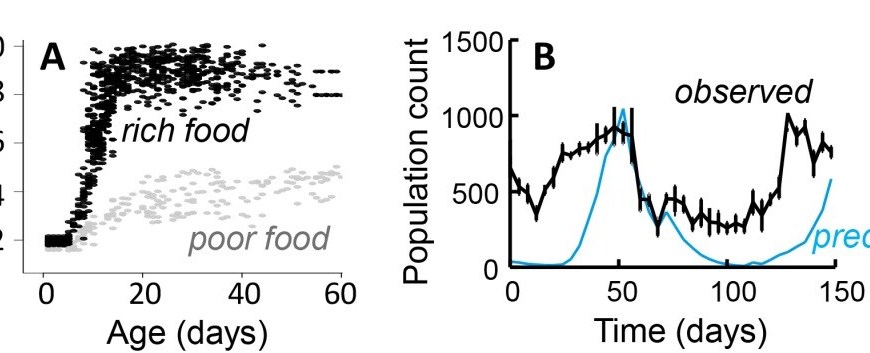
We are in great need of an integrative framework that allows ecologists to predict life history strategies from functional traits that inform on population performance. The aim of a recent British Ecological Society cross-journal Special Feature is to link organismal functions, life history strategies and population performance. Here, Dr Isabel Smallegange discusses a test published within this Special Feature that shows how a recently developed dynamic energy … Continue reading Can traits of individuals inform on how populations respond to change?

Women in Science and Abuse of Power

Following our launch of the #DiversityInEcology blog post series last week, here is our first contributed post! The series allows people to share their personal perspectives on the theme of diversity in ecology, and this particular post was received after putting out a call for submissions on Twitter. There are many articles out there that discuss the problem of power differentials. From a women in … Continue reading Women in Science and Abuse of Power