Welcome to our new Associate Editors

We are pleased to welcome Rachael Antwis, Jon Bielby, Fleur Ponton and Rafael L. G. Raimundo who have all recently joined the Journal of Animal Ecology Associate Editor Board. Rachael Antwis School of environment and life sciences. University of Salford, UK Rachael is a microbial ecologist, broadly interested in genetic and environmental interactions that influence host microbiome composition, and the consequences of these for host … Continue reading Welcome to our new Associate Editors

Open Call for Papers: Joint Special Feature on ecological resilience

Resilience has emerged as a key concept in ecology and conservation biology to understand and predict ecosystem responses to global change. In its broadest and original sense, resilience describes the ability of an ecosystem to resist, and recover from, a disturbance. However, the application of such a concept in different sub-disciplines of ecology and in different study systems has resulted in a wide disparity of … Continue reading Open Call for Papers: Joint Special Feature on ecological resilience

2019 Elton Prize shortlist: Journal of Animal Ecology award for early career researchers

The Elton Prize is awarded by the British Ecological Society each year for the best paper in Journal of Animal Ecology written by an early career author at the start of their research career. Today we are pleased to present the shortlisted papers for this year’s award, based on the previous (88th) volume of the journal. The winner will be selected in the coming weeks … Continue reading 2019 Elton Prize shortlist: Journal of Animal Ecology award for early career researchers

Why archive my data?

Why do the British Ecological Society journals require me to archive my data? At the BES, along with many other ecology journals, we require that all data (and code for theortical papers) associated with published papers are archived in an appropriate public repository. We do this because we believe data are important products of scientific enterprise, and they should be preserved and usable in the … Continue reading Why archive my data?

Showcasing developments in biologging and related methods in applied ecology

Originally posted on The Applied Ecologist:
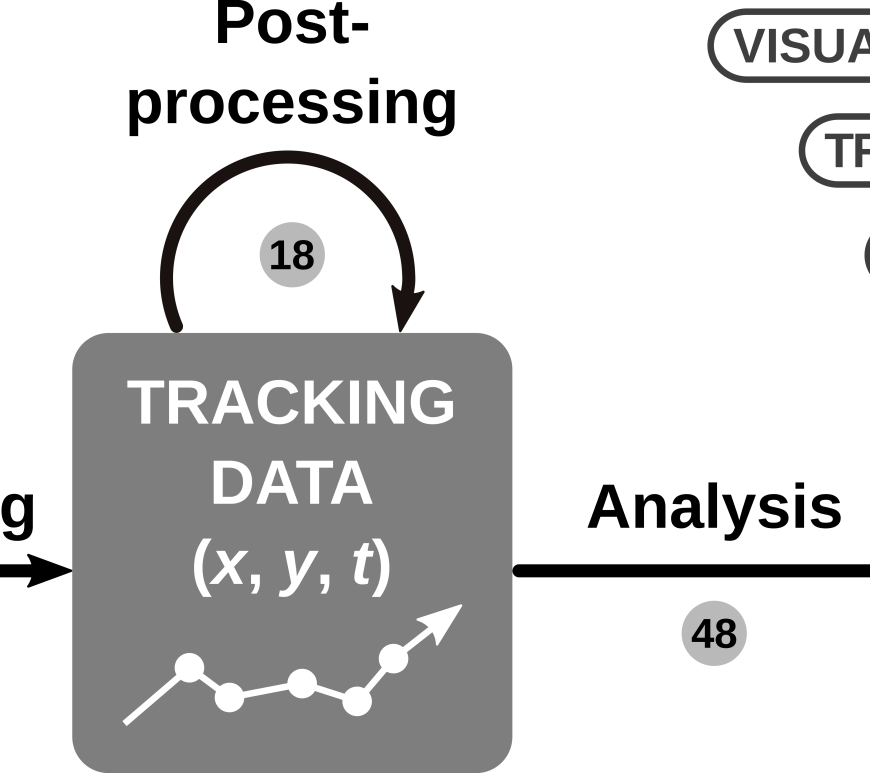
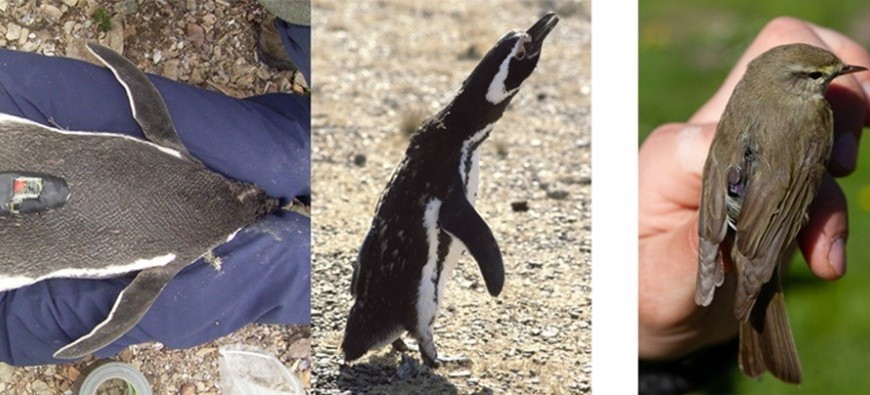
Following the recent Journal of Animal Ecology Special Feature on biologging, Associate Editor, Steph Januchowski-Hartley takes a look at how research in this and similar methods are affecting the field of applied ecology today. Advances in technology have allowed for small electronic loggers and transmitters to be developed not only for biomedical monitoring for humans (think of the tech… Continue reading Showcasing developments in biologging and related methods in applied ecology

Navigating through the R packages for movement

In the biologging Special Issue of the journal, we have new Review paper lead by Rocío Joo on Navigating through the r packages for movement. Rocío is a movement statistician based at the University of Florida and the blog tells the story behind the paper and a brief overview of the paper. Behind the scenes Two years ago, if someone would have asked me about … Continue reading Navigating through the R packages for movement

Light‐Level Geolocator Analyses: A user’s guide

In the biologging Special Issue of the journal, we have new ‘How to…’ paper lead by Simeon Lisovski from the Swiss Ornithological Institute on Light‐Level Geolocator Analyses. In this blog Simeon walks us through the history of the development of the light-level geolocator, discusses how to choose the best tools for analyzing the date and presents future directions of their usage. Simeon is a Geo.X Young … Continue reading Light‐Level Geolocator Analyses: A user’s guide

How to make your ORCID iD work for you

The BES journals require authors to include an ORCID iD when submitting a manuscript. ORCID provides a persistent digital identifier (an ORCID iD) that you own and control, that distinguishes you from every other researcher and provides greater discoverability for your work. In this blog post, I explain how you can enable ORCID to automatically update and collect all your published work and datasets so … Continue reading How to make your ORCID iD work for you

Self-medication: how to use macronutrients to better survive infections

This blog post is provided by Fleur Ponton, Senior Lecturer in Insect Biology at  Macquarie University in Sydney, Australia. Fleur and her team are investigating the relationship between nutrition, immunology and gut microbiota, primarily using flies as model species, this blog discusses her recent paper in the journal. Infection and nutrition are intimately linked. Nutrients in the diet play a fundamental role in sustaining an … Continue reading Self-medication: how to use macronutrients to better survive infections

Speed Review at the BES Annual Meeting: Get a Senior Editor’s Opinion on YOUR Manuscript

Coming to the BES Annual Meeting? Planning to submit a paper to a BES journal? Then you should sign up for the Speed Review Session on Thursday 12 December! (sign-up sheets will be on the BES Stand in the Exhibition Hall.) Find out more about this session below. What is a Speed Review Session? Essentially, Speed Review is a chance for you to get a … Continue reading Speed Review at the BES Annual Meeting: Get a Senior Editor’s Opinion on YOUR Manuscript