The creation of artificial light has dramatically changed the natural environment. Light pollution from buildings, vehicles and streetlights has the potential to alter the behaviour of many animals. Continue reading “Shining a Light on Coastal Light Pollution”
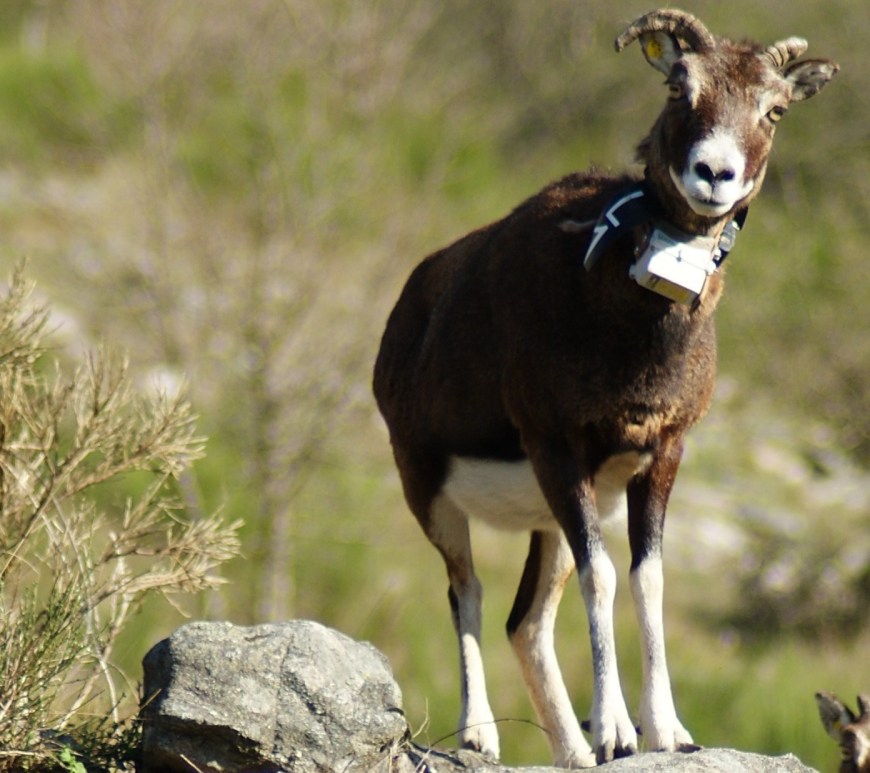
A Mediterranean mouflon female monitored by a GPS collar in southern France (Caroux-Espinouse massif): its movements are largely determined by familiarity and linear features, with consequence on the design of its home range. Photo credit: Pascal Marchand.
The Elton Prize is awarded by the British Ecological Society each year for the best paper in Journal of Animal Ecology written by an early career author at the start of their research career. We are delighted to announce that Rob Salguero-Gómez has won the 2016 Elton Prize for his paper: COMADRE: a global data base of animal demography.
Demographic information is key for answering many of the questions evolutionary ecologists, population biologists, and scientists involved in management and conservation have to tackle. Continue reading “2016 Elton Prize Winner: Rob Salguero-Gómez”
Today is International Women’s day, an annual event celebrating the achievements of women all over the world and helping to drive positive change to achieve gender parity.
The latest Global Gender Gap report by the World Economic Forum reveals that progress towards closing the gender gap over the past year has been ambiguous at best. In the UK, for example, the pace of change has slowed over the past three years.
The World Economic Forum predicts that the gender gap won’t close entirely for another 170 years. In response, the 2017 IWD campaign is asking everyone to #BeBoldForChange to spur faster change.
In this blog post, some of our female Associate Editors offer their perspectives on the recent changes they have observed for women in science, and share the experiences that shaped and inspired their careers. Continue reading “International Women’s day”
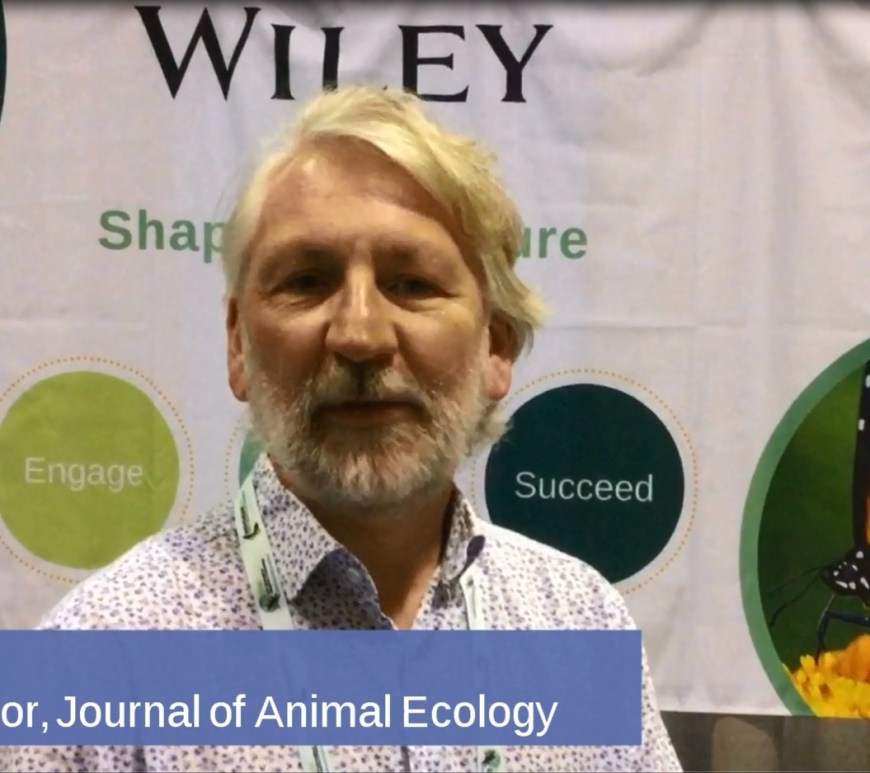
In this video Executive Editor Ken Wilson discusses what he is looking for from a great paper for Journal of Animal Ecology. The message from Ken is that papers must have a clear structure, clear message, clear narrative & be genuinely novel. Ken goes onto discuss our popular feature papers including Synthesis and ‘How to…’ papers. Ken discusses how synthesis papers are reviews focused on … Continue reading What makes a great paper for Journal of Animal Ecology?
In the heart of New Zealand’s Waikato region, rising out of a sea of gently rolling pastoral farmland, is an imposing remnant of ancient forest that draws you in. Maungatautari Mountain. In many ways, this 34 km2 rugged pocket of land reflects the story of New Zealand as a whole: an isolated landmass brimming with uniquely wonderful life, now engaged in a spirited fight back after introduced pests threatened the existence of native flora and fauna. Central to this resurgence is New Zealand’s pioneering use of pest eradication and native species reintroduction.
In this, Maungatautari is leading the way. The world’s longest pest-proof fence stretches for 47 km around the mountain’s perimeter. Completed in 2006, it has ensured the eradication of all mammalian pests, with the exception of mice. The exclusion of the likes of cats, rats, mustelids and possums – to name just a few of the offenders – has paved the way for the reintroduction of a rich variety of native wildlife long missing from Maungatautari’s slopes. Continue reading “Bringing species back, New Zealand style”
Male Teleopsis dalmanni showing his sexually selected eyestalks. Photo by Rob Knell.
Issue 86:1 is now out including an editorial announcing some new journal initiatives a paper on ‘How to…’ include genetic groups in quantitative genetic animal models by Matthew Wolak and Jane Reid and of course a great collection of original research papers.
We are looking for an Associate Editor for this blog. The aim of the blog is to provide the latest journal updates and, in particular, to serve as a forum for informative and stimulating discussion of topics in the field of animal ecology. Posts are variously contributed by the Senior Editors, the Assistant Editor and other members of the Editorial board.
The Blog Editor will be responsible for commissioning content for the blog and will work closely with the rest of the Journal’s editorial board and editorial office to determine regular content. We aim to publish 3–4 posts per month. In the rare cases where there is disagreement regarding content, all final Editorial decisions will rest with the Editorial Office. Continue reading “We are recruiting for a blog editor”
New research from Victoria University of Wellington has revealed the population of the common wasp is amplified by spring weather, with warmer and drier springs often meaning more wasps and wasp stings in summer. Continue reading “What will the wasp plague be like this year?”


 The
The 


 We are looking for an Associate Editor for this blog. The aim of the blog is to provide the latest journal updates and, in particular, to serve as a forum for informative and stimulating discussion of topics in the field of animal ecology. Posts are variously contributed by the
  Animal Ecology in Focus