Sarah Hoy wins Watson Raptor Science Prize for paper on impact of selective predation

We are delighted to learn that Sarah Hoy has won 2016 Watson Raptor Science Prize for her paper ‘Age and sex-selective predation moderate the overall impact of predators’ published in Journal of Animal Ecology. In the paper Sarah Hoy and colleagues examined selective predation by goshawks on juvenile and female tawny owls, drawing on long-term data to exploit a unique situation where data from a prey species were obtained over a period of Goshawk increase.
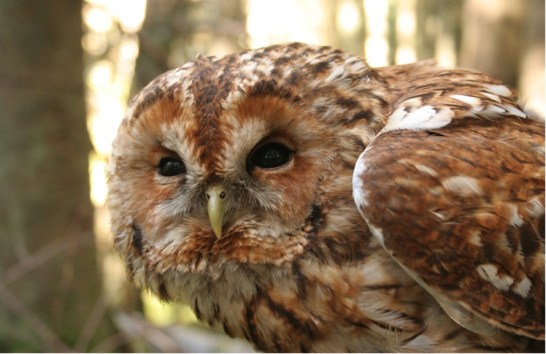
jae-2014-00285-r1_jpg
Tawny owl Strix aluco

On the paper Senior Editor Jean-Michel Gaillard said: Continue reading “Sarah Hoy wins Watson Raptor Science Prize for paper on impact of selective predation”

Grizzly Bears Face Ecological Trap

In a recent paper published in the journal Clayton Lamb and colleagues tested for an ecological trap in Southeastern British Columbia where human settlement and grizzly bear habitat overlap. For this paper Clayton has produced an infograhic and slideshow to bring the article to life.

Infographic

clayton-lamb-infographic

Slideshow Continue reading “Grizzly Bears Face Ecological Trap”

What do reviewers want?

Last year’s Peer Review Week proved to be a great success in raising awareness and starting discussions about peer review. This year, it’s back and the focus is on recognition for review.

There have been lots of surveys looking at perceptions of peer review. These surveys agree that peer review is valued and authors feel that the quality of their paper improves as a result. Nature’s annual author survey shows that after the reputation of the journal and relevance to the discipline, the quality of peer review was the third most important factor driving author’s choice of where to submit their article.

For Peer Review Week 2016, I thought I’d take another look at these surveys to see what they tell us about recognition for reviewing activity. I’m concentrating on three big surveys that were carried out in 2015 by Wiley, Taylor and Francis (T&F), and the Publishing Research Consortium (PRC). Sense about Science also conducted a survey in 2009.

243202_final-artwork-700x300-2 Continue reading “What do reviewers want?”

What is the future of peer review in ecology?

Originally posted on The Applied Ecologist:
Peer review is critical to the research process, but is also the subject of much criticism and debate. Review bias, reviewer recognition and the discovery of peer review rings are recent examples of topics widely discussed by the scientific community. Many peer review models and experiments have emerged across scientific disciplines with the aim of improving the review process,… Continue reading What is the future of peer review in ecology?

What Makes a Good Peer Review: Peer Review Week 2016 — methods.blog

For many academics, especially Early Career Researchers, writing a review can seem like quite a daunting task. Direct training is often hard to come by and not all senior academics have the time to act as mentors. As this week is Peer Review Week, we wanted to provide some advice on what makes a good […] via What Makes a Good Peer Review: Peer Review Week … Continue reading What Makes a Good Peer Review: Peer Review Week 2016 — methods.blog

Peer review week: Encouraging collaborative peer review

Post from Managing Editor Emilie Aimé. Check out the methods.blog later in the week for some of the Methods in Ecology and Evolution Associate Editors’ perspective on collaborative peer review. It’s Peer Review Week 2016 and the BES journals are celebrating with a series of blog posts on how much we value our reviewers. Here at the BES we love Early Career Researchers. We give out grants… Continue reading Peer review week: Encouraging collaborative peer review

Thank you to our reviewers

243202_final-artwork-700x300-2Today marks the start of the Peer Review Week 2016, the theme this year is recognition for review. In 2015 675 individuals from 38 different countries reviewed for the journal, without the time commitment and expertise off all of these people the journal would not be a success. To thank and recognise everybody that has reviewed for us we publish a list of all that have reviewed for us, for peer review week we have republished this list below to thank again everybody that reviewed for us in 2015.

Keep an eye on the blog for more posts for Peer Review Week 2016. Continue reading “Thank you to our reviewers”

The role of ecology in managing vector-borne diseases: Zika and beyond

fenton-aThe recent re-emergence and spread of the Zika virus, coupled with the link to a surge in microcephaly cases, has gripped the attention of the global health community, the general public, and professional golfers alike.  Of course Zika isn’t new – it was first discovered in 1947 – however the scale of the outbreak in 2015 was unprecedented.  Given that there are currently no effective vaccines or medicines against Zika, suggested management efforts have mainly focussed on vector control (e.g. through traditional insecticides, the use of microbes to control pathogens, or genetic manipulation or selective breeding of mosquitoes to reduce vector population sizes or otherwise prevent them from transmitting the virus).  To deploy these vector-targeted methods effectively it is clearly essential to understand vector ecology.  Indeed, recent attempts to explain the patterns of infection and predict the likely number of cases in the future highlight the importance of ecological processes such as: heterogeneities in transmission, the magnitude of herd immunity, seasonality in dynamics, seasonal forcing or other environmental drivers, and the potential for the virus to circulate within reservoir populations etc (see here and here).  Of course, these processes aren’t unique to Zika – they are fundamental aspects of the ecology of any vector-borne infection.  As such these ecological processes have been well studied in many vector-borne disease systems, whether they relate to human diseases or not.This breadth of ecological research across vector disease systems is reflected in a recent Virtual Issue compiled by Wiley including papers from Journal of Animal Ecology and other BES journals. Continue reading “The role of ecology in managing vector-borne diseases: Zika and beyond”
New Associate Editors

Journal of Animal Ecology is pleased to welcome Niels Dingemanse (Ludwig Maximilians University of Munich), Jenny Dunn (RSPB), Andrew Jackson (University of Dublin), Lesley Lancaster (University of Aberdeen), Katie Marske (University of Michigan) and Mariano Rodriguez-Cabal (Universidad del Comahue) to the board of Associate Editors. They have all joined on a three-year term and you can find out more about them below. Niels Dingemanse Niels … Continue reading New Associate Editors

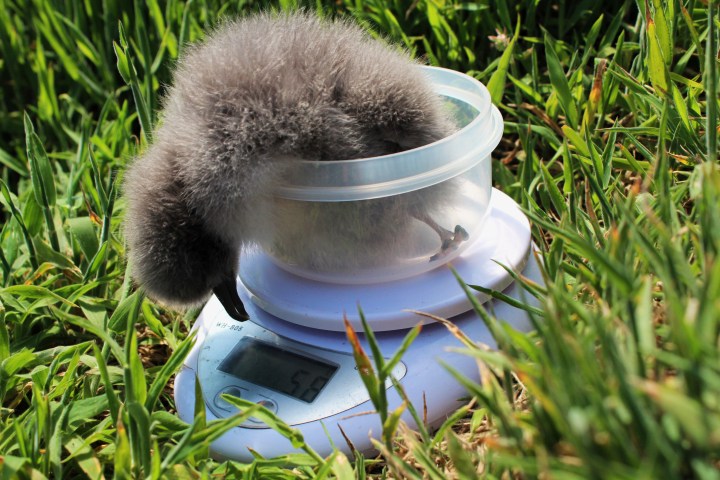
Devotion to rearing chicks can come at a cost for migratory birds

This post is a press release from the authors of Journal of Animal Ecology paper “Carry-Over Effects on the Annual Cycle of a Migratory Seabird: an Experimental Study” by Annette Fayet et al. Issued by University of Oxford press office.

Birds that have to work harder during breeding season will feel the effects of their exertions the following year, according to research by Oxford University scientists.

A new study published in the Journal  found that migratory seabirds suffered negative repercussions when they had to spend more time rearing chicks, including decreased breeding success when they returned to the colony the following spring.JAE-2015-00801.R2

Continue reading “Devotion to rearing chicks can come at a cost for migratory birds”