Lethal genetic blindness found in a rare Scottish bird

JAE-2015-00734.R1This blog post is a press release from the authors of Journal of Animal Ecology paper “Evidence of the phenotypic expression of a lethal recessive allele under inbreeding in a wild population of conservation concern” by Amanda E. Trask et al. Press release issued by University of Aberdeen

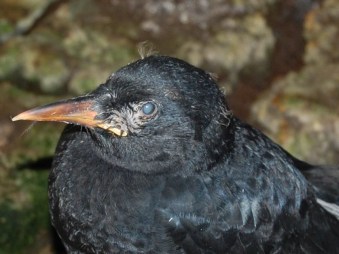
The last remaining Scottish populations of the rare red-billed chough are being affected by a genetic mutation causing lethal blindness, a new study from the University of Aberdeen and the Scottish Chough Study Group and funded by NERC and Scottish Natural Heritage has shown.

Blindness was first observed in a chough chick in 1998 and small numbers of blind chicks have occurred in most years subsequently. Continue reading “Lethal genetic blindness found in a rare Scottish bird”

Solving the skewed sex ratio on science journal editorial boards

On this blog in October 2014, Senior Editor, Tim Coulson presented an argument for solving the sex ratio problem in scientific academia. He proposed that we should mandate that universities and institutes appoint equal numbers of men and women at each professional level from faculty positions though to full professors. Whilst the skewed sex ratio in academia has been long recognised and discussed, there is … Continue reading Solving the skewed sex ratio on science journal editorial boards

Demography beyond the population: Integrated demography comes of age

Assessing variation in population abundance over time and across space is a long-standing goal of population ecologists. Up to now, two main approaches have been mostly used to identify the factors driving observed fluctuations in population abundance. First, a pattern-oriented approach, based on the monitoring of population size, involves the analysis of time series of counts. In the most recent applications, these analyses lead to partitioning observed changes in population growth into different contributing factors, like current or past population density, environmental conditions, or demographic stochasticity. Second, a process-oriented approach, based on the monitoring of demographic parameters, involves the construction of age- or stage-structured demographic models. The steady increase of case studies aiming to monitor known-aged recognizable animals over most of their lifespan, the availability of statistical methods allowing reliable estimates of demographic parameters to be obtained from field data, and the development of a powerful framework to build a large range of matrix population models have all led to this process-oriented approach becoming a standard tool of population ecologists. It has become the gold standard in the context of both the management of exploited populations and the conservation of endangered populations. However, analyses of detailed monitoring of individuals have also revealed the existence of marked individual differences in most life history traits studied so far, which have been mostly ignored until now when using population-scale demographic modelling. To account for such sources of within-population variation, a trait-based demographic approach is required. Nowadays, Integral Projection Models (IPMs) provide a way to obtain more realistic demographic models that encompass the association between demographic parameters and, for instance, phenotypic traits. In their most extended version, IPMs include the four biological functions that are necessary and sufficient to obtain the distribution of a given continuous trait in a population at a given time from the distribution of the same trait in the same population one time-step before. These functions are the survival function linking survival probability to the trait value, the recruitment function linking the number of recruits to the trait value, the growth function linking the trait value at time t+1 to the trait value at time t, and the inheritance function linking the trait value of the offspring to the trait value of the parents.

Following the British Ecological Society Symposium “Demography Beyond the Population” that was held in Sheffield about one year ago, four papers derived from this symposium have just been published in Journal of Animal Ecology as part of the British Ecological Society Cross Journal Special Feature: Demography Beyond the Population. From the analysis of the contents of these four papers it appears that a new, integrated demography, comes of age. Continue reading “Demography beyond the population: Integrated demography comes of age”
Demography Beyond the Population

This exciting collaborative and interdisciplinary special feature integrates novel lines of research in the vast field of demography that directly interact with other ecological and evolutionary disciplines. The goal of the special feature is to highlight the interdisciplinary potential of demography and is further emphasised by the fact that the 21 articles are spread across all six journals of the British Ecological Society. The goal … Continue reading Demography Beyond the Population

Global demography in the animal kingdom

Today the paper that introduces the COMADRE Animal Matrix Database was published in Journal of Animal Ecology (Salguero-Gómez et al. 2016). This is an international effort in collaboration with ca. 10 other institutions. Our main goal was to replicate the impact that its sister database, the COMPADRE Plant Matrix Database (Salguero-Gómez et al. 2015) has had for plant ecology and evolution, but in the rich animal kingdom. Open access to the database itself can be gained from the COMADRE website.

comadre logo Continue reading “Global demography in the animal kingdom”

A Look Back At 2015 … And A Little Peek Forward

It’s been another busy year at Journal of Animal Ecology, with more personnel changes and a few new initiatives. Here, we review some of these developments.

Papers and other media

Last year was another good year for the journal, with our Impact Factor remaining strong (4.504), ranking us 2nd out of 149 Zoology journals and 24th out of 143 Ecology journals. We continued to publish a number of successful Feature papers, including two How to.. papers, which continue to be extremely popular with our readers. The first, by Marie-Therese Puth, Markus Neuhäuser and Graeme D. Ruxton ‘On the variety of methods for calculating confidence intervals by bootstrapping’ and the second, by Damien Farine and Hal Whitehead, on ‘Constructing, conducting and interpreting animal social network analysis’. The latter was accompanied by a Virtual Issue on social network analysis, edited by Senior Editor Ben Sheldon. We also published a joint Virtual Issue with Journal of Applied Ecology and Methods in Ecology and Evolution on ‘Monitoring Wildlife’, featuring a selection of papers focusing on new methods and technologies for monitoring animals in their natural environments. To coincide with Open Access Week in October 2015, the five BES journals published a Virtual Issue of a selection of our OA papers. We also welcome unsolicited inquiries about potential Virtual Issues, whether you would like to see a particular topic covered, or whether you would like to edit one yourself. Similarly, we continue to welcome other special features including Synthesis, Review and How to.. papers, as well as topical Forum articles, so if you have any ideas, please let us know. Continue reading “A Look Back At 2015 … And A Little Peek Forward”

Do animals exercise to keep fit?

This blog post is a press release of the Journal of Animal Ecology paper “Do animals exercise to keep fit?” by Lewis Halsey. Press release issued by The British Ecological Society From joining a gym to taking up running, getting fit is a perennially popular new year’s resolution. We lead sedentary lifestyles and have easy access to energy-rich food, so we need to do voluntary exercise … Continue reading Do animals exercise to keep fit?

How a Special Feature can help wildlife “Stuck in Motion” – Video post

In an epoch that will likely be remembered as “The Anthropocene”, wildlife is struggling to cope with anthropogenic habitat loss, fragmentation and disturbance. Ancient migration routes are being lost as we speak, and animal space use, behaviour and life history are undergoing rapid changes. “Villy” and his Norwegian wild reindeer pals are extremely wary of human activities, and may be considered emblematic of the challenge of human-wildlife coexistence.

We believe that science can help. The first step is to single out key ecological questions, and to identify the most appropriate technologies and methodologies to answer them. Proper analyses of GPS-tracking data have recently provided scientists with unprecedented opportunities to understand mechanisms underlying the observed patterns and processes of animal space use, and to make inferences and predictions needed to guide sustainable development and support human-wildlife coexistence. Continue reading “How a Special Feature can help wildlife “Stuck in Motion” – Video post”

The secret life of wild reindeer

This post presents photos from the Special Feature” Stuck in motion? Reconnecting questions and tools in movement ecology ” from the current issue (85:1) of Journal of Animal Ecology

DCIM101MEDIA
Wild mountain reindeer. Photo: wild reindeer.

Taken from GPS collars equipped with wide-angle cameras, these amazing shots represent an unprecedented window into the lives of reindeer, one of the most ancient deer species in the world. Few people are aware that within the heart of Europe there still exist mass migrations as spectacular but more secretive than those in the Serengeti. Yet, reindeer migrations represent one of the most endangered phenomena in the Northern hemisphere. Wild reindeer are extremely wary of humans, who have been harvesting them since pre-historic times using large-scale pitfall systems. Their anti-predator strategy consists of aggregating in large herds roaming across vast mountain plateau in southern Norway, and avoiding human activities. Following the industrial revolution, the development of anthropogenic infrastructures has therefore led to the fragmentation of the last remaining wild mountain reindeer population into 23 virtually isolated sub-populations, and has hampered/blocked migration routes used since pre-historic times. Due to the increase in tourism, hydropower and other human activities in mountain areas, fragmentation is rapidly ongoing. Continue reading “The secret life of wild reindeer”

When does ecology of fishes became fisheries research?

Photo11_11_crop

World fisheries day, celebrated today aims to draw attention to the poor status of many fished species as a consequence of overfishing, habitat degradation, global warming, and pollution. Clearly, we stand far from the key objective of fisheries management, that is, to regulate fishing such that in the long term harvesting is sustainable. Less political and more science-based management has frequently been called upon as a solution and ‘ecosystem-based fisheries management’ is a term often repeated, but rarely implemented. In fact, a recent study by Skern-Mauritzen et al. (2015) showed that out of 1200 reviewed fisheries, ecosystem-based drivers were only accounted for in 24 cases. Continue reading “When does ecology of fishes became fisheries research?”