To Breed or Not to Breed: Skipped Breeding Can Obscure True Population Dynamics in Colonially Breeding Seabirds

This blog post is provided by Emma J. Talis and tells the #StoryBehindthePaper for the paper ‘Variability, Skipped Breeding, and Heavy-tailed Dynamics in an Antarctic Seabird‘, which was recently published in Journal of Animal Ecology. The authors show that the presence of variable rates of skipped breeding in Adélie penguins can challenge our interpretation of abundance fluctuations and obscure relationships with key environmental drivers. Considered … Continue reading To Breed or Not to Breed: Skipped Breeding Can Obscure True Population Dynamics in Colonially Breeding Seabirds

Field experiments, ecology and physiology: studying cultural propensities in wild species

This blog post is provided by Kelly Ray Mannion and tells the #StoryBehindthePaper for the paper ‘A multicomponent approach to study cultural propensities during foraging in the wild‘, which was recently published in Journal of Animal Ecology. In their paper, they review previous work done with field experiments, how to assess diet and ecology, as well as physiology to offer a framework to study cultural … Continue reading Field experiments, ecology and physiology: studying cultural propensities in wild species

Climate Change Genomics workshop: Vulnerability, adaptations & applications

How can genetic and genomic tools improve our capacity to assess species vulnerability and study adaptations to climate change? Orly Razgour, Tin Hang (Henry) Hung, Regina Kolzenburg, and Brenna Forester report on their international online 3-day workshop held in September 2022. Climate change is producing a range of new selection pressures, forcing species to shift their ranges to track suitable climates or adapt to changing … Continue reading Climate Change Genomics workshop: Vulnerability, adaptations & applications

Functional Traits Predict Sensitivity of Forest Birds to Habitat Disturbance in Tropical Countryside

This blog post is provided by Ian Ausprey and tells the #StoryBehindthePaper for the paper ‘Functional response traits and altered ecological niches drive the disassembly of cloud forest bird communities in tropical montane countrysides‘, which was recently published in Journal of Animal Ecology. In their study they examine how functional response traits related to morphology, diet, foraging behaviour and environmental niche breadth of birds predict … Continue reading Functional Traits Predict Sensitivity of Forest Birds to Habitat Disturbance in Tropical Countryside

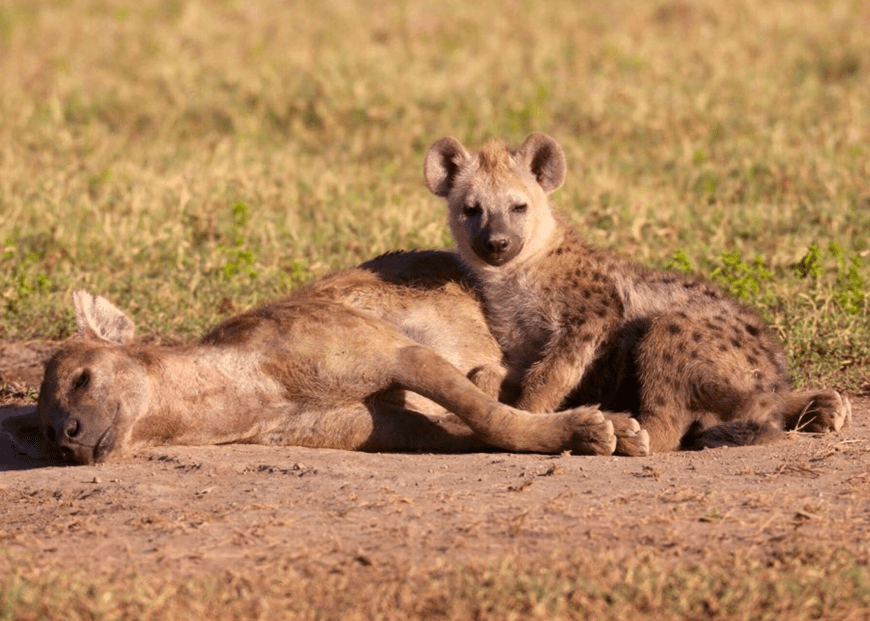
Coexistence is possible: spotted hyenas exposed to daytime pastoralism do just fine

This blog post is provided by Arjun Dheer and tells the #StoryBehindthePaper for the paper ‘Diurnal pastoralism does not reduce juvenile recruitment nor elevate allostatic load in spotted hyenas‘, which was recently published in Journal of Animal Ecology. In his study, he explores the impact of pastoralism on spotted hyena populations in Ngorongoro, discovering that they don’t seem stressed and numbers of recruited cubs didn’t differ between areas … Continue reading Coexistence is possible: spotted hyenas exposed to daytime pastoralism do just fine

To understand how mule deer use fire-impacted areas, consider the season and account for their predators

This blog post is provided by Taylor Ganz and tells the #StoryBehindthePaper for the paper ‘Interactive effects of wildfires, season, and predator activity shape mule deer movements‘, which was recently published in Journal of Animal Ecology. In their study, they investigate how changes in food availability and predator vulnerability, due to wildfires, impact mule deer. Across the American West, wildfires are becoming more frequent, larger, … Continue reading To understand how mule deer use fire-impacted areas, consider the season and account for their predators

Kuishi pamoja kunawezekana: fisi madoa wanaongiliana na mifugo nyakati za mchana hufanya vizuri

Chapisho hili la blogu limetolewa na Arjun Dheer na Philemon Naman na linaambia #StoryBehindthePaper kwa jarida la ‘Ufugaji wa kila siku haupunguzi uajiri wa vijana wala kuinua mzigo wa fisi wenye madoadoa’, ambayo ilichapishwa hivi majuzi katika Journal of Animal Ecology. Katika utafiti wake, anachunguza athari za ufugaji kwa idadi ya fisi walio na madoadoa katika Ngorongoro, na kugundua kuwa hawaonekani kuwa na mkazo na … Continue reading Kuishi pamoja kunawezekana: fisi madoa wanaongiliana na mifugo nyakati za mchana hufanya vizuri

Predicting What Extinctions Could Mean for Lemurs and the Forests They Call Home

This blog post is provided by James Herrera and tells the #StoryBehindthePaper for the paper “Drivers and Consequences of Structure in Plant–Lemur Ecological Networks“, which was recently published in Journal of Animal Ecology. In their study the authors explore how lemurs and plants are interconnected in ecological networks, and the impacts of plant or lemur extinctions on these networks. This post was originally posted on … Continue reading Predicting What Extinctions Could Mean for Lemurs and the Forests They Call Home

Male rock hyraxes that maintain an isochronous song rhythm achieve higher reproductive success

This blog post is provided by Vlad Demartsev, Michal Haddas-Sasson, Amiyaal Ilany, Lee Koren and Eli Geffen and tells the #StoryBehindthePaper for the paper ‘Male rock hyraxes that maintain an isochronous song rhythm achieve higher reproductive success‘, which was recently published in Journal of Animal Ecology. In their study, they explore whether singing ability in male hyraxes is linked to the number of offspring that … Continue reading Male rock hyraxes that maintain an isochronous song rhythm achieve higher reproductive success

Black History Month 2022: Contribute to our BHM Blog Series!

Originally posted on Functional Ecologists:
“Black History Month is a time to celebrate black history, heritage and culture, and the iconic figures that have contributed so much, but this year, let’s make it about so much more. If you’re serious about allyship, it’s Time for Change: Action Not Words.” – Catherine Ross, Black History Month Editor. https://www.blackhistorymonth.org.uk/article/section/bhm-intros/our-theme-for-black-history-month-2022-is-time-for-change-action-not-words/ This year, the autumn issue of our membership… Continue reading Black History Month 2022: Contribute to our BHM Blog Series!