Dung beetle-mammal dung interaction networks are resilient across a gradient of forest disturbance

This blog post is provided by Li Yuen Chiew and Eleanor M. Slade and tells the #StoryBehindThePaper for the paper “Tropical forest dung beetle-mammal dung interaction networks remain similar across an environmental disturbance gradient”, which was recently published in the Journal of Animal Ecology. Li Yuen Chiew: I am a conservation ecologist, whose research focuses on biodiversity conservation and ecosystem ecology, with a particular interest … Continue reading Dung beetle-mammal dung interaction networks are resilient across a gradient of forest disturbance

Finding out when rare and common species change their interactions using multi-site interaction turnover

This blog post is provided by Marie V. Henriksen and tells the #StoryBehindThePaper for the paper “A multi-site method to capture turnover in rare to common interactions in bipartite species networks”, which was recently published in the Journal of Animal Ecology. In ecological networks, species are linked by their interactions to form complex interaction networks. How species interact in these networks reveals what role they … Continue reading Finding out when rare and common species change their interactions using multi-site interaction turnover

Connections Matter: How Patterns of Habitat Connectivity Affect Population Dynamics

This blog post is provided by Paulina A. Arancibia and Peter J. Morin and tells the #StoryBehindThePaper for the paper “Network topology and patch connectivity affect dynamics in experimental and model metapopulations”, which was recently published in the Journal of Animal Ecology. Global change has increased the rate at which habitats are fragmented, increasing the creation of spatially discontinuous populations linked by migration (metapopulations). The … Continue reading Connections Matter: How Patterns of Habitat Connectivity Affect Population Dynamics

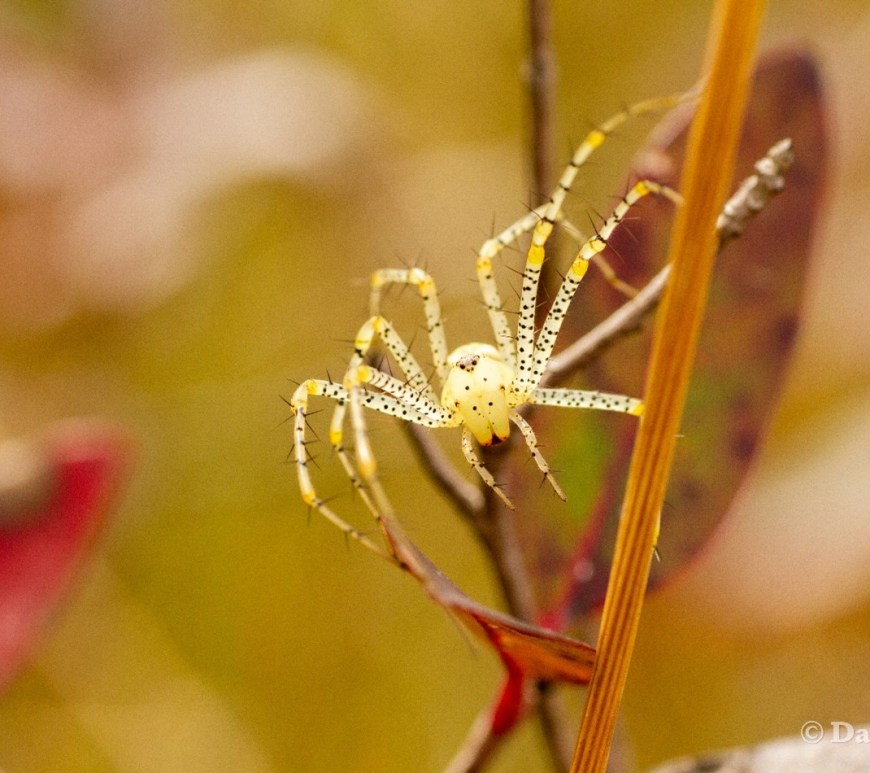
Hiding in plain sight: a mystery of colour-changing ability in the green lynx spider

This blog is part of our colourful countdown to the holiday season where we’re celebrating the diversity and beauty of the natural world. Click here to read the rest of the colour countdown series. Dani Davis of Florida State University sheds light on the story behind her winning Capturing Ecology award photograph, and the complex and mysterious abilities of spider that acts like a cat. Animals that can change … Continue reading Hiding in plain sight: a mystery of colour-changing ability in the green lynx spider

The colours out of (nano)space

This blog is part of our colourful countdown to the holiday season where we’re celebrating the diversity and beauty of the natural world. Click here to read the rest of the colour countdown series. Natalia Cristina García from the Museo Argentino de Ciencias Naturales takes us on a journey into space and into the centre of a feather to explain how ultra-reflective colours are created by nature. The … Continue reading The colours out of (nano)space

Los colores del (nano) espacio

This blog is part of our colourful countdown to the holiday season where we’re celebrating the diversity and beauty of the natural world. Click here to read the rest of the colour countdown series. Natalia Cristina García del Museo Argentino de Ciencias Naturales nos lleva en un viaje al espacio y al centro de una pluma para explicar cómo la naturaleza crea colores ultra-reflectivos. El título que elegí para este … Continue reading Los colores del (nano) espacio

Promoting your research

Originally posted on Functional Ecologists:
This is the blog post to accompany the ‘Promoting your research workshop’ at 2021 Ecology Across Borders in Liverpool. Whether you made it to the conference or not, you can find some useful tips here on how to communicate your research to a wide audience. Davy Falkner – Media Relations Officer Our BES Media Relations Officer gives a run down… Continue reading Promoting your research

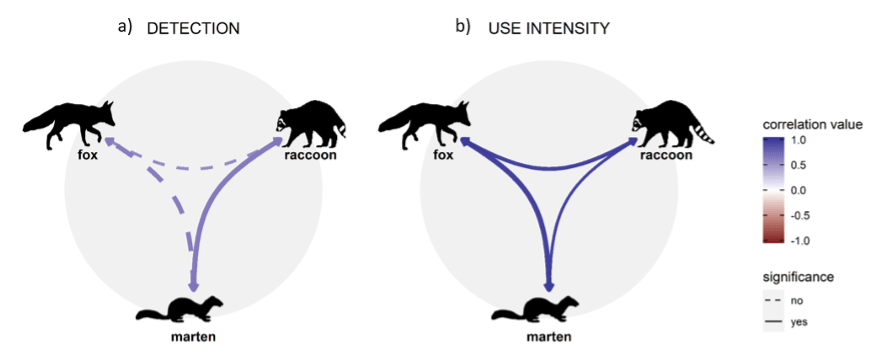
How do mesocarnivores interact in an urban environment? And how did the SARS-CoV-2 lockdown affect it?

This blog post is provided by Julie Louvrier (Twitter: @LouvrierJulie) and tells the #StoryBehindThePaper for the paper “Spatiotemporal interactions of a novel mesocarnivore community in an urban environment before and during SARS-CoV-2 lockdown”, which was recently published in the Journal of Animal Ecology. Cities represent a novel environment for wildlife species: human activities and disturbance happen during the day; a high density of buildings and … Continue reading How do mesocarnivores interact in an urban environment? And how did the SARS-CoV-2 lockdown affect it?

Climate and genomic patterns in marine fish

This blog post is provided by Alicia Dalongeville, Emilie Boulanger and Stéphanie Manel and tells the #StoryBehindThePaper for the paper “Climate differently influences the genomic patterns of two sympatric marine fish species”, which was recently published in the Journal of Animal Ecology. Boulanger and colleagues show how the genetic variation of two marine fish species is linked to climatic conditions across the Mediterranean Sea, suggesting … Continue reading Climate and genomic patterns in marine fish

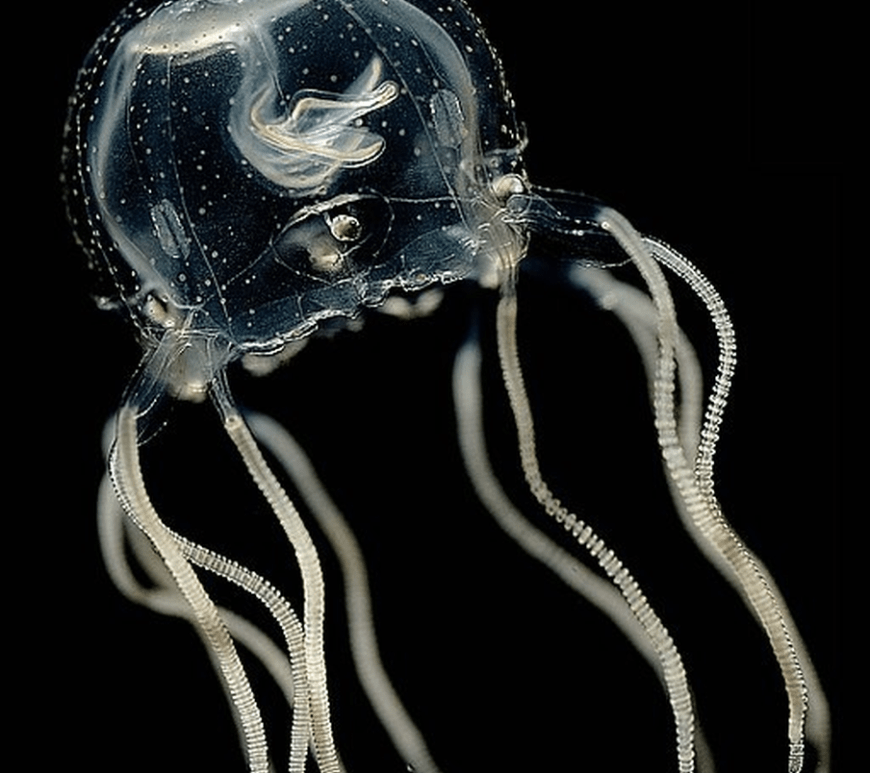
How and what do jellyfish see?

This blog is part of our colourful countdown to the holiday season where we’re celebrating the diversity and beauty of the natural world. Click here to read the rest of the colour countdown series. Aide Macias-Muñoz and Marina Stoilova of University of California Irvine take us on a journey to the depths of the jellyfish cells to help us understand what they are able to see and how … Continue reading How and what do jellyfish see?