Hidden, but not insignificant – appreciating parasites in stream ecology

This blog post is provided Tamara Layden with edits by Dan Preston and tells the #StoryBehindThePaper for the article “Trematode parasites exceed aquatic insect biomass in Oregon stream food webs”, which was recently published in Journal of Animal Ecology. As far as animals go, it is probably safe to say that parasites, such as trematodes, fall into the “lesser loved” category. Why? First, they are … Continue reading Hidden, but not insignificant – appreciating parasites in stream ecology

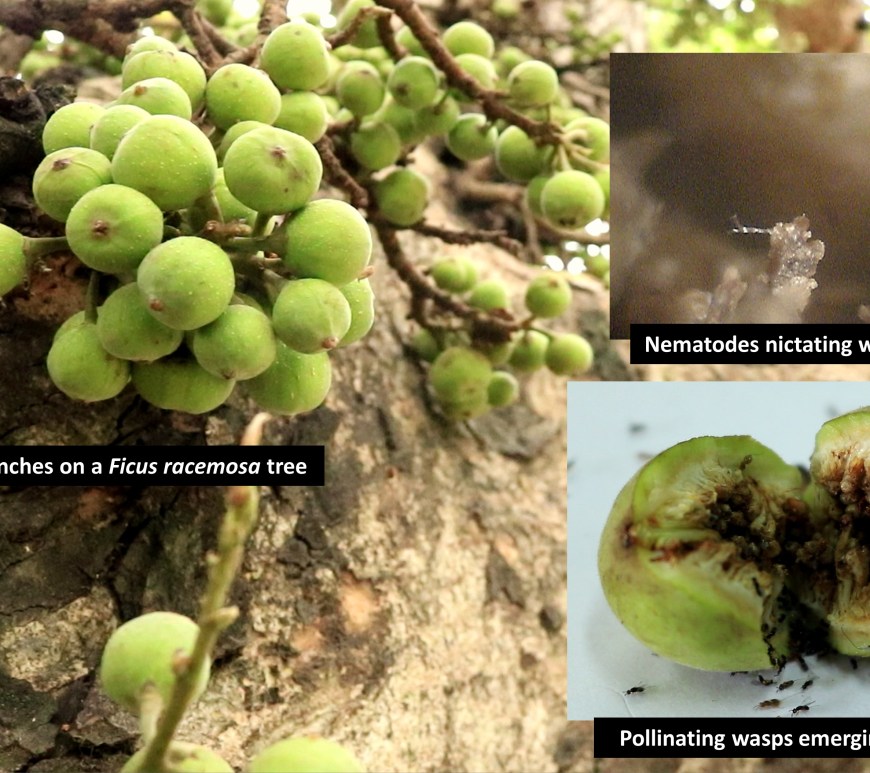
Too many, too few, or empty: The number of passengers determines whether nematodes will hitchhike on a vehicle

This blog post is provided by Satyajeet Gupta and Renee M Borges from the Centre for Ecological Sciences, Indian Institute of Science, Bangalore and tells the #StoryBehindThePaper for the article “Hopping on: Conspecific traveller density within a vehicle regulates parasitic hitchhiking between ephemeral microcosms“, which was recently published in the Journal of Animal Ecology. Tiny organisms that are unable to move far by themselves or assisted by water … Continue reading Too many, too few, or empty: The number of passengers determines whether nematodes will hitchhike on a vehicle

Big brains, low densities

This blog post is provided by Manuela González-Suárez and tells the #StoryBehindThePaper for the article “The role of brain size on mammalian population densities”, which was recently published in Journal of Animal Ecology. An area near my home has an active sett occupied by a badger family. I have also seen a handful of deer, and dozens and dozens of squirrels. This difference in the … Continue reading Big brains, low densities

How animals fuel their reproduction: a new approach

This blog post is provided by John Whiteman and tells the #StoryBehindThePaper for the article “Quantifying capital vs. income breeding: new promise with stable isotope measurements of individual amino acids“, which was recently published in the Journal of Animal Ecology. It is an intensive process to grow and support offspring – just ask anyone who has raised children. For wild animals, supporting rapidly-developing, new organisms creates many challenges, whether … Continue reading How animals fuel their reproduction: a new approach

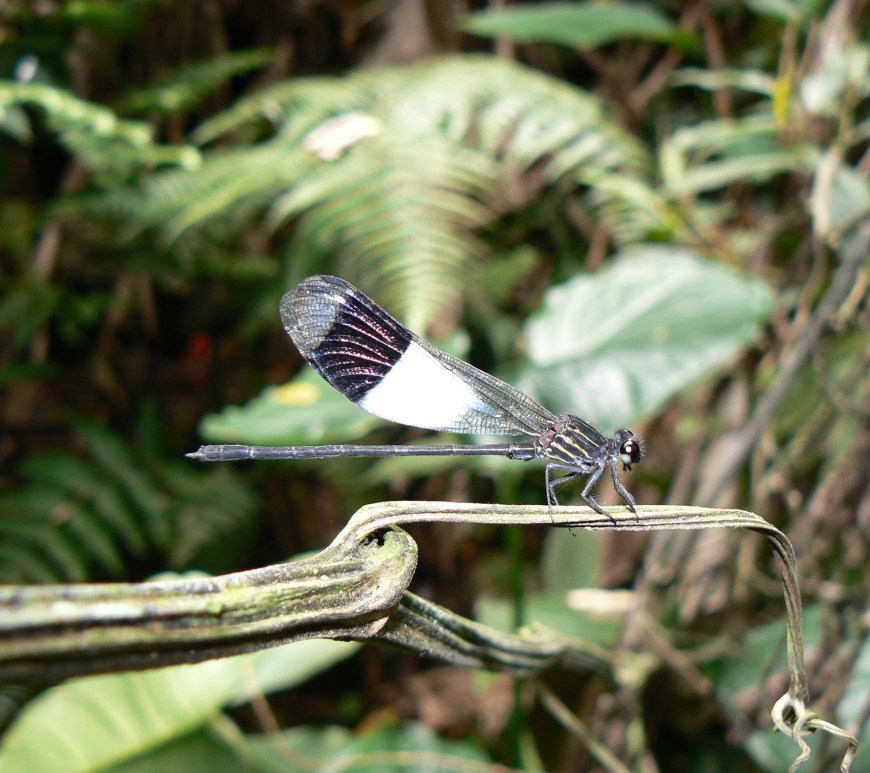
Investigating imperfect mimicry in natural populations

This blog post is provided by David Outomuro and Alberto Corral-Lopez and tells their #StoryBehindthePaper for the article “Field evidence for colour mimicry overshadowing morphological mimicry”, which was recently published in the Journal of Animal Ecology. Intuitively, to gain higher protection from predators, mimic species should evolve to be mirror images of their models. However, mimic species with very poor resemblance to their models are … Continue reading Investigating imperfect mimicry in natural populations

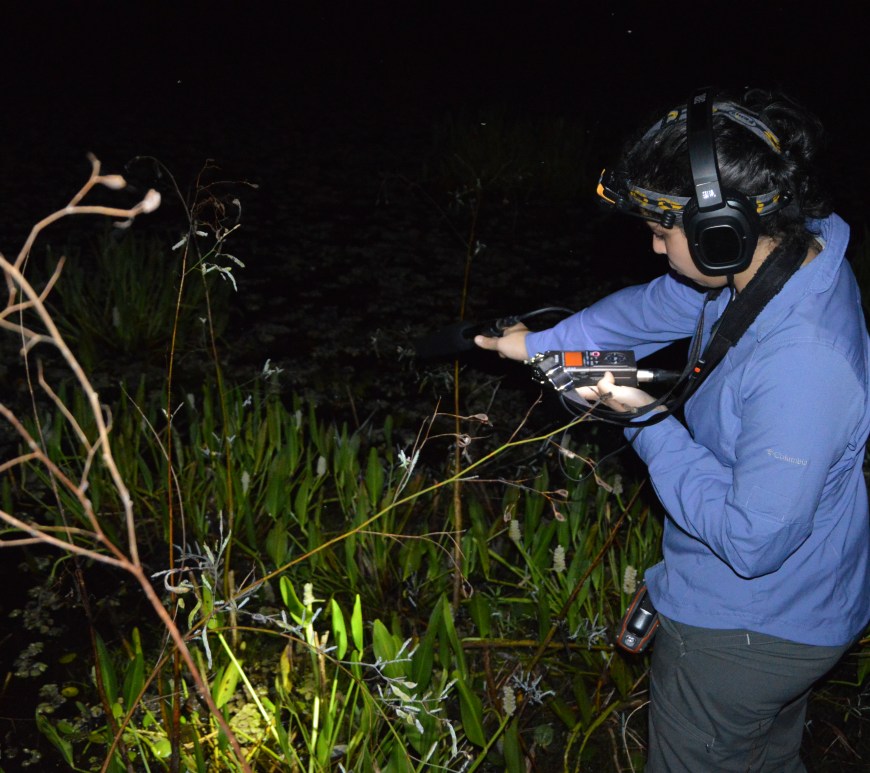
Night fever at the Pantanal wetlands: night activity of anuran assemblages

“The nighttime environment provides the ecological theater for the nocturnal play” (Gaston 2019, American Naturalist) This blog post is provided by Dr Larissa Sugai and tells the #StoryBehindThePaper for the article “Drivers of assemblage-wide calling activity in tropical anurans and the role of temporal resolution”, which was recently published in Journal of Animal Ecology. As ecologists, our theoretical background has profound historical roots. Sometimes, we’re not … Continue reading Night fever at the Pantanal wetlands: night activity of anuran assemblages

Visual contagion in prey defence signals can enhance honest defence

This blog post is provided by Shihao Dong, Ken Tan, and James C. Nieh and tells the #StoryBehindThePaper for their article “Visual contagion in prey defence signals can enhance honest defence“, which was recently published in the Journal of Animal Ecology. It’s a scene out of a horror film. In a sunny, peaceful glade, bees buzz out of their colony and return laden with nectar and pollen. A shadow … Continue reading Visual contagion in prey defence signals can enhance honest defence

A 30-year journey to fulfill a dream: social dominance networks reveal mechanisms promoting coexistence of charrs in streams of Hokkaido, Japan

This blog post is provided by Kurt D. Fausch, Satoshi Kitano, Yoichiro Kanno, and Seog Kim and tells the #StoryBehindThePaper for the article “Interspecific social dominance networks reveal mechanisms promoting coexistence in sympatric charrs in Hokkaido, Japan”. Some papers take a long time to come to fruition…. sometimes a very long time. Kurt Fausch first traveled to Japan in October 1988, to present an invited paper … Continue reading A 30-year journey to fulfill a dream: social dominance networks reveal mechanisms promoting coexistence of charrs in streams of Hokkaido, Japan