Large mammals at Mt. Kilimanjaro: the importance of resource availability and protected areas

This blog post is provided by Friederike Gebert from the University of Würzburg and tells the #StoryBehindThePaper for her article  Primary productivity and habitat protection predict elevational species richness and community biomass of large mammals on Mt. Kilimanjaro which has been shortlisted for the 2019 Elton Prize. Mountains are biodiversity hotspots and prior areas for conservation. Even though elevational gradients belong to the best described … Continue reading Large mammals at Mt. Kilimanjaro: the importance of resource availability and protected areas

Urbanization alters predator‐avoidance behaviours

Urbanisation is changing the natural landscape at a global scale. This obviously alters habitat structures, but what is the influence on predator-prey dynamics? A recent paper in the Journal of Animal Ecology studied two urban prey species to examine whether urbanisation changed their predator-avoidance behaviour. Lead author Dr Travis Gallo, an Urban Wildlife Postdoctoral Researcher at the Urban Wildlife Institute, Lincoln Park Zoo, tells us … Continue reading Urbanization alters predator‐avoidance behaviours

Estimating Species Populations – a critical step in understanding ecological processes

Understanding the size of animal populations is necessary – but also extremely challenging. Andrea Campos Candela, a PhD student with the Fish Ecology Lab in the Mediterranean Institute for Advanced Studies (IMEDEA-CSIC) talks us through this problem. “How many animals are there? Understanding ecological processes and the dynamics of wild animal populations is dependent on our answer to such seemingly simple question.  Further, recognizing changes … Continue reading Estimating Species Populations – a critical step in understanding ecological processes

Spatial overlap in a solitary predator

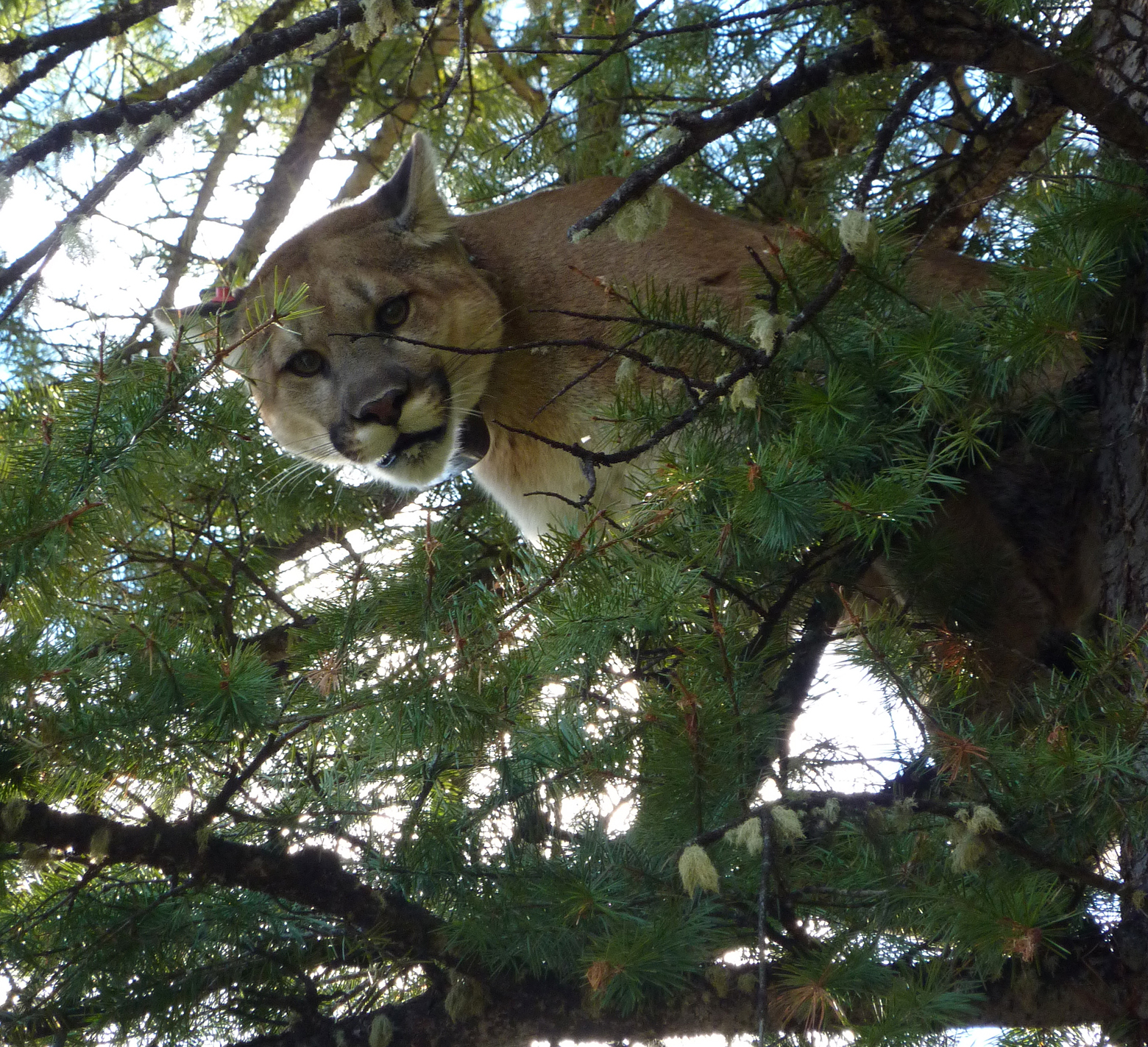
F97, a subadult female raised by F61. Photograph by Patrick Lendrum / Panthera.

F61 and F51, adult female cougars (Puma concolor), also called mountain lions, were very nearly the same age when they gave birth to their first litters of kittens within a month of each other in 2011. The pair of big cats were neighbors in adjacent and overlapping home ranges in the Bridger-Teton National Forest, east of Grand Teton National Park in northwest Wyoming, USA.

A well-placed motion-triggered camera caught a fortuitous image of F61 and F51 spending time together in early 2012, accompanied by their four kittens (1 from F61, 3 from F51). It sparked great discussion among our team, many of whom were convinced they must be close relatives, perhaps sisters. Indeed, prevailing theory supported the idea that close kin were more likely to be close to each other and tolerant of one other. Thus, it just made sense that the two cats would be kin. At the time, however, we did not know the genetic relatedness of cougars in our study, except of course, kittens born to females we were tracking. Continue reading “Spatial overlap in a solitary predator”