Spatial overlap in a solitary predator
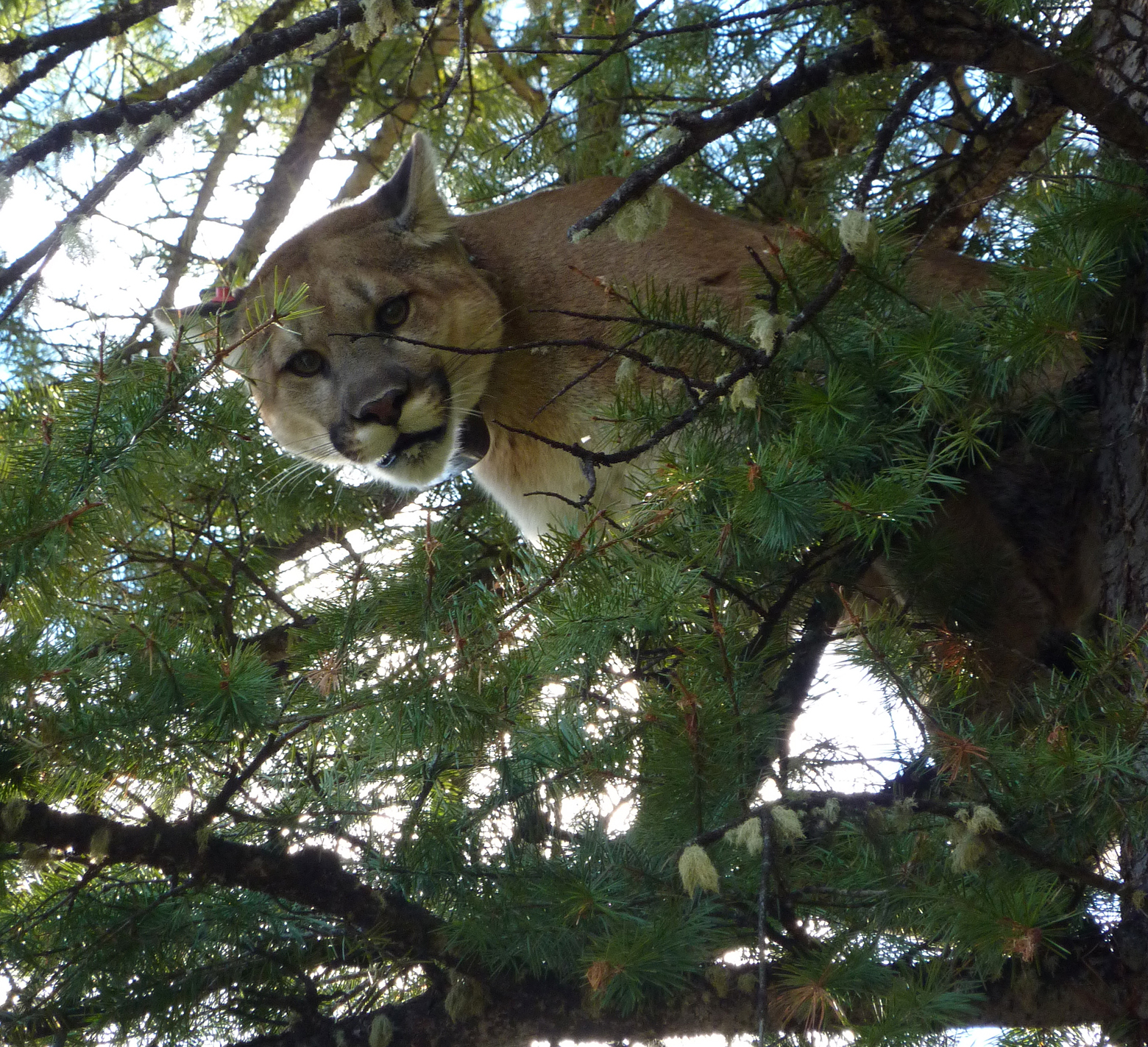
F61 and F51, adult female cougars (Puma concolor), also called mountain lions, were very nearly the same age when they gave birth to their first litters of kittens within a month of each other in 2011. The pair of big cats were neighbors in adjacent and overlapping home ranges in the Bridger-Teton National Forest, east of Grand Teton National Park in northwest Wyoming, USA.
A well-placed motion-triggered camera caught a fortuitous image of F61 and F51 spending time together in early 2012, accompanied by their four kittens (1 from F61, 3 from F51). It sparked great discussion among our team, many of whom were convinced they must be close relatives, perhaps sisters. Indeed, prevailing theory supported the idea that close kin were more likely to be close to each other and tolerant of one other. Thus, it just made sense that the two cats would be kin. At the time, however, we did not know the genetic relatedness of cougars in our study, except of course, kittens born to females we were tracking. Continue reading “Spatial overlap in a solitary predator”

 Animal Ecology in Focus