Alliance of ecologists and physiologists to study the effect of size and food quantity on muscle metabolism in the European sardine Sardina pilchardus

This blog post is provided by Elisa Thoral, Claire Saraux and Loïc Teulier and tells the #StoryBehindThePaper for the paper ‘Changes in foraging mode caused by a decline in prey size have major bioenergetic consequences for a small pelagic fish’, which was recently published in the Journal of Animal Ecology. Elisa Thoral (PhD student) and Loïc Teulier (her thesis co-director), are from the University of Lyon in France. … Continue reading Alliance of ecologists and physiologists to study the effect of size and food quantity on muscle metabolism in the European sardine Sardina pilchardus

A Colourful Distribution

Skinks come in a variety of colours and patterns. But why and how are these colour polymorphisms maintained? Genevieve Matthews, a PhD student at Monash University, has been studying skinks for four years. Her research examines the maintenance of genetic variation in the form of colour pattern polymorphism in the delicate skink, and the costs associated with sexual conflict. Here, Genevieve summarises her recent publication … Continue reading A Colourful Distribution

Ecophysiological feedbacks under climate change

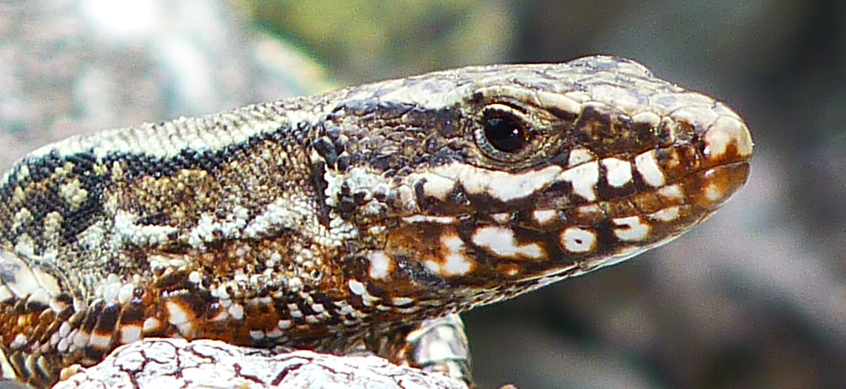
Variability in heat tolerance among populations modifies the climate-driven periods of diurnal activity expected for ectotherm species. This phenomenon is illustrated for Iberian lizards in a paper recently published in the Journal of Animal Ecology. Lead author Dr Salvador Herrando-Pérez is a generalist ecologist with expertise in community ecology, demography, ecophysiology and palaeoecology, and currently undertaking his second postdoc. Here, he explains the approach used … Continue reading Ecophysiological feedbacks under climate change

Stopovers for sickly songbirds

The understanding of the interplay of movement, behaviour and physiology that biologging offers has applied relevance for a range of fields, including evolutionary ecology, wildlife conservation and behavioural ecology. In recognition of this, the Journal of Animal Ecology has an upcoming Special Feature on Biologging  (submissions due 20th September). This blog posts is written to accompany a recent publication in the Journal of Animal Ecology. Lead-author Dr Arne … Continue reading Stopovers for sickly songbirds

Stressed-Out Squirrels

A recently-published paper in the Journal of Animal Ecology has discovered that the grey squirrel (one of the most impacting alien invasive species in Europe) causes an increase in chronic stress in the native red squirrel. Lead author Dr Francesca Santicchia is a research fellow at the University of Insubria in Italy. She had studied the relationships among parasites, physiological stress, and personality in grey squirrel … Continue reading Stressed-Out Squirrels

Effects of a maternal stress hormone across life stages

Anthropogenic disturbance is a growing threat, and the physiological consequences of exposure to such stressors is gaining increasing attention. A recent paper published in the Journal of Animal Ecology explores the consequences of stress-relevant hormones for mothers and their offspring. David Ensminger, lead author of the study, is finishing up his PhD with Dr. Tracy Langkilde, taking an integrative approach to examining the role stress-relevant … Continue reading Effects of a maternal stress hormone across life stages

Volume 85:6 a slideshow

jane_v85_i6_oc_rev4_crx_spgh_to-crop
Male Montagu’s Harrier Edwin on the hunt for grasshoppers near Djilas, Senegal. Ellinor Schlaich et al. http://dx.doi.org/10.1111/1365-2656.12583

Issue 85:6 is now online and for the first time we have two In Focus papers in the issue as we no longer want to limit ourselves to championing only one great paper!

The First is by Pedro Jardano and takes a look at the paper by Sazatornil et al. on morphological matches and the assembly of mutualistic hawkmoth–plant networks. The second is by Shawn Wilder and Punidan Jeyasingh and they review the paper by Zhang et al. on how warming and predation risk shape stoichiometry.

To make the most of all the great photos from our authors we have included a slideshow of the best images.

Read the full November 2016 issue here.

Continue reading “Volume 85:6 a slideshow”