Sticky post

Body size mediates trophic interaction strength of novel fish assemblages under climate change

This blog post is provided by Minami Sasaki, Kelsey M. Kingsbury, David J Booth and Ivan Nagelkerken and tells the #StoryBehindthePaper for the paper “Body size mediates trophic interaction strength of novel fish assemblages under climate change”, which was recently published in Journal of Animal Ecology. In their study, they investigate how fish species changing ranges and sizes due to climate change interact. They explore what happens when … Continue reading Body size mediates trophic interaction strength of novel fish assemblages under climate change

Sticky post

Förvaltning av vilda djurpopulationer i en föränderlig värld: fallet med Östersjöns gråsälar

Denna blog är skriven av Daire Carroll från Instutitionen för Biologi och Miljövetenskaper vid Göteborgs Universitet, här beskrivs #HistorienBakomArtikeln för den vetenskapliga artikeln  “120-years of ecological monitoring data shows that the risk of overhunting is increased by environmental degradation for an isolated marine mammal population: the Baltic grey seal”, detta är en artikel som nyligen publicerades i Journal of Animal Ecology. I denna artikel undersöks … Continue reading Förvaltning av vilda djurpopulationer i en föränderlig värld: fallet med Östersjöns gråsälar

Sticky post

Managing wildlife in a changing environment: the case of the Baltic grey seal

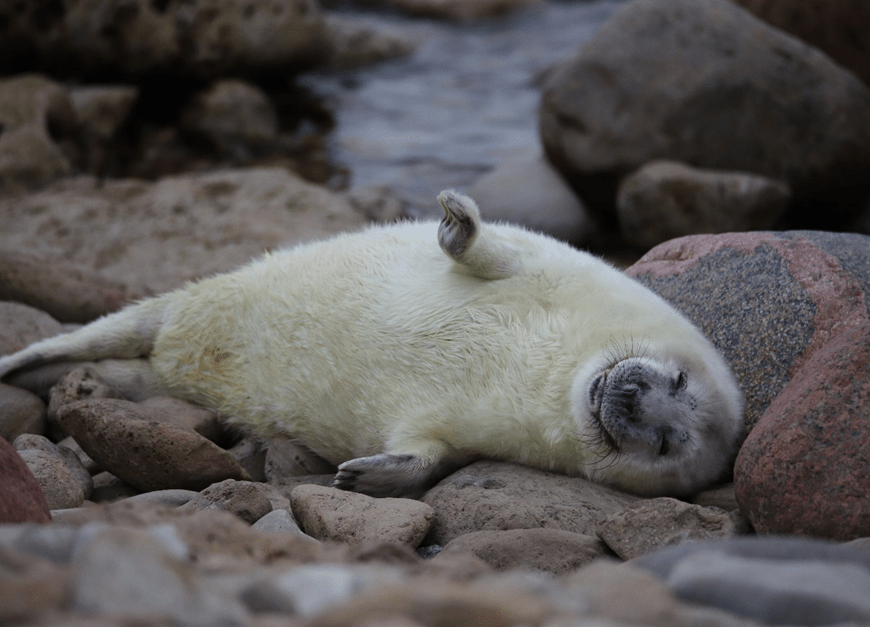
This blog post is provided by Daire Carroll from the Department of Biological and Environmental Science, Gothenburg University and tells the #StoryBehindthePaper for the paper “120-years of ecological monitoring data shows that the risk of overhunting is increased by environmental degradation for an isolated marine mammal population: the Baltic grey seal“, which was recently published in Journal of Animal Ecology. In the paper, they explore … Continue reading Managing wildlife in a changing environment: the case of the Baltic grey seal

Small details affect the big picture: The response of populations to changing environments depends more on individual organisms than we can see in classical models

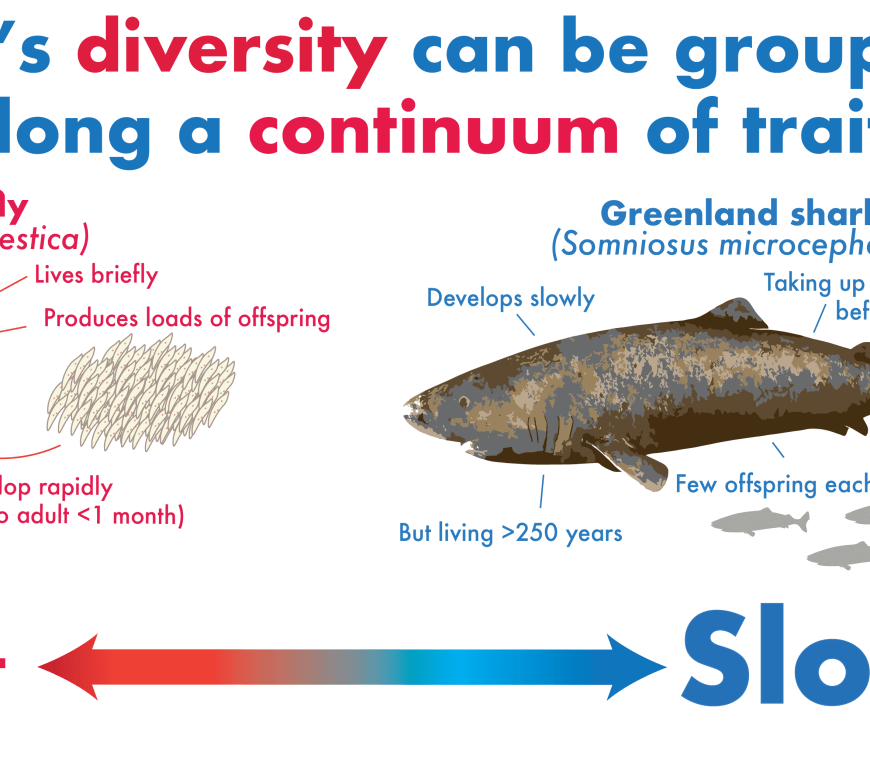
This blog post is provided by Mark Rademaker, Anieke van Leeuwen and Isabel Smallegange and tells the #StoryBehindthePaper for the paper “Why we cannot always expect life history strategies to directly inform on sensitivity to environmental change“, which was recently published in Journal of Animal Ecology. In their paper, they explore individual-level tradeoffs, and how these affect trait patterns and population responses, finding that compared … Continue reading Small details affect the big picture: The response of populations to changing environments depends more on individual organisms than we can see in classical models

Historical ecology to address long-term niche dynamics

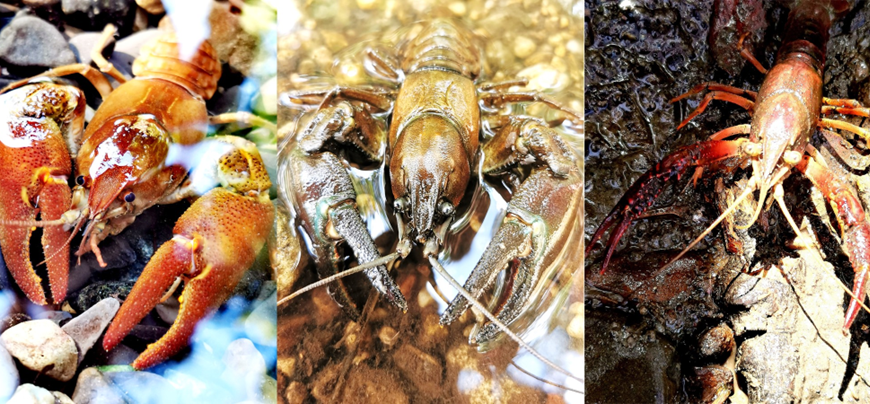
This blog post is provided by Duarte S. Viana, Francisco J. Oficialdegui, María del Carmen Soriano, Virgilio Hermoso and Miguel Clavero and tells the #StoryBehindthePaper for the paper “Niche dynamics along two centuries of multiple crayfish invasions“, which was recently published in Journal of Animal Ecology. In their study, they explore how using historical records of species can track their spread and distribution through time, revealing … Continue reading Historical ecology to address long-term niche dynamics

Reproductive Performance of Peregrine Falcons in southern Scotland Relative to the Use of Organochlorine Pesticides, 1946-2021

This blog post is provided by Madan K. Oli, George D. Smith, Michael J. McGrady, Vratika Chaudhary, Chris J. Rollie, Richard Mearns, Ian Newton and Xavier Lambin and tells the #StoryBehindthePaper for the paper “Reproductive Performance of Peregrine Falcons Relative to the Use of Organochlorine Pesticides, 1946-2021”, which was recently published in Journal of Animal Ecology. They explore how banning pesticides like DDT impacted Peregrine Falcons … Continue reading Reproductive Performance of Peregrine Falcons in southern Scotland Relative to the Use of Organochlorine Pesticides, 1946-2021

Sticky post

¿Qué hace que un ave sea más (o menos) importante para la dispersión de semillas?

Esta entrada de blog proviene de Gabriel Moulatlet, Wesley Dáttilo y Fabricio Villalobos, y nos cuenta la #HistoriaDetrásdelArtículo del artículo “Species-level drivers of avian centrality within seed-dispersal networks across different levels of organization” (“Impulsores de la centralidad de las especies de aves en redes de dispersión de semillas en diferentes niveles de organización”), que fue recientemente publicado en el Journal of Animal Ecology. En su … Continue reading ¿Qué hace que un ave sea más (o menos) importante para la dispersión de semillas?

Sticky post

What makes a bird important for plants’ seed dispersal?

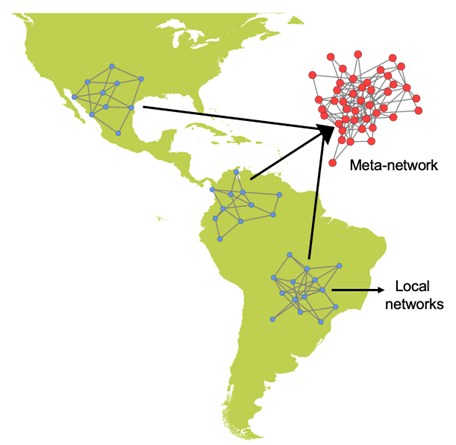
This blog post is provided by Gabriel Moulatlet, Wesley Dáttilo and Fabricio Villalobos and tells the #StoryBehindthePaper for the paper “Species-level drivers of avian centrality within seed-dispersal networks across different levels of organization“, which was recently published in Journal of Animal Ecology. In their study, they investigate the factors that influence birds relationships with plants for seed dispersal, in a network context, at both local … Continue reading What makes a bird important for plants’ seed dispersal?

Sticky post

Caribou acclimate timing of migration and birth to changes in snowmelt and green-up

This blog post is provided by Michel Laforge and tells the #StoryBehindthePaper for the paper “Plasticity and repeatability in spring migration and parturition dates with implications for annual reproductive success”, which was recently published in Journal of Animal Ecology. In their paper they find that caribou acclimate the timing of their migration and when they give birth to the timing of spring snow melt and plant … Continue reading Caribou acclimate timing of migration and birth to changes in snowmelt and green-up

Sticky post

La perception du risque de maladie chez les animaux et ses applications

Un article récemment publié dans Journal of Animal Ecology examine les implications et applications du dégoût et de l’évitement des maladies chez les animaux. L’article de blog ci-dessous est écrit par Cécile Sarabian (chercheuse postdoctorale en écologie cognitive à l’université de Nagoya, Japon ; au centre), Andrew MacIntosh (écologue du comportement et professeur associé à l’université de Kyoto, Japon ; à gauche) et Jorge Tobajas (écologue de … Continue reading La perception du risque de maladie chez les animaux et ses applications