Lessons from two decades of detailing an invasion front

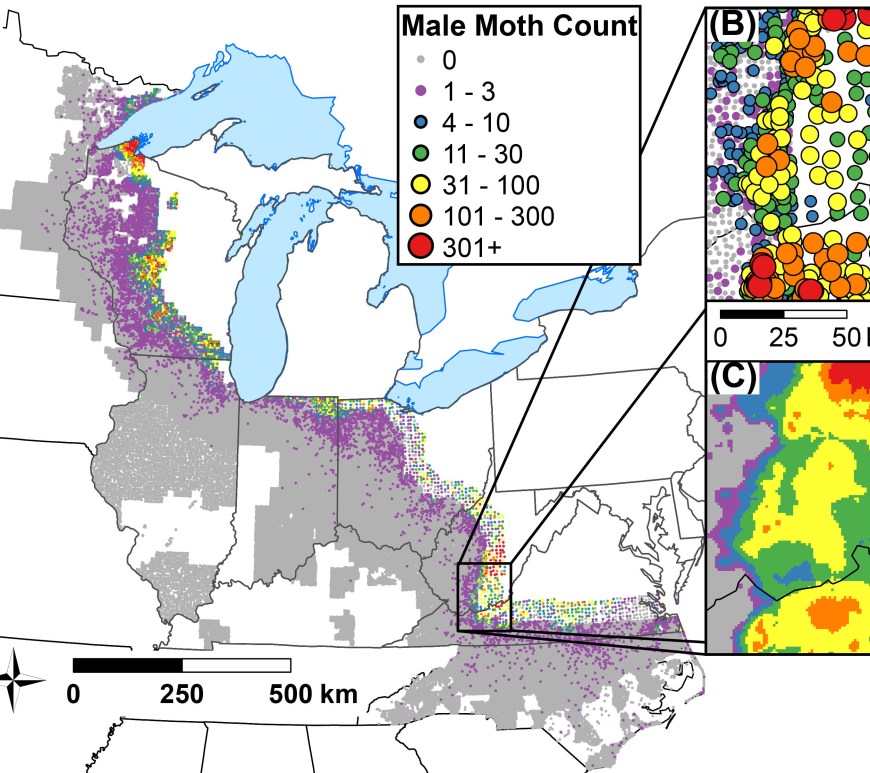
What can we learn about population dynamics from invasive species? A recent synthesis article published in the Journal of Animal Ecology examines the contributions from one of the best-documented cases of species invasion, the spread of the gypsy moth in North America. Dr Kristine Grayson started working with gypsy moth as a USDA National Institute of Food and Agriculture Postdoctoral Fellow at Virginia Commonwealth University … Continue reading Lessons from two decades of detailing an invasion front

Open Data in Journal of Animal Ecology

A couple of weeks ago the British Ecology Society Journals published a virtual issue for Open Access Week looking at the most downloaded data sets in Dryad associated with papers on the journals. At Journal of Animal Ecology we encourage authors to use the most appropriate archive for their data and in JAE we’ve seen a variety of repositories used alongside Dryad. For Open Access … Continue reading Open Data in Journal of Animal Ecology

Spatial disease models: picking a “useful” model for pressing ecological questions

Since all models are wrong the scientist cannot obtain a “correct” one by excessive elaboration. On the contrary following William of Occam he should seek an economical description of natural phenomena. Just as the ability to devise simple but evocative models is the signature of the great scientist so overelaboration and overparameterization is often the mark of mediocrity. – George Box Ecology is fundamentally intertwined … Continue reading Spatial disease models: picking a “useful” model for pressing ecological questions

New technologies for listening to bats

As well as being fascinating creatures with a unique sensory ecology, bats are also potentially useful indicator species whose population trends may help to provide broader information about the health of ecosystems. To mark Halloween, Ella Browning and Rory Gibb describe new research developing smart tools to more effectively and accurately monitor bat populations across the globe. Ella Browning and Rory Gibb are both PhD … Continue reading New technologies for listening to bats

Hidden differences in life history trajectories of Antarctic seabirds

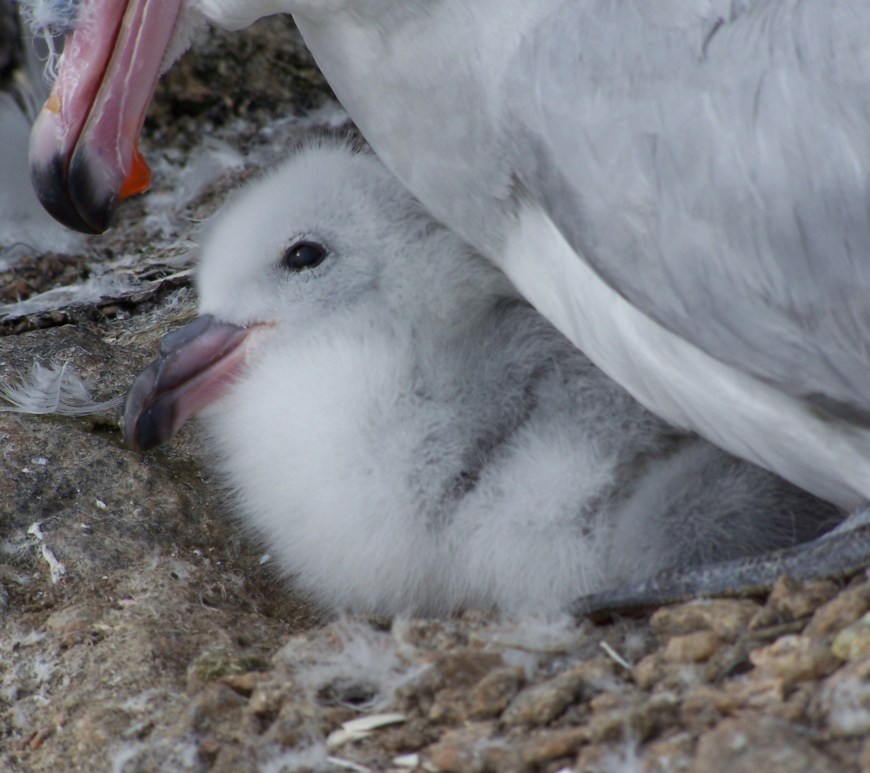
We live surrounded by populations. We rely on populations of plants and animals for food; we struggle to control populations of pests and pathogens. The food webs on which we depend on for natural resources are linked populations. We confront the extinction of populations due to a variety of human activities and strive to develop management strategies to preserve biodiversity. In all these interactions with … Continue reading Hidden differences in life history trajectories of Antarctic seabirds

The Peer Review Process for the British Ecological Society journals

This time last year the British Ecological Society Publications team surveyed all researchers that had either submitted a manuscript to or reviewed a manuscript for, one or more of the five BES Journals.

A key recommendation from the survey was to provide more detail on the peer review process for the BES Journals. As it is Peer Review Week and the theme is transparency we thought this was a great opportunity to breakdown the peer review process that the BES Journals use and make it more transparent,  we have done this by providing a summary of the peer review process on the BES journals hub page. Below I have summarized this process for Journal of Animal Ecology: Continue reading “The Peer Review Process for the British Ecological Society journals”

Welcome to our new Associate Editors

We are pleased to welcome Ann Tate and Marie Auger-Méthé who have all recently joined the Journal of Animal Ecology Associate Editor Board. Ann T. Tate Department of Biological Sciences, Vanderbilt University, USA Ann combines theoretical and experimental approaches to understand the proximate and ultimate sources of natural variation in immune responses and their consequences for disease dynamics. She has a particular interest in the … Continue reading Welcome to our new Associate Editors

Volume 86:4 slideshow

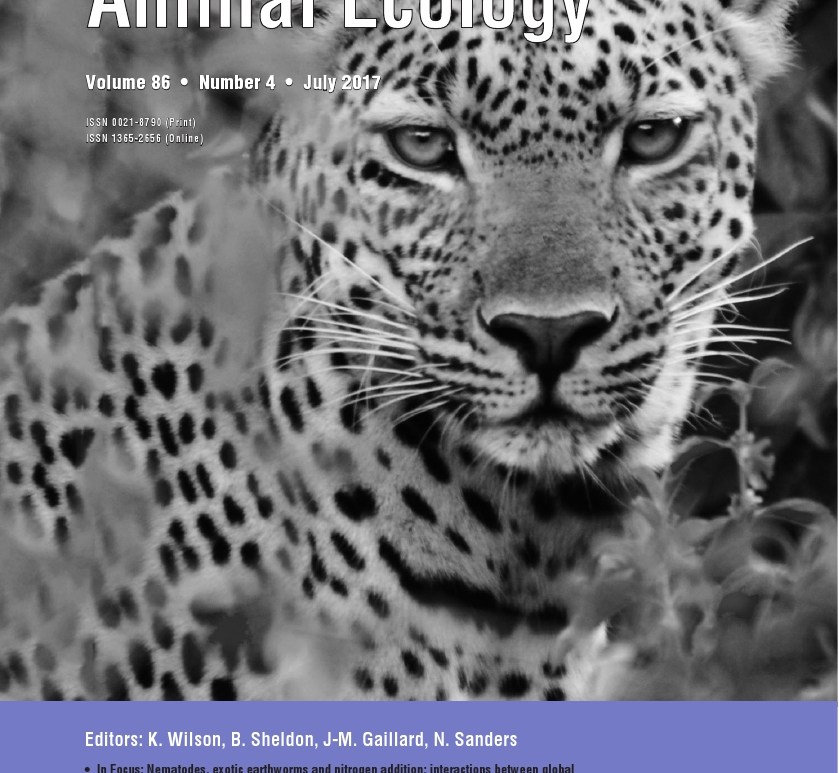
Issue 86:4 is now out. The In Focus in this issue is by Jonathan De Long and looks at the paper by Yuanhu Shao on “Nitrogen deposition cancels out exotic earthworm effects on plant‐feeding nematode communities”. We also an review paper by Remington J. Moll which features on the cover titled “The many faces of fear: a synthesis of the methodological variation in characterizing predation … Continue reading Volume 86:4 slideshow

Volume 86:3 slideshow

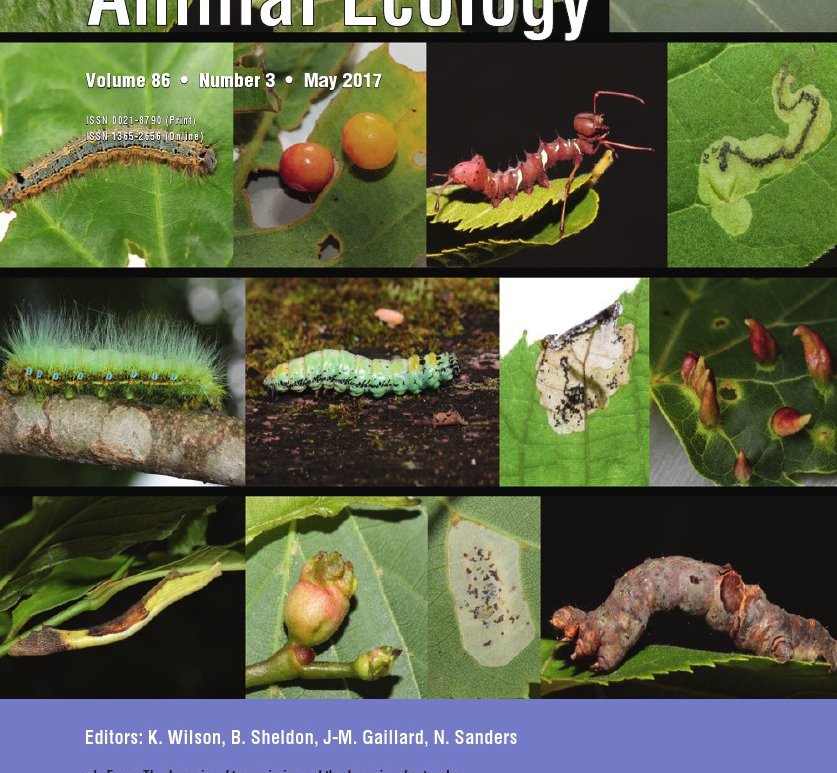
Issue 86:3 is now out. The In Focus in this issue is by Damien Farine and looks at the paper by Andrea Springer on “Dynamic vs. static social networks in models of parasite transmission: predicting Cryptosporidium spread in wild lemurs”. We also have papers on community ecology, trophic interactions, behavioural ecology, population ecology, spatial ecology and demography. As always to make the most of all … Continue reading Volume 86:3 slideshow

Welcome to our new blog team

We are excited to announce the newly revamped Animal Ecology In Focus blog, along with our fresh new design we are pleased to welcome a new team for the blog. Sarah Marley has joined us as Blog Editor; Sarah will be driving the blog forward by commissioning content for the blog and working with authors to promote their papers. Sarah is a marine mammologist and … Continue reading Welcome to our new blog team