Both the British Ecological Society and Journal of Animal Ecology have long been champions of research by early career ecologists. Indeed, there are many examples of early career researchers publishing their first papers from their dissertation in the pages of Journal of Animal Ecology. To continue, and hopefully enhance, that tradition, Journal of Animal Ecology is very happy to announce a new award targeted at early career researchers. With this award, we hope to inspire early career researchers working on any aspect of animal ecology to submit reviews or syntheses that might either summarize their dissertation work, provide new insights into classic areas of animal ecology, or might shed light on emerging fields in animal ecology.
Nate Sanders
Senior Editor, Journal of Animal Ecology @Nate_J_Sanders
Turtles (and tortoises) are among the most outstanding and recognizable groups of animals on the planet. Despite being a relatively species poor clade (only 327 extant species), they are easily recognizable and adored by many (you’d be hard pressed to find any other reptile so heavily featured in children’s toys sections). Ever since the Triassic period, roughly 220 million years ago, they have been a constant and familiar aspect of the earth’s vertebrate fauna, found on all continents barring frigid Antarctica, and easily distinguishable by their unique trait – the bony shell, a derivative of the rib cage that encompasses their entire body and provides them with uncanny protection. At present, however, they are also among the most endangered taxa on Earth, with more than half of extant species threatened with extinction [1].
At the BES Annual Meeting 2015 in Edinburgh, a lively debate was held on the future of data archiving. The debate was recorded and the video can be viewed here.
The British Ecology Society (BES) has been mandating the archiving of data for all papers published in its journals since January 2014, so with the mandate having been in place for over 2 years this was a good opportunity to take stock of the impacts and look to the future. While it is recognised that data archiving presents both financial and time costs to researchers, the benefits of data preservation and validation of results help to advance science. The aim of the debate was to provide the opportunity for researchers to debate the pros and cons of data archiving in an open format. Continue reading “The Future of Data Archiving”
Using tags surgically implanted into thousands of juvenile salmon, University of British Colombia researchers have discovered that many fish die within the first few days of migration from their birthplace to the ocean. Continue reading “Salmon smolts find safety in numbers”
Small – hungry mesopredator common on coral reefs. Photo: C.E. Mirbach
This blog post is a press release from the authors of Journal of Animal Ecology paper “Top predators negate the effect of mesopredators on prey physiology” by Maria M. Palacios et al. Press release issued by by James Cook University & ARC Centre of Excellence for Coral reef Studies
Scientists have discovered that the presence of large fish predators can reduce stress on baby fish.
The researchers – from the ARC Centre of Excellence for Coral Reef Studies, James Cook University and the University of Glasgow- have found that physiological stress on baby fish can be reduced by more than a third if large predatory fish are around to scare off smaller, hungry predators, known as mesopredators. Continue reading “Baby fish breathe easier around large predators”
Deer in small wooded patches on the campus of Princeton University. The photos were taken as part of an undergraduate ecology laboratory course taught by my co-author Rob Pringle, and for which I served as an assistant instructor. Students also captured images of foxes, raccoons, and house cats.
In wintertime, it’s often getting dark in Princeton by the time I head home from the office to scrounge up some dinner. Along the half-mile path, I regularly walk or bike within few meters of the local herd of white-tailed deer. There are at least five or six animals that circulate among the tiny patches of trees and streams at the south end of campus. The university deer are just a fraction of the estimated 450-500 that roam the 16 km2 town of Princeton. That’s almost 40 deer per km2, well above the state of New Jersey’s recommended 20-25 per km2. Indeed, much of the northeast U.S. is forced to deal with dense, growing deer populations thanks to the removal of wolves, forest recovery over the last century following the westward shift of American agriculture, and a suburbanization-associated decline in hunting.
Journal of Animal Ecology is pleased to welcome Sandra Bouwhuis (Institute of Avian Research, Germany), Anna Eklöf (Linköping University, Sweden) and Elisa Thebault (Université Pierre et Marie Curie, France) to the board of Associate Editors. They have all joined on a three-year term and you can find out more about them below. Continue reading “New Associate Editors”

 Both the British Ecological Society and Journal of Animal Ecology have long been champions of research by early career ecologists. Indeed, there are many examples of early career researchers publishing their first papers from their dissertation in the pages of Journal of Animal Ecology. To continue, and hopefully enhance, that tradition, Journal of Animal Ecology is very happy to announce a new award targeted at early career researchers. With this award, we hope to inspire early career researchers working on any aspect of animal ecology to submit
  This post is a press release from the authors of Journal of Animal Ecology paper “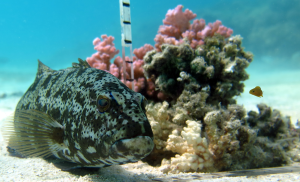

 This blog post is a press release from the authors of Journal of Animal Ecology paper “
 Animal Ecology in Focus