Are multi-brooded birds the current “winners” of climate change?

This blog post is provided by Abigail Kimmitt and Daniel Becker and tells the #StoryBehindthePaper for the paper “Plasticity in female timing may explain earlier breeding in a North American songbird“, which was recently published in the Journal of Animal Ecology. In their study, they explored breeding success of the dark-eyed junco from long term datasets, to see if birds respond to climate change in … Continue reading Are multi-brooded birds the current “winners” of climate change?

Tail loss in limbless reptiles explained by specimens from natural history collections

This blog post is provided by Mario Moura and Henrique Costa and tells the #StoryBehindthePaper for the paper “Unwrapping broken tails: biological and environmental correlates of predation pressure in limbless reptiles“, which was recently published in the Journal of Animal Ecology. In their study, they use natural history collections of snakes and limbless lizards from museums to explore where predation occurs. These animals can drop … Continue reading Tail loss in limbless reptiles explained by specimens from natural history collections

The “gall” of it all – how a latitudinal gradient in the diversity of oak gall formers contributes to the outbreak of a range-expanding species

This blog post is provided by Dylan Jones and Kirsten Prior and tells the #StoryBehindthePaper for the paper “Latitudinal gradient in species diversity provides high niche opportunities for a range-expanding phytophagous insect“, which was recently published in the Journal of Animal Ecology. In their study they explore how gall wasp communities vary from north to south in the United States of America, and how reduced … Continue reading The “gall” of it all – how a latitudinal gradient in the diversity of oak gall formers contributes to the outbreak of a range-expanding species

El tamaño si importa: ¿Como afectan los rasgos el rol de los peces depredadores en las tramas tróficas y redes espaciales en el Río Paraná Medio?

Este posteo fue proporcionado por Dalmiro Borzone Mas y Pablo Scarabotti y nos cuenta #StoryBehindthePaper para el trabajo “Simetrías y asimetrías en los roles topológicos de los peces depredadores entre las redes de ocurrencia y las tramas tróficas” el cual fue recientemente publicado en el Journal of Animal Ecology. En este estudio ellos exploran como las redes de ocurrencia y las tramas tróficas tienen una … Continue reading El tamaño si importa: ¿Como afectan los rasgos el rol de los peces depredadores en las tramas tróficas y redes espaciales en el Río Paraná Medio?

Size does matter: how do traits affect the role of predatory fish on food webs and spatial networks in the middle Paraná River?

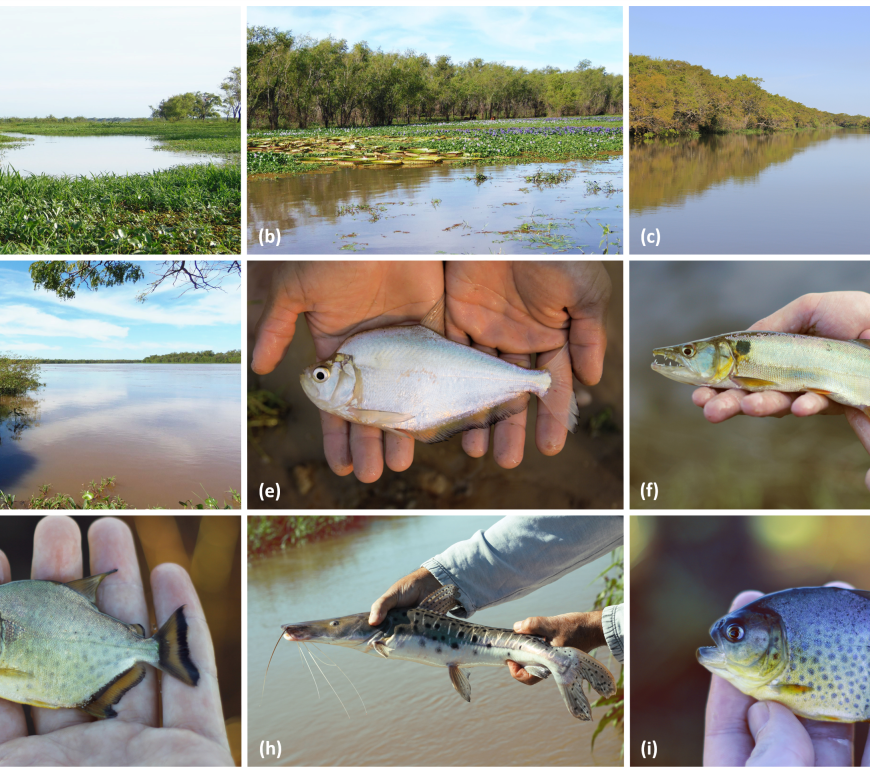
This blog post is provided by Dalmiro Borzone Mas and Pablo Scarabotti and tells the #StoryBehindthePaper for the paper “Symmetries and asymmetries in the topological roles of piscivorous fishes between occurrence networks and food webs“, which was recently published in the Journal of Animal Ecology. In their study, they explore whether occurrence networks and food webs of the Paraná River have a modular structure and … Continue reading Size does matter: how do traits affect the role of predatory fish on food webs and spatial networks in the middle Paraná River?

Bee declines: what’s the stress all about?

This blog post is provided by Aoife Cantwell-Jones and tells the #StoryBehindThePaper for the paper “Signatures of increasing environmental stress in bumblebee wings over the past century: Insights from museum specimens”, which was recently published in the Journal of Animal Ecology. The authors looked at how bumblebee wing asymmetry has changed over the 20th century. They found that wing asymmetry started increasing around 1925 and … Continue reading Bee declines: what’s the stress all about?

Multiple parasitoid species enhance top-down control, but parasitoid performance is context-dependent

This blog post is provided by Melanie Thierry, Nick Pardikes, Miguel González Ximénez de Embún, Grégoire Proudhom, Jan Hrcek and tells the #StoryBehindThePaper for the paper “Multiple parasitoid species enhance top-down control, but parasitoid performance is context-dependent“, which was recently published in the Journal of Animal Ecology. They explore how different combinations of hosts and parasitoid species interact in miniature worlds, also known as microcosms, showing … Continue reading Multiple parasitoid species enhance top-down control, but parasitoid performance is context-dependent

Artificial selection in human-wildlife feeding interactions.

This blog post is provided by Laura L. Griffin and tells the #StoryBehindthePaper for the paper “Artificial selection in human-wildlife feeding interactions“, which was recently published in the Journal of Animal Ecology. In their study, they link human-wildlife feeding interactions with the production of heavier offspring, identifying these interactions as a driver for artificial selection. Here, author Laura L. Griffin tells us more. Humans are … Continue reading Artificial selection in human-wildlife feeding interactions.

Mountain lion predation on wild donkeys rewires an ancient food web

This blog post is provided by Erick Lundgren and tells the #StoryBehindThePaper for the paper “A novel trophic cascade between cougars and feral donkeys shapes desert wetlands“, which was recently published in the Journal of Animal Ecology. Contrary to popular belief, they find that mountain lions are capable of hunting wild donkeys, positively affecting wetlands due to changes in donkey activity levels. Around 12,000 years … Continue reading Mountain lion predation on wild donkeys rewires an ancient food web

Parasites are just the strings: Microbes as the real puppet masters in phenotypic manipulations of parasitized animals

This blog post is provided by Priscila Salloum, Fátima Jorge and Robert Poulin and tells the #StoryBehindThePaper for the paper “Inter-individual variation in parasite manipulation of host phenotype: a role for parasite microbiomes?“, which was recently published in the Journal of Animal Ecology. They explore how differences in the microbiome of parasites might impact the way that those parasites can manipulate their hosts’ behaviour. Many parasites … Continue reading Parasites are just the strings: Microbes as the real puppet masters in phenotypic manipulations of parasitized animals