When the world burns, how do predators respond?

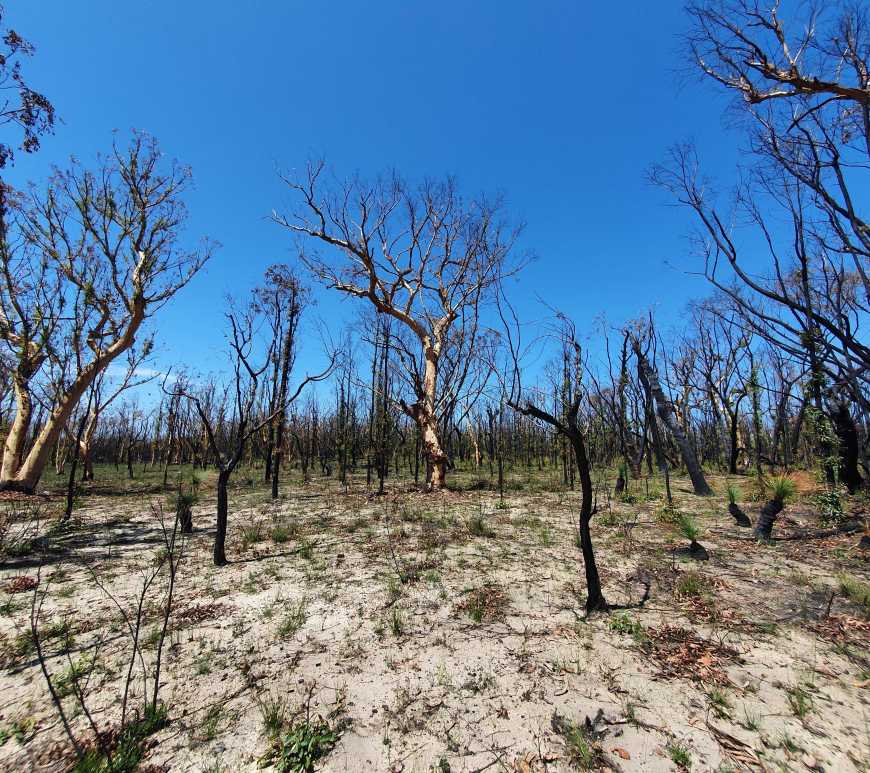
This blog post is provided by William Geary, Tim Doherty, Dale Nimmo, Ayesha Tulloch and Euan Ritchie and tells the  #StoryBehindThePaper for their article Predator responses to fire: A global systematic review and meta‐analysis, which has been shortlisted for the 2020 Sidnie Manton Award. Over the past year, many regions of the world have experienced extensive and severe fires. More than ten million hectares across … Continue reading When the world burns, how do predators respond?

Characterizing the “landscape of immunity” across wildlife systems

How does animal susceptibility to pathogens vary across landscapes? In this shortlisted paper for the Sidnie Manton Award “Macroimmunology: The drivers and consequences of spatial patterns in wildlife immune defence“, Daniel Becker and colleagues discuss the expanding efforts to apply large-scale approaches to ecological immunology. Daniel is a postdoctoral fellow at Indiana University and will be starting as an Assistant Professor at the University of … Continue reading Characterizing the “landscape of immunity” across wildlife systems

There are no second acts in animal life cycles

This blog post has been provided by Mike Moore, a post-doctoral fellow with the Living Earth Collaborative in St. Louis, USA. It tells the #StoryBehindThePaper for “On the evolution of carry-over effects”, a review that was short-listed for the Sidnie Manton Award.  Simply put, the things that animals need to do in one part of the life cycle are almost always different from the things … Continue reading There are no second acts in animal life cycles

Large mammals at Mt. Kilimanjaro: the importance of resource availability and protected areas

This blog post is provided by Friederike Gebert from the University of Würzburg and tells the #StoryBehindThePaper for her article  Primary productivity and habitat protection predict elevational species richness and community biomass of large mammals on Mt. Kilimanjaro which has been shortlisted for the 2019 Elton Prize. Mountains are biodiversity hotspots and prior areas for conservation. Even though elevational gradients belong to the best described … Continue reading Large mammals at Mt. Kilimanjaro: the importance of resource availability and protected areas

How good are we at identifying cues for breeding?

This blog post is provided by Emily Simmonds from the Norwegian University of Science and Technology (NTNU) and tells the #StoryBehindThePaper for her article  Cue identification in phenology: A case study of the predictive performance of current statistical tools which has been shortlisted for the 2019 Elton Prize. How do individuals decide when to start breeding, come out of hibernation, drop their leaves, or migrate? … Continue reading How good are we at identifying cues for breeding?

Showcasing developments in biologging and related methods in applied ecology

Originally posted on The Applied Ecologist:
Following the recent Journal of Animal Ecology Special Feature on biologging, Associate Editor, Steph Januchowski-Hartley takes a look at how research in this and similar methods are affecting the field of applied ecology today. Advances in technology have allowed for small electronic loggers and transmitters to be developed not only for biomedical monitoring for humans (think of the tech… Continue reading Showcasing developments in biologging and related methods in applied ecology

Persistence (and a bit of luck) pays off: Costs of reproduction in mountain ungulates

Fitness costs of reproduction are expected when resources are limited. This can drive the evolution of life‐history strategies and can affect population dynamics, particularly if females change their allocation of resources to reproduction. Dr Marco Festa-Bianchet (Université de Sherbrooke) explains the value of long-term studies for understanding such trade-offs and gives the #StoryBehindThePaper for his recent synthesis article in the Journal of Animal Ecology. Long-term studies … Continue reading Persistence (and a bit of luck) pays off: Costs of reproduction in mountain ungulates

Navigating through the R packages for movement

In the biologging Special Issue of the journal, we have new Review paper lead by Rocío Joo on Navigating through the r packages for movement. Rocío is a movement statistician based at the University of Florida and the blog tells the story behind the paper and a brief overview of the paper. Behind the scenes Two years ago, if someone would have asked me about … Continue reading Navigating through the R packages for movement

Light‐Level Geolocator Analyses: A user’s guide

In the biologging Special Issue of the journal, we have new ‘How to…’ paper lead by Simeon Lisovski from the Swiss Ornithological Institute on Light‐Level Geolocator Analyses. In this blog Simeon walks us through the history of the development of the light-level geolocator, discusses how to choose the best tools for analyzing the date and presents future directions of their usage. Simeon is a Geo.X Young … Continue reading Light‐Level Geolocator Analyses: A user’s guide

Birds in paradise: biogeography in the subtropics

Biogeography is often more complicated than the species-area relationship as discussed in a Journal of Animal Ecology paper testing multiple extensions of island biogeography theory. Sam Ross, lead author of the study, is a PhD student at Trinity College Dublin studying ecological responses to global change. Sam has additional interests in community ecology and macroecology, and works closely with colleagues at the Okinawa Institute of … Continue reading Birds in paradise: biogeography in the subtropics