Sticky post

The Road to Recovery

This blog post is provided by John Donohue, Petri Piiroinen and Adam Kane and tells the #StoryBehindThePaper for the paper “Predicted short-term mesoscavenger release gives way to apex-scavenger dominance” which was recently published in the Journal of Animal Ecology. In their study, they explore whether and how vultures would recover from near extirpation. Most, if not all, modern-day ecosystems bear the hallmarks of human disturbance … Continue reading The Road to Recovery

Sticky post

What kind of birds put artificial materials into their nests?

This blog post is provided by Catherine Sheard and tells the #StoryBehindThePaper for the paper “Anthropogenic nest material use in a global sample of birds”, which was recently published in the Journal of Animal Ecology. This study investigates patterns in the use of artificial materials in bird nests. I had been collecting data on bird nests for a number of years, including thinking about how … Continue reading What kind of birds put artificial materials into their nests?

Prey Depletion and Source-Sink Dynamics in Endangered African Wild Dogs

This blog post is provided by Johnathan Reyes de Merkle and tells the #StoryBehindthePaper for the paper “An integrated population model reveals source-sink dynamics for competitively subordinate African wild dogs linked to anthropogenic prey depletion”, which was recently published in Journal of Animal Ecology. In their study, they investigated the effects of anthropogenic prey depletion on the coexistence and persistence of the African wild dog, a … Continue reading Prey Depletion and Source-Sink Dynamics in Endangered African Wild Dogs

Key Concepts in Ecology: Complex interactions and foodwebs  

This blog post on ‘Complex interactions and foodwebs’ is part of the BES ‘Key Concepts in Ecology’ series, designed to help ecologists in learning the key topics in ecology! Take a look at the full blog series for a list of key topics you might typically find in an ecology textbook, each providing a quick introduction to the topic, and a list of suggested papers … Continue reading Key Concepts in Ecology: Complex interactions and foodwebs  

Coexistence is possible: spotted hyenas exposed to daytime pastoralism do just fine

This blog post is provided by Arjun Dheer and tells the #StoryBehindthePaper for the paper ‘Diurnal pastoralism does not reduce juvenile recruitment nor elevate allostatic load in spotted hyenas‘, which was recently published in Journal of Animal Ecology. In his study, he explores the impact of pastoralism on spotted hyena populations in Ngorongoro, discovering that they don’t seem stressed and numbers of recruited cubs didn’t differ between areas … Continue reading Coexistence is possible: spotted hyenas exposed to daytime pastoralism do just fine

Stressful environments put bumblebees at risk

This blog post is provided by Cristina Botías and Dave Goulson and tells the #StoryBehindThePaper for the article “Multiple stressors interact to impair the performance of bumblebee (Bombus terrestris) colonies”. Cristina Botías is a Research Fellow at the Apicultural and Agri-environmental Research Center (CIAPA-IRIAF, Spain), working on a range of applied research related to bee health. Dave Goulson is a Professor of Biology at the University … Continue reading Stressful environments put bumblebees at risk

Open call for papers: Special Feature on understanding climate change response in the age of genomics

Anthropogenic climate change is rapidly transforming environments and poses a major threat to species and ecosystems worldwide. Understanding how animal populations respond to these changing environments is crucial for developing conservation and mitigation strategies as global temperatures continue to rise. It is now becoming increasingly feasible to generate data at genome and population-wide scales for many species, including those at the greatest risk from the … Continue reading Open call for papers: Special Feature on understanding climate change response in the age of genomics

Is beta-diversity the elephant in the room?

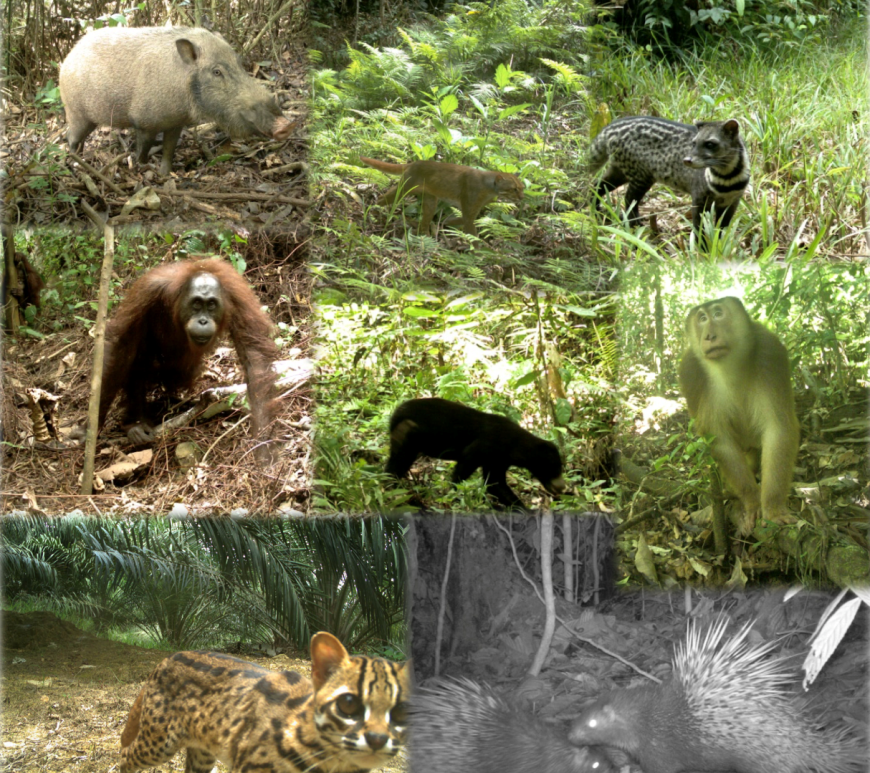
Do you understand beta-diversity? If not, you are likely not alone. Here to explain this under-appreciated concept is Dr Ollie Wearn, an AXA Research Fellow at the Institute of Zoology, London. He is interested in a broad-range of topics, including land-use change, habitat fragmentation, biodiversity monitoring and practically anything involving camera-trapping and-or mammals. There’s a problem in land-use change research, and we’re not talking about … Continue reading Is beta-diversity the elephant in the room?

How can you help Arctic skuas?

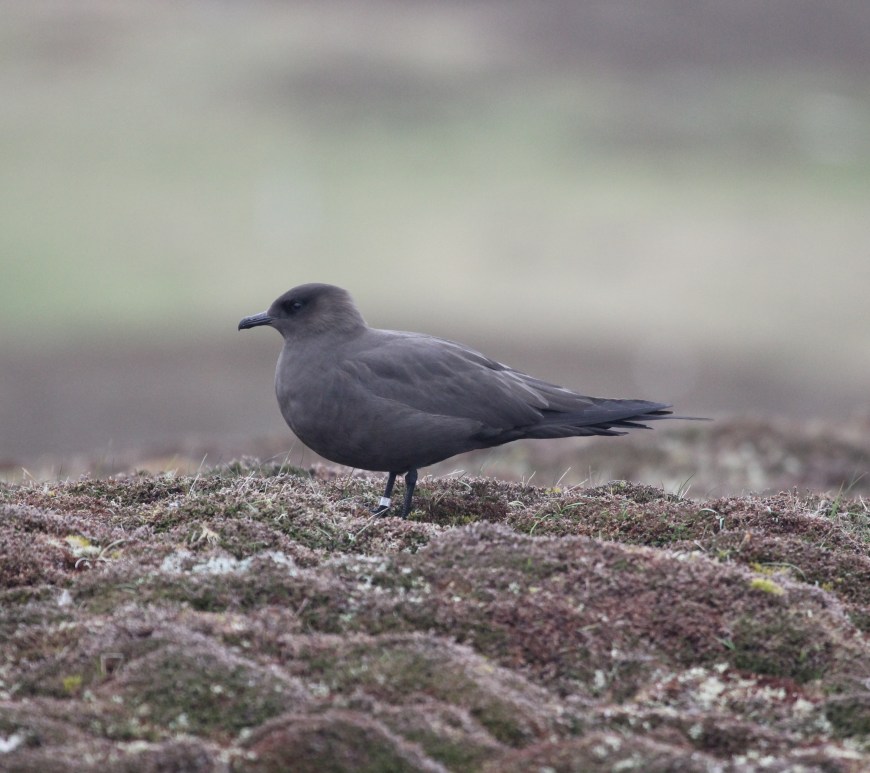
Continuing from last week’s post describing the challenges faced by Arctic skuas, Dr Allan Perkins (RSPB Centre for Conservation Science) is back with some advice on what you can to to help. Arctic skuas may well be heading towards extinction as a breeding species within the UK. That is the stark warning from our recent study, which found that Arctic skuas have declined by 81% in Scotland. What … Continue reading How can you help Arctic skuas?

Stressed-Out Squirrels

A recently-published paper in the Journal of Animal Ecology has discovered that the grey squirrel (one of the most impacting alien invasive species in Europe) causes an increase in chronic stress in the native red squirrel. Lead author Dr Francesca Santicchia is a research fellow at the University of Insubria in Italy. She had studied the relationships among parasites, physiological stress, and personality in grey squirrel … Continue reading Stressed-Out Squirrels