The Long and Winding Road: 36 Years of Insight into the Population Dynamics of an Insect

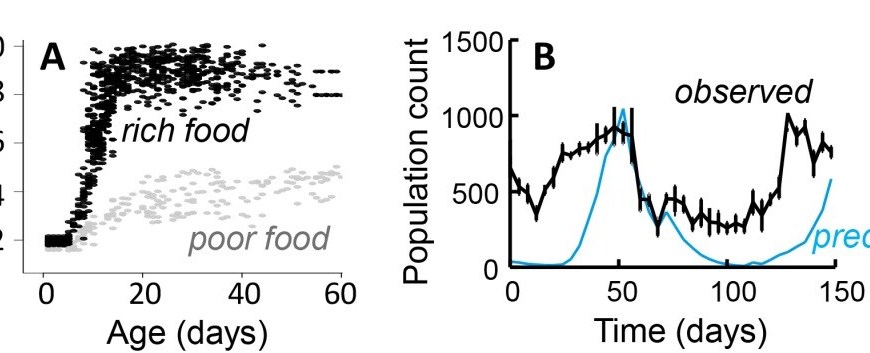
This blog post is provided by Christer Solbreck and tells the #StoryBehindThePaper for the article “Long-term population dynamics of an insect in a simple food web under a changing environment”, which was recently published in the Journal of Animal Ecology. In this post, Solbreck reflects on his time spent studying the seed-feeding bug Lygaeus equestris, and how research questions can evolve over the course of … Continue reading The Long and Winding Road: 36 Years of Insight into the Population Dynamics of an Insect

Frankenstein matrices: among-population life history variation affects the reliability and predictions of demographic models

This blog post is provided by Giacomo Rosa, Benedikt R. Schmidt, Hugo Cayuela and Stefano Canessa and tells the #StoryBehindThePaper for the article “Frankenstein matrices: among-population life history variation affects the reliability and predictions of demographic models”, which was recently published in the Journal of Animal Ecology. In their study, Rosa and colleagues examine the impacts of using “Frankenstein matrices” in practical population ecology, which … Continue reading Frankenstein matrices: among-population life history variation affects the reliability and predictions of demographic models

Prey Depletion and Source-Sink Dynamics in Endangered African Wild Dogs

This blog post is provided by Johnathan Reyes de Merkle and tells the #StoryBehindthePaper for the paper “An integrated population model reveals source-sink dynamics for competitively subordinate African wild dogs linked to anthropogenic prey depletion”, which was recently published in Journal of Animal Ecology. In their study, they investigated the effects of anthropogenic prey depletion on the coexistence and persistence of the African wild dog, a … Continue reading Prey Depletion and Source-Sink Dynamics in Endangered African Wild Dogs

Historical data show serious threats facing freshwater mussels in major UK river

This blog post is provided by Isobel Ollard and tells the #StoryBehindthePaper for the paper ‘Declines in freshwater mussel density, size and productivity in the River Thames over the past half century‘, which was recently published in Journal of Animal Ecology. The authors replicated a survey of freshwater mussels in the River Thames from the 1960s and mussel populations had declined to less than 10% … Continue reading Historical data show serious threats facing freshwater mussels in major UK river

The invisible interplay between herbivorous insects and their monitoring ants on a chemically diverse plant

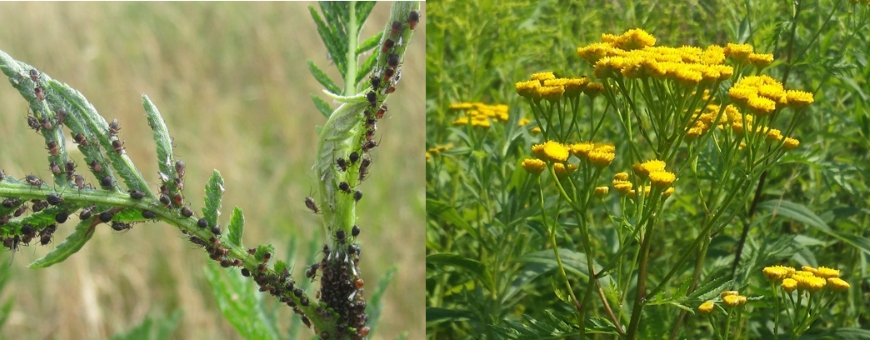
Plants exhibit impressive genetic and chemical diversity, and this variation is important for structuring ecological communities. A recent paper in the Journal of Animal Ecology investigated this with regard to aphids and their host-plant tansy. Lead author Dr Sharon Zytynska from the Technical University of Munich tells us more about this study. The perennial tansy plant (Tanacetum vulgare) grows steadily throughout the spring, producing heads … Continue reading The invisible interplay between herbivorous insects and their monitoring ants on a chemically diverse plant

Live fast, don’t die young

Understanding the trade-offs between survival and reproduction is essential for the study of population dynamics. A recent paper in the Journal of Animal Ecology used a novel statistical framework to reveal previously unknown life-cycle trends for two sympatric bat species. Lead author Dr Antica Culina from the University of Oxford and Netherlands Institute of Ecology, explains the research. Survival and reproduction both require energy, which is generally … Continue reading Live fast, don’t die young

A high cost of infidelity for swift parrots

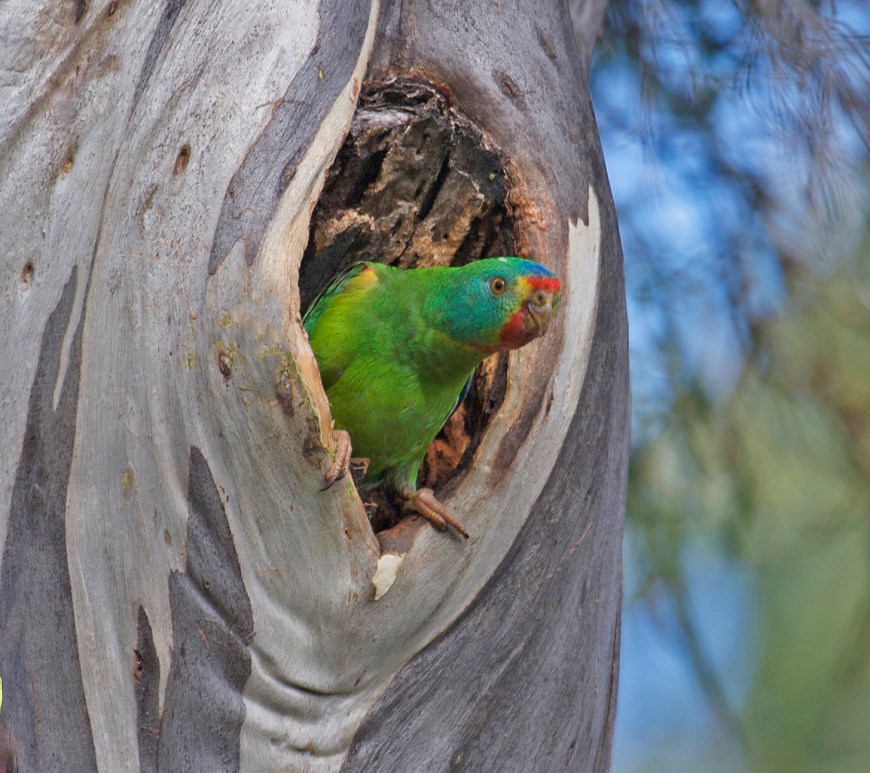
A recent paper published in the Journal of Animal Ecology has found that a chronic shortage of females in a critically endangered parrot species has led to love triangles, sneaky sex on the side, increased fighting between males, and fewer babies.  Here to tell us more are three of the authors: Rob Heinsohn, George Olah, and Dejan Stojanovic. Most birds are at least socially monogamous, … Continue reading A high cost of infidelity for swift parrots

Aging in Eagles

For many species, breeding performance changes as an individual ages. So in order to properly monitor and manage animal populations, it is important to understand how different species age. But this is easier said than done! A recent paper published in the Journal of Animal Ecology used a unique dataset from a reintroduced population of white‐tailed eagles in Scotland to study age‐ and sex‐specific trends. Lead author … Continue reading Aging in Eagles

Can traits of individuals inform on how populations respond to change?

We are in great need of an integrative framework that allows ecologists to predict life history strategies from functional traits that inform on population performance. The aim of a recent British Ecological Society cross-journal Special Feature is to link organismal functions, life history strategies and population performance. Here, Dr Isabel Smallegange discusses a test published within this Special Feature that shows how a recently developed dynamic energy … Continue reading Can traits of individuals inform on how populations respond to change?

Population Cycles: Historical Notes from the Bureau of Animal Population to 2018

This guest post by Professor Charles J. Krebs (Department of Zoology, University of British Columbia) looks back at his experiences studying population cycles across several decades, his work with Charles Elton and the team of people who made such work possible. In 1959 I began my Ph.D. research on lemming cycles under Dr. Ian McTaggart Cowan at the University of British Columbia (UBC), Canada. To … Continue reading Population Cycles: Historical Notes from the Bureau of Animal Population to 2018