Effects of a maternal stress hormone across life stages

Anthropogenic disturbance is a growing threat, and the physiological consequences of exposure to such stressors is gaining increasing attention. A recent paper published in the Journal of Animal Ecology explores the consequences of stress-relevant hormones for mothers and their offspring. David Ensminger, lead author of the study, is finishing up his PhD with Dr. Tracy Langkilde, taking an integrative approach to examining the role stress-relevant … Continue reading Effects of a maternal stress hormone across life stages

Biologging around the clock

The understanding of the interplay of movement, behaviour and physiology that biologging offers has applied relevance for a range of fields, including evolutionary ecology, wildlife conservation and behavioural ecology. In recognition of this, the Journal of Animal Ecology has an upcoming Special Feature on Biologging  (submissions due 20th September). A great advantage of biologging is that it allows data collection from some of the toughest environments on Earth. … Continue reading Biologging around the clock

A Collaborative Approach to Mapping Marine Megafauna Movements

The understanding of the interplay of movement, behaviour and physiology that biologging offers has applied relevance for a range of fields, including evolutionary ecology, wildlife conservation and behavioural ecology. In recognition of this, the Journal of Animal Ecology has an upcoming Special Feature on Biologging  (submissions due 20th September). One of the issues when studying the movements of large animals is the fact that they cover large distances. … Continue reading A Collaborative Approach to Mapping Marine Megafauna Movements

Biologging in a remote world

The understanding of the interplay of movement, behaviour and physiology that biologging offers has applied relevance for a range of fields, including evolutionary ecology, wildlife conservation and behavioural ecology. In recognition of this, the Journal of Animal Ecology has an upcoming Special Feature on Biologging  (submissions due 20th September). There are many different types of biologging devices. Here, Aimee Hoover from the University of Maryland tells us about … Continue reading Biologging in a remote world

Aging in Eagles

For many species, breeding performance changes as an individual ages. So in order to properly monitor and manage animal populations, it is important to understand how different species age. But this is easier said than done! A recent paper published in the Journal of Animal Ecology used a unique dataset from a reintroduced population of white‐tailed eagles in Scotland to study age‐ and sex‐specific trends. Lead author … Continue reading Aging in Eagles

Using crowd-sourced funding to track snakes

The understanding of the interplay of movement, behaviour and physiology that biologging offers has applied relevance for a range of fields, including evolutionary ecology, wildlife conservation and behavioural ecology. In recognition of this, the Journal of Animal Ecology has an upcoming Special Feature on Biologging  (submissions due 20th September). Unfortunately, animal-borne tags don’t come cheap. This was the problem recently-completed PhD student Ashleigh Wolfe faced … Continue reading Using crowd-sourced funding to track snakes

Can traits of individuals inform on how populations respond to change?

We are in great need of an integrative framework that allows ecologists to predict life history strategies from functional traits that inform on population performance. The aim of a recent British Ecological Society cross-journal Special Feature is to link organismal functions, life history strategies and population performance. Here, Dr Isabel Smallegange discusses a test published within this Special Feature that shows how a recently developed dynamic energy … Continue reading Can traits of individuals inform on how populations respond to change?

Building “SealSpotter” and Working with Citizen Scientists

A new citizen-science initiative has just been launched in southern Australia. But don’t worry if you’re not local – volunteers can assist from anywhere in the world thanks to the online platform! Here to tell us more is Dr Rebecca McIntosh (with some help from Ross Holmberg) from Phillip Island Nature Parks. Australian fur seals (Arctocephalus pusillus doriferus) are near-apex predators, and have been recognised … Continue reading Building “SealSpotter” and Working with Citizen Scientists

The wandering albatrosses of the Crozet Islands

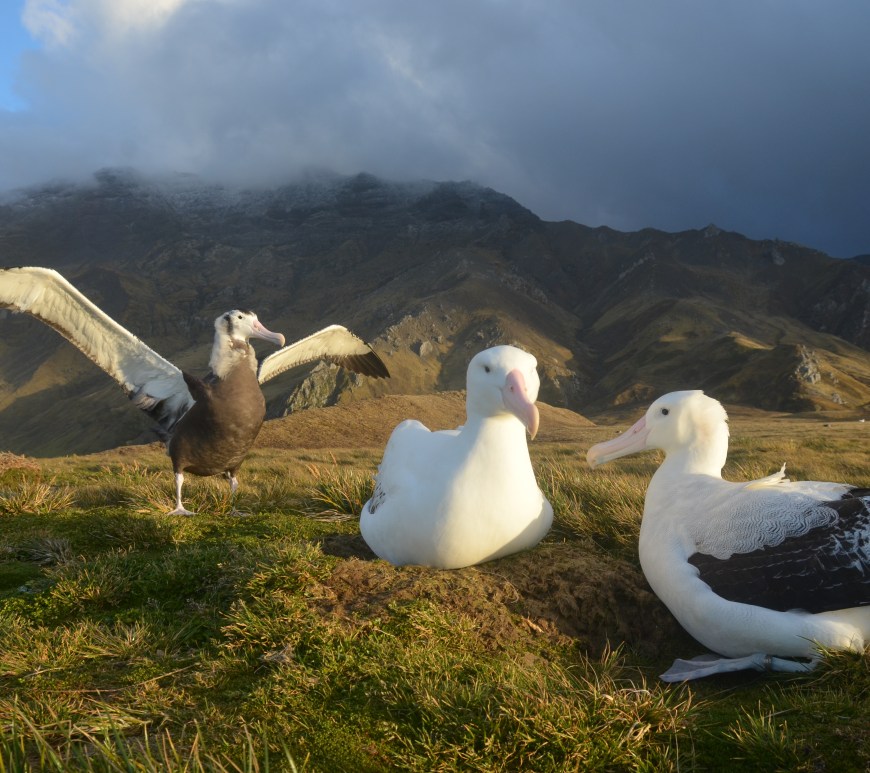
Henri Weimerskirch has been studying the wandering albatrosses that nest on the Crozet Islands for over 50 years. Out in the current issue of the journal is a new Synthesis paper Linking demographic processes and foraging ecology in wandering albatross—Conservation implications by Henri giving an overview of this unique 60-year study system. The paper presents the work carried out on albatross addressing questions on the links … Continue reading The wandering albatrosses of the Crozet Islands

Nowhere to Hide: Changing landscapes and predator highways

Whilst we often think about human activities negatively altering the landscape, sometimes these changes can have unexpected benefits for predators. Of course, this is not necessarily good news for prey species! A paper recently published in the Journal of Animal Ecology examined this with regard to linear features and predator-prey dynamics in the forests of Canada. Lead author Dr Craig DeMars, a postdoctoral fellow at the … Continue reading Nowhere to Hide: Changing landscapes and predator highways