Can traits of individuals inform on how populations respond to change?

We are in great need of an integrative framework that allows ecologists to predict life history strategies from functional traits that inform on population performance. The aim of a recent British Ecological Society cross-journal Special Feature is to link organismal functions, life history strategies and population performance. Here, Dr Isabel Smallegange discusses a test published within this Special Feature that shows how a recently developed dynamic energy … Continue reading Can traits of individuals inform on how populations respond to change?

Building “SealSpotter” and Working with Citizen Scientists

A new citizen-science initiative has just been launched in southern Australia. But don’t worry if you’re not local – volunteers can assist from anywhere in the world thanks to the online platform! Here to tell us more is Dr Rebecca McIntosh (with some help from Ross Holmberg) from Phillip Island Nature Parks. Australian fur seals (Arctocephalus pusillus doriferus) are near-apex predators, and have been recognised … Continue reading Building “SealSpotter” and Working with Citizen Scientists

The wandering albatrosses of the Crozet Islands

Henri Weimerskirch has been studying the wandering albatrosses that nest on the Crozet Islands for over 50 years. Out in the current issue of the journal is a new Synthesis paper Linking demographic processes and foraging ecology in wandering albatross—Conservation implications by Henri giving an overview of this unique 60-year study system. The paper presents the work carried out on albatross addressing questions on the links … Continue reading The wandering albatrosses of the Crozet Islands

Nowhere to Hide: Changing landscapes and predator highways

Whilst we often think about human activities negatively altering the landscape, sometimes these changes can have unexpected benefits for predators. Of course, this is not necessarily good news for prey species! A paper recently published in the Journal of Animal Ecology examined this with regard to linear features and predator-prey dynamics in the forests of Canada. Lead author Dr Craig DeMars, a postdoctoral fellow at the … Continue reading Nowhere to Hide: Changing landscapes and predator highways

Disease Ecology: The Lion’s Share

For the 2017 Elton Prize, the Editors selected one winning paper and two highly-commended papers. Last month we featured a blog post about prize winner Natalie Clay, and now we are proud to feature a post by highly-commended author Nick Fountain-Jones. Nick is a postdoc with the Department of Veterinary Population Medicine at the University of Minnesota. Read on to hear the #StoryBehindThePaper Understanding disease transmission … Continue reading Disease Ecology: The Lion’s Share

Return to the Wild: Conservation hope for the scimitar-horned oryx

In this post for Endangered Species Day Jared Stabach, a research ecologist at the Smithsonian Conservation Biology Institute highlights the sharp decline in large mammal species across the Sahara and focuses on species that individuals and organizations are working to reintroduce. Deserts cover approximately 17% of the world’s land mass.  While understudied and underappreciated, these systems support a unique and charismatic flora and fauna, with … Continue reading Return to the Wild: Conservation hope for the scimitar-horned oryx

The intersection of wildlife conservation, disease, and human health

Today marks Endangered Species Day, when people around the world are encouraged to discover more about threatened species and their habitats. For conservation efforts to succeed, it is necessary to understand how animals interact with each other, with their environment – and with humans. Lauren White (University of Minnesota) addresses this by studying the idea of One Health – the intersection of human, animal, and … Continue reading The intersection of wildlife conservation, disease, and human health

Population Cycles: Historical Notes from the Bureau of Animal Population to 2018

This guest post by Professor Charles J. Krebs (Department of Zoology, University of British Columbia) looks back at his experiences studying population cycles across several decades, his work with Charles Elton and the team of people who made such work possible. In 1959 I began my Ph.D. research on lemming cycles under Dr. Ian McTaggart Cowan at the University of British Columbia (UBC), Canada. To … Continue reading Population Cycles: Historical Notes from the Bureau of Animal Population to 2018

Evolution of dance and color in the birds of paradise

In this post, we take a behind-the-scenes look at a recent study into the drivers of complexity in bird of paradise displays. Meredith Miles, a PhD student in Dr Matthew Fuxjager’s lab at Wake Forest University, takes an integrative approach into behavioural ecology. This involves studying the molecular and physiological mechanisms that underlie display performance all the way up to the diversity of macroevolutionary pattern … Continue reading Evolution of dance and color in the birds of paradise

How do birds avoid their sibling-species competitors?

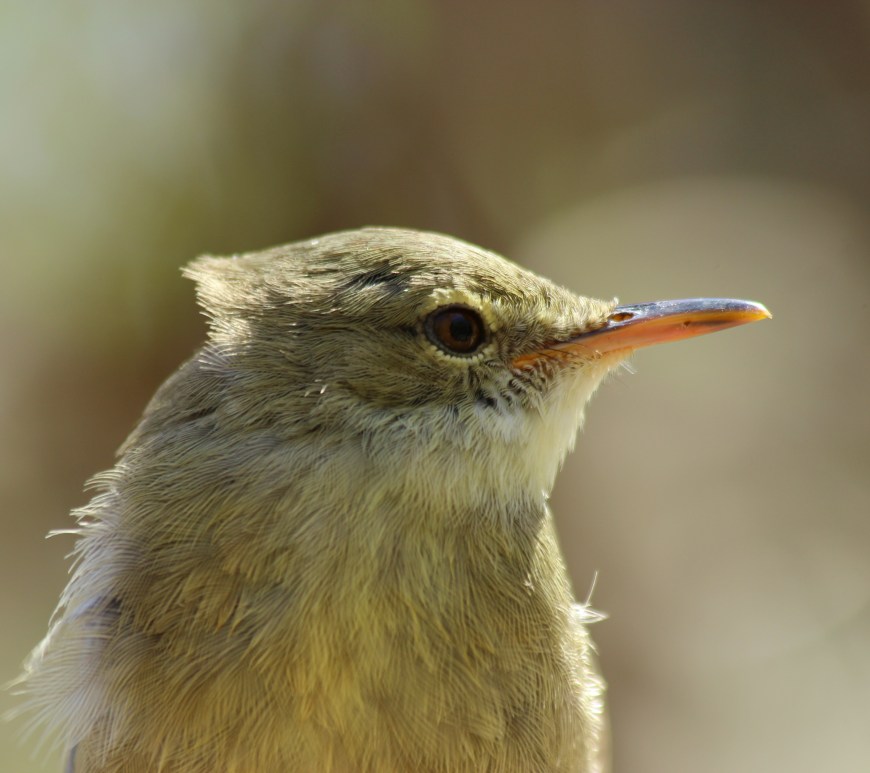
Being similar can be problematic. When ecologically-similar species co-occur, competition can result. So how can this be avoided? A recent paper published in the Journal of Animal Ecology shows how birds avoid their sibling-species competitors. Authors Lechosław Kuczyński, Anna Skoracka, Jiri Reif and Radka Reifova explain. Mechanisms that enable coexistence of ecologically-similar species are crucial in maintaining biological diversity. When such species co‑occur they inevitably compete for resources, such as … Continue reading How do birds avoid their sibling-species competitors?