Disease Ecology: The Lion’s Share

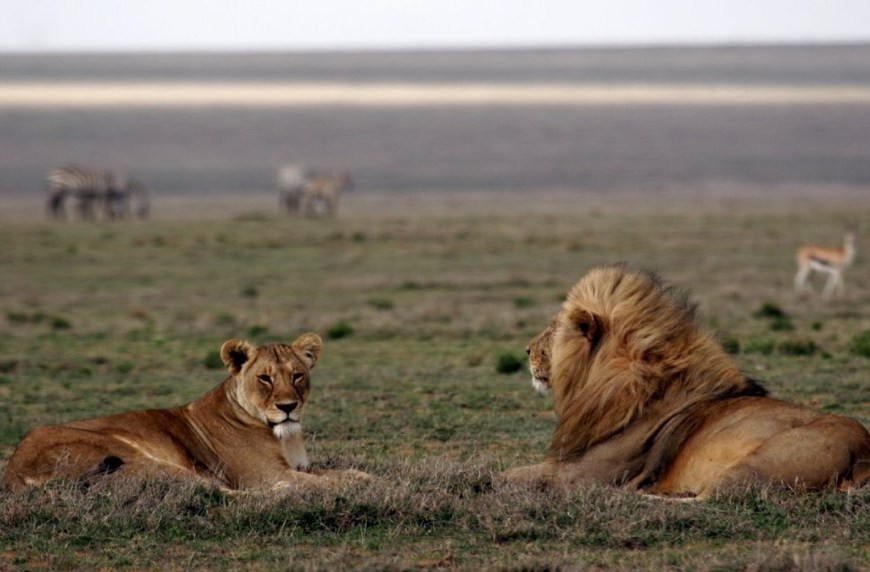
For the 2017 Elton Prize, the Editors selected one winning paper and two highly-commended papers. Last month we featured a blog post about prize winner Natalie Clay, and now we are proud to feature a post by highly-commended author Nick Fountain-Jones. Nick is a postdoc with the Department of Veterinary Population Medicine at the University of Minnesota. Read on to hear the #StoryBehindThePaper Understanding disease transmission … Continue reading Disease Ecology: The Lion’s Share

Return to the Wild: Conservation hope for the scimitar-horned oryx

In this post for Endangered Species Day Jared Stabach, a research ecologist at the Smithsonian Conservation Biology Institute highlights the sharp decline in large mammal species across the Sahara and focuses on species that individuals and organizations are working to reintroduce. Deserts cover approximately 17% of the world’s land mass.  While understudied and underappreciated, these systems support a unique and charismatic flora and fauna, with … Continue reading Return to the Wild: Conservation hope for the scimitar-horned oryx

The intersection of wildlife conservation, disease, and human health

Today marks Endangered Species Day, when people around the world are encouraged to discover more about threatened species and their habitats. For conservation efforts to succeed, it is necessary to understand how animals interact with each other, with their environment – and with humans. Lauren White (University of Minnesota) addresses this by studying the idea of One Health – the intersection of human, animal, and … Continue reading The intersection of wildlife conservation, disease, and human health

Population Cycles: Historical Notes from the Bureau of Animal Population to 2018

This guest post by Professor Charles J. Krebs (Department of Zoology, University of British Columbia) looks back at his experiences studying population cycles across several decades, his work with Charles Elton and the team of people who made such work possible. In 1959 I began my Ph.D. research on lemming cycles under Dr. Ian McTaggart Cowan at the University of British Columbia (UBC), Canada. To … Continue reading Population Cycles: Historical Notes from the Bureau of Animal Population to 2018

Evolution of dance and color in the birds of paradise

In this post, we take a behind-the-scenes look at a recent study into the drivers of complexity in bird of paradise displays. Meredith Miles, a PhD student in Dr Matthew Fuxjager’s lab at Wake Forest University, takes an integrative approach into behavioural ecology. This involves studying the molecular and physiological mechanisms that underlie display performance all the way up to the diversity of macroevolutionary pattern … Continue reading Evolution of dance and color in the birds of paradise

How do birds avoid their sibling-species competitors?

Being similar can be problematic. When ecologically-similar species co-occur, competition can result. So how can this be avoided? A recent paper published in the Journal of Animal Ecology shows how birds avoid their sibling-species competitors. Authors Lechosław Kuczyński, Anna Skoracka, Jiri Reif and Radka Reifova explain. Mechanisms that enable coexistence of ecologically-similar species are crucial in maintaining biological diversity. When such species co‑occur they inevitably compete for resources, such as … Continue reading How do birds avoid their sibling-species competitors?

Frogs and Herbicides: A Gut Feeling

Dr. Sarah Knutie led a study to explore whether a commonly-used herbicide affects the gut microbes of frogs and if the gut microbes could mediate the effect of the herbicide on infection risk by the amphibian chytrid fungus. She conducted the work as a Post-doctoral Researcher at the University of South Florida and is currently an Assistant Professor at the University of Connecticut. Here, she … Continue reading Frogs and Herbicides: A Gut Feeling

Behind the scenes: An evolutionary framework outlining the integration of individual social and spatial ecology

Our latest #StoryBehindThePaper comes from Quinn Webber, a PhD student working with Dr Eric Vander Wal in the Wildlife Evolutionary Ecology Lab at Memorial University in Newfoundland, Canada. Quinn is studying social and spatial behaviour of caribou on the Island of Newfoundland and Fogo Island. His work focuses on improving scientific unerstanding of how social network structure is related to habitat selection and space use, and how these … Continue reading Behind the scenes: An evolutionary framework outlining the integration of individual social and spatial ecology

Social or solitary: Does social network protect from disease?

The spread of infectious diseases is heavily influenced by the structure of animal social networks. So how do disease risks vary by different social systems? Dr Pratha Sah addresses this in a recent publication with the Journal of Animal Ecology. Animal species ranging from mammals, birds, reptiles and fish to insects exhibit an impressive diversity in sociality. Sociality describes the tendency of animals to associate with … Continue reading Social or solitary: Does social network protect from disease?

Lessons from two decades of detailing an invasion front

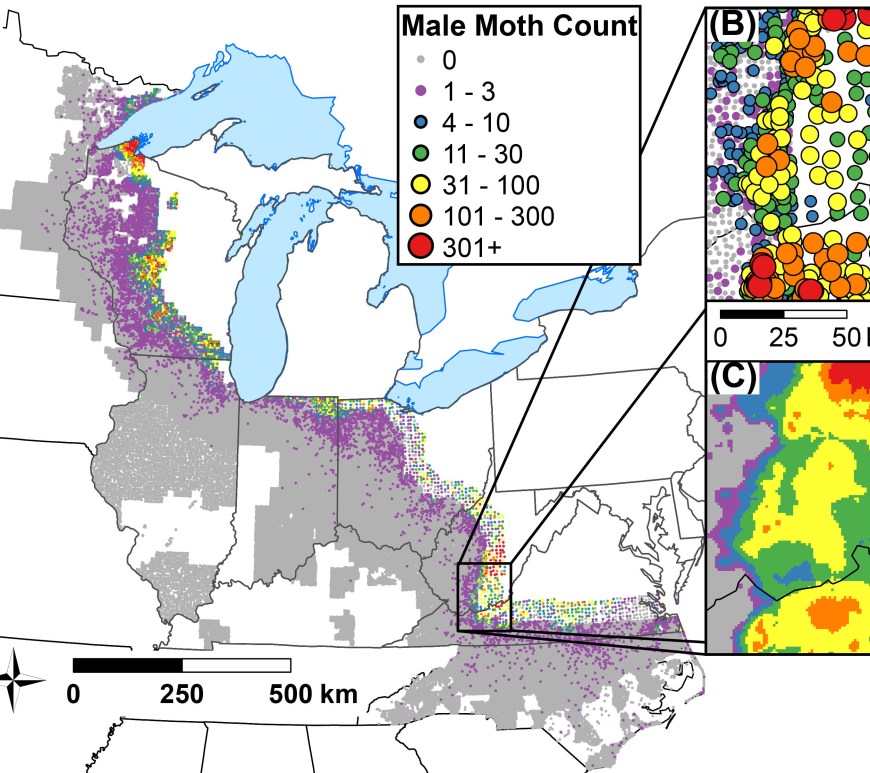
What can we learn about population dynamics from invasive species? A recent synthesis article published in the Journal of Animal Ecology examines the contributions from one of the best-documented cases of species invasion, the spread of the gypsy moth in North America. Dr Kristine Grayson started working with gypsy moth as a USDA National Institute of Food and Agriculture Postdoctoral Fellow at Virginia Commonwealth University … Continue reading Lessons from two decades of detailing an invasion front