Sticky post

Plant Metabolites and Sawfly Social Lives: Uncovering Nature’s Secret Networks

This blog post is provided by Pragya Singh and tells the #StoryBehindThePaper for the paper “Plant metabolites modulate social networks and lifespan in a sawfly” which was recently published in the Journal of Animal Ecology. Together with colleagues, Pragya explores how turnip sawflies acquire plant chemicals from non-food plants that not only boost their defenses but also, depending on group compositions concerning chemical access, reshape … Continue reading Plant Metabolites and Sawfly Social Lives: Uncovering Nature’s Secret Networks

Terrestrial birds mediating their responses to droughts through biological traits

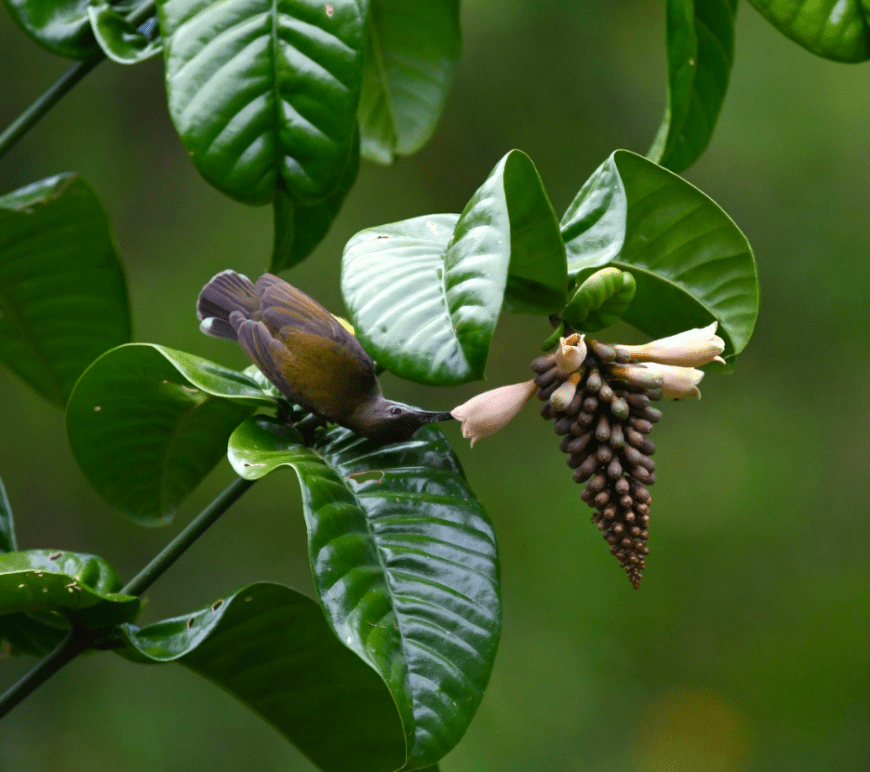
This blog post is provided by Lyu Bing Zhang and Yang Liu and tells the #StoryBehindThePaper for the paper “Biological traits and biome features mediate responses of terrestrial bird demography to droughts”, which was recently published in the Journal of Animal Ecology. In their study, Lyu Bing, Yang and colleagues conducted a meta-analysis of 204 species to find that droughts generally have a negative impact … Continue reading Terrestrial birds mediating their responses to droughts through biological traits

Homesick insects

This blog post is provided by Charlotte Taelman and Garben Logghe and tells the #StoryBehindThePaper for the paper “Unravelling arthropod movement in natural landscapes: small-scale effects of body size and weather conditions”, which was recently published in the Journal of Animal Ecology. Together with colleagues, they track and study the ability of over 200 insect species to find their way home. Home is a place … Continue reading Homesick insects

Seed dispersers see the rainforest in 3D

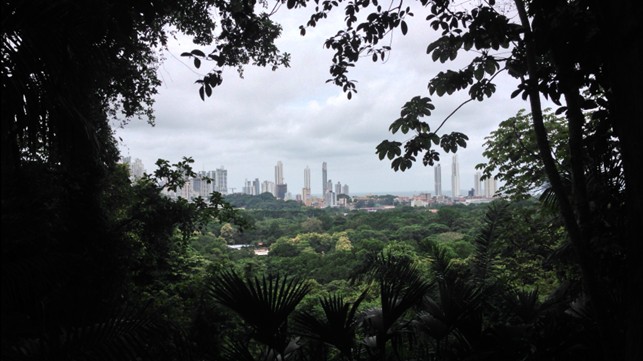
This blog post is provided by Nicholas Russo and tells the #StoryBehindThePaper for the paper “Three-dimensional vegetation structure drives patterns of seed dispersal by African hornbills” which was recently published in the Journal of Animal Ecology. Together with colleagues, Nicholas shows how vegetation structure and weather affect the behaviour and habitat preference of two hornbill species and how this, in turn, may influence seed dispersal. … Continue reading Seed dispersers see the rainforest in 3D

Black History Month 2024: Kristian Harris

For Black History Month 2024, the British Ecological Society (BES) journals are celebrating the work of Black ecologists around the world and sharing their stories. In this blog, Kristian Harris shares his story and journey in academia. Biography Name: Kristian Harris Affiliation (university/place of employment): The Ohio State University (Graduate Student) Ecology interests in three keywords: How did you get into ecology? Growing up in … Continue reading Black History Month 2024: Kristian Harris

Temporal Variability in Host Availability Alters the Outcome of Competition Between Two Parasitoid Species

This blog post is contributed by Hua Wang, Tiantian Liu, Shucun Sun, Owen T. Lewis, and Xinqiang Xi, sharing the #StoryBehindThePaper for their article “Temporal variability in host availability alters the outcome of competition between two parasitoid species”, which was recently published in the Journal of Animal Ecology. In their study, Wang and colleagues found that temporal variability in host availability had significant effects on … Continue reading Temporal Variability in Host Availability Alters the Outcome of Competition Between Two Parasitoid Species

Sticky post

The Road to Recovery

This blog post is provided by John Donohue, Petri Piiroinen and Adam Kane and tells the #StoryBehindThePaper for the paper “Predicted short-term mesoscavenger release gives way to apex-scavenger dominance” which was recently published in the Journal of Animal Ecology. In their study, they explore whether and how vultures would recover from near extirpation. Most, if not all, modern-day ecosystems bear the hallmarks of human disturbance … Continue reading The Road to Recovery

Adapting to Scarcity: How Drought Impacts Large Carnivore Movement

This blog post is provided by Leigh West and tells the #StoryBehindThePaper for the paper “Droughts reshape apex predator space use and intraguild overlap” which was recently published in the Journal of Animal Ecology. Together with colleagues, Leigh explores how drought influences the movements and competitive dynamics of four key predators in Botswana’s Okavango Delta: lions, leopards, African wild dogs, and cheetahs. In the dynamic … Continue reading Adapting to Scarcity: How Drought Impacts Large Carnivore Movement

Environmental constraints can explain clutch size differences between urban and forest blue tits: Insights from an egg removal experiment

This blog post is provided by Mark Pitt and tells the #StoryBehindThePaper for the paper “Environmental constraints can explain clutch size differences between urban and forest blue tits: Insights from an egg removal experiment” which was recently published in the Journal of Animal Ecology. The authors find that urban blue tits lay fewer eggs than their non-urban counterparts, possibly as a response to limited resources. … Continue reading Environmental constraints can explain clutch size differences between urban and forest blue tits: Insights from an egg removal experiment

Lizard population responses to climate and fire regimes: new pathways to ecological resilience

This blog post is provided by Heitor Sousa and Rob Salguero-Gómez and tells the #StoryBehindThePaper for the paper “Severe fire regimes decrease resilience of ectothermic populations”, which was recently published in the Journal of Animal Ecology. In their study, Heitor, Rob and colleagues found that intermediate fire regimes may be the most conducive to resistance for several Cerrado lizard species, and that variation in life … Continue reading Lizard population responses to climate and fire regimes: new pathways to ecological resilience