Lovers and fighters, and how their coexistence affects their evolution within an eco-evolutionary feedback loop


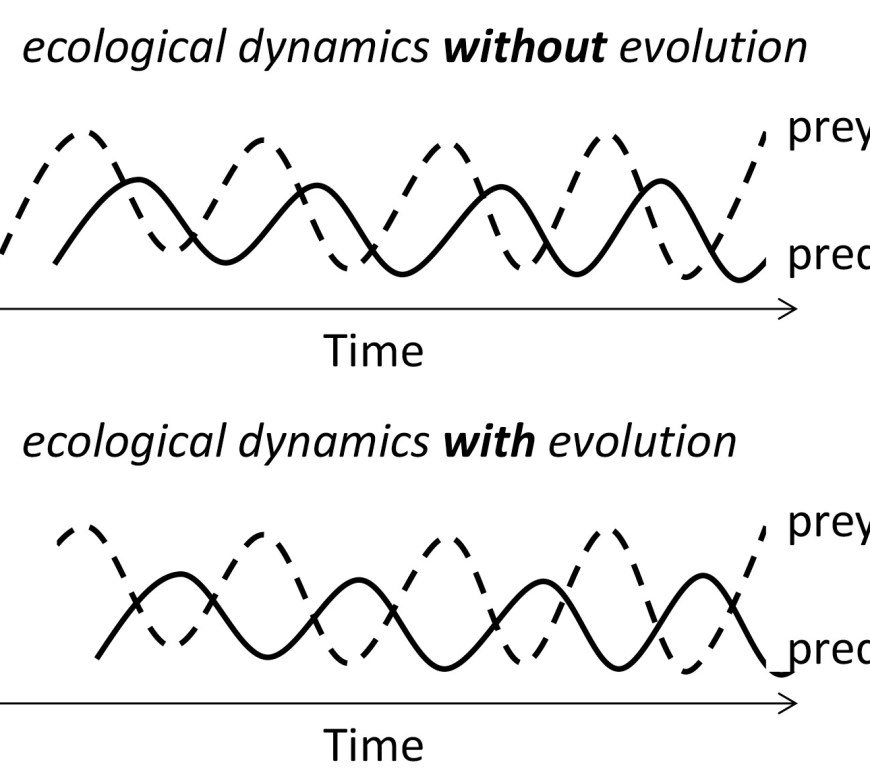
Eco-evolutionary dynamics are well studied but the term is applied to a wide variety of effects and interactions. Yet comparing these different types of studies on eco-evolutionary dynamics will inform on how this field can move forward, which is precisely the aim of a recent British Ecological Society cross-journal Special Feature. Here,  Isabel Smallegange (an Associate Professor of Population Biology at the University of Amsterdam) … Continue reading Lovers and fighters, and how their coexistence affects their evolution within an eco-evolutionary feedback loop
Diversity In Ecology

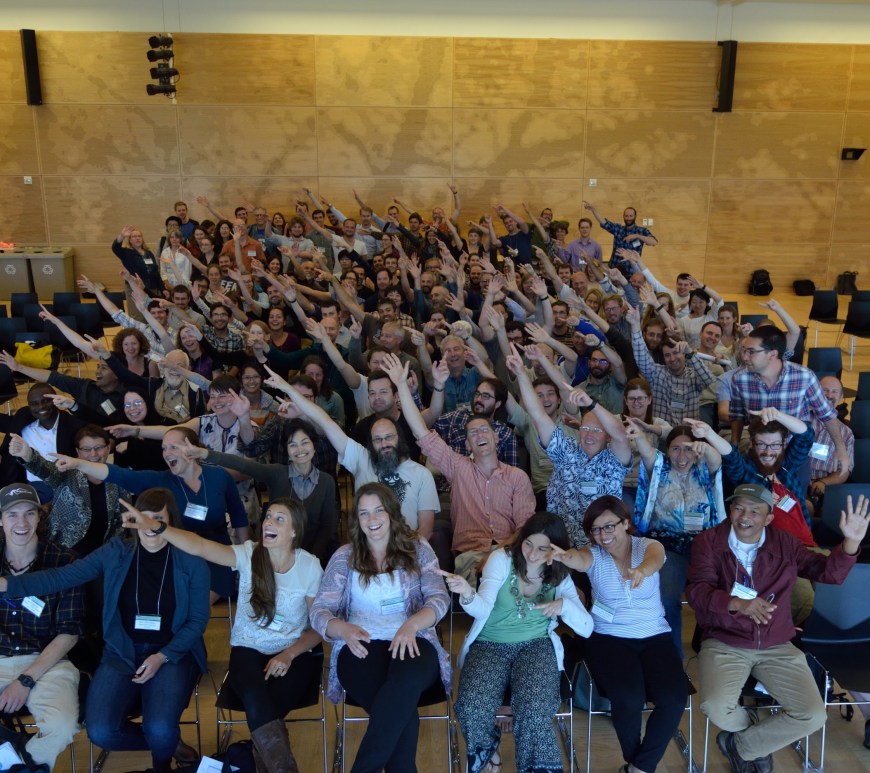
Blog Editor Sarah Marley introduces a new series of blog posts targeting #DiversityInEcology. One of the major goals of the British Ecological Society (BES) is to inspire, engage and recognise talent. This includes a commitment to building a community of ecologists which is as inclusive as possible. To achieve this, BES has undertaken a number of initiatives: launching an equality and diversity task group; running … Continue reading Diversity In Ecology

Countdown to ISEC!

There are only three more days to register for the next International Statistical Ecology Conference (ISEC). Many workshops are now fully-booked, but there is still a significant line-up of invited sessions, general speakers, and social events on offer. And with so many statistical ecologists attending, this conference promises to be well above average! But for those of you facing uncertainty, Dr Rachel McCrea, Chair of the ISEC Scientific … Continue reading Countdown to ISEC!

Population Cycles: Historical Notes from the Bureau of Animal Population to 2018

This guest post by Professor Charles J. Krebs (Department of Zoology, University of British Columbia) looks back at his experiences studying population cycles across several decades, his work with Charles Elton and the team of people who made such work possible. In 1959 I began my Ph.D. research on lemming cycles under Dr. Ian McTaggart Cowan at the University of British Columbia (UBC), Canada. To … Continue reading Population Cycles: Historical Notes from the Bureau of Animal Population to 2018

Evolution of dance and color in the birds of paradise

In this post, we take a behind-the-scenes look at a recent study into the drivers of complexity in bird of paradise displays. Meredith Miles, a PhD student in Dr Matthew Fuxjager’s lab at Wake Forest University, takes an integrative approach into behavioural ecology. This involves studying the molecular and physiological mechanisms that underlie display performance all the way up to the diversity of macroevolutionary pattern … Continue reading Evolution of dance and color in the birds of paradise

How do birds avoid their sibling-species competitors?

Being similar can be problematic. When ecologically-similar species co-occur, competition can result. So how can this be avoided? A recent paper published in the Journal of Animal Ecology shows how birds avoid their sibling-species competitors. Authors Lechosław Kuczyński, Anna Skoracka, Jiri Reif and Radka Reifova explain. Mechanisms that enable coexistence of ecologically-similar species are crucial in maintaining biological diversity. When such species co‑occur they inevitably compete for resources, such as … Continue reading How do birds avoid their sibling-species competitors?

Frogs and Herbicides: A Gut Feeling

Dr. Sarah Knutie led a study to explore whether a commonly-used herbicide affects the gut microbes of frogs and if the gut microbes could mediate the effect of the herbicide on infection risk by the amphibian chytrid fungus. She conducted the work as a Post-doctoral Researcher at the University of South Florida and is currently an Assistant Professor at the University of Connecticut. Here, she … Continue reading Frogs and Herbicides: A Gut Feeling

Social or solitary: Does social network protect from disease?

The spread of infectious diseases is heavily influenced by the structure of animal social networks. So how do disease risks vary by different social systems? Dr Pratha Sah addresses this in a recent publication with the Journal of Animal Ecology. Animal species ranging from mammals, birds, reptiles and fish to insects exhibit an impressive diversity in sociality. Sociality describes the tendency of animals to associate with … Continue reading Social or solitary: Does social network protect from disease?

Glimpsing evolutionary instability in mountains

There are many challenging environments on the planet, and the Andes Mountains are no exception. Animals living at height need to overcome a range of extremes – but how do they achieve this and what impact does it have on their evolution? Chauncey Gadek is a Masters student at the University of New Mexico, and his research with Dr Christopher Witt examines the impact of … Continue reading Glimpsing evolutionary instability in mountains

International Day of Women and Girls in Science

Science and gender equality are both vital for the achievement of the internationally-agreed Sustainable Development Goals. To help further gender equality and the empowerment of women and girls, the United Nations General Assembly declared 11th February as the International Day of Women and Girls in Science. To celebrate, the Journal of Animal Ecology blog asked some of the Journal’s new Associate Editors about their role models … Continue reading International Day of Women and Girls in Science