Personality and pace-of-life in free-ranging lemon sharks: a field recipe

This blog post is provided by Félicie Dhellemmes and tells the #StoryBehindThePaper for the article “Personality‐driven life history trade‐offs differ in two subpopulations of free‐ranging predators”. Ingredients: Two (or more) wild populations of juvenile lemon sharks which are known to differ in their predator abundance 15 to 23 people who are ready to fish for twelve exceptionally long nights (every year, since 1993 (or start A.S.A.P.)), to … Continue reading Personality and pace-of-life in free-ranging lemon sharks: a field recipe

A Journey to understanding, saving and conserving the Nigerian Biodiversity

This blog post is provided by Gideon Deme Gywa and is a special feature for Black History Month, in which the British Ecological Society (BES) journals are celebrating the work of Black ecologists from around the world and sharing their stories. Introduction I am Gideon Deme Gywa from Ganawuri (a small hub) in Plateau State, Nigeria. Growing up with my paternal grandparents was fun, and it really … Continue reading A Journey to understanding, saving and conserving the Nigerian Biodiversity

A Migratory Bird’s Journey from the Andes of Colombia to North America: leave early and take it easy or leave late and migrate fast?

This blog post is provided by Ana M. González and tells the #StoryBehindThePaper for the article “Earlier and slower or later and faster: Spring migration pace linked to departure time in a Neotropical migrant songbird”. Several species of migratory birds, many populations of which are in steep decline, spend the winter exclusively in montane forest in the Andes of northern South America between 1000-2500 m … Continue reading A Migratory Bird’s Journey from the Andes of Colombia to North America: leave early and take it easy or leave late and migrate fast?

How butterflies keep their cool: taking butterfly temperatures to understand the impacts of climate change.

This blog post is provided by Dr. Andrew Bladon and tells the  #StoryBehindThePaper for the article “How butterflies keep their cool: Physical and ecological traits influence thermoregulatory ability and population trends“, which was recently published in Journal of Animal Ecology. They say that only mad dogs and Englishmen go out in the midday sun. Perhaps we should add lepidopterists – people who study butterflies – to … Continue reading How butterflies keep their cool: taking butterfly temperatures to understand the impacts of climate change.

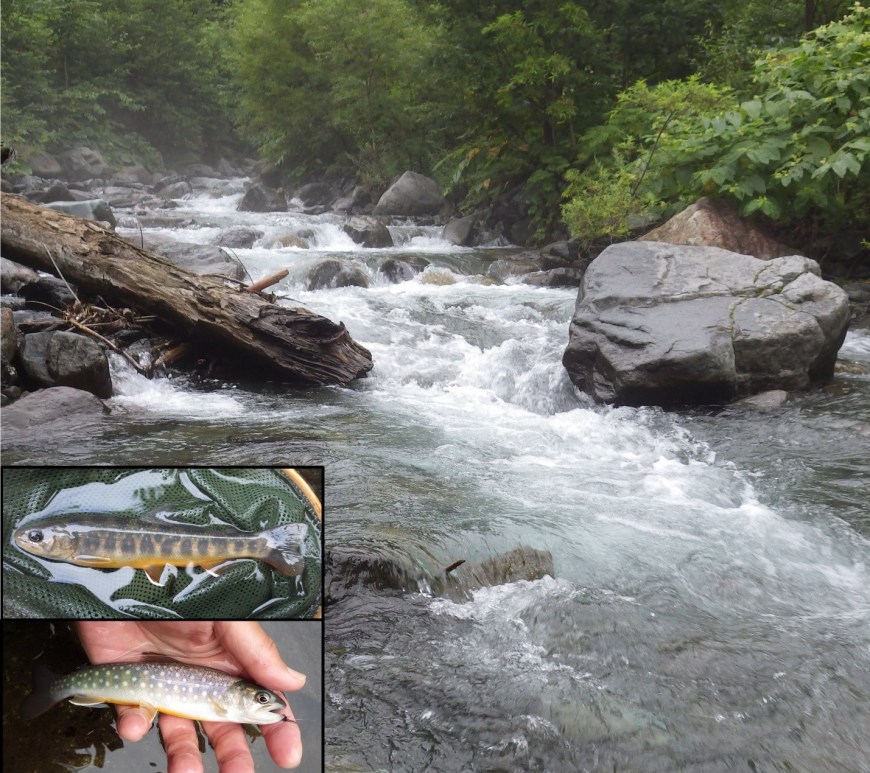
Up silt creek without a niche: how do stream food webs respond to sedimentation?

This blog post is provided by Francis J. Burdon, Angus McIntosh, and Jon Harding and tells the #StoryBehindThePaper for their article ”Mechanisms of landscape disturbance: evidence from landscape disturbance”. Food webs represent a holistic systems approach to characterizing patterns of biodiversity and energy flow by describing trophic interactions between consumers and resources. However, how these ecological networks respond to natural and anthropogenic perturbations remains poorly … Continue reading Up silt creek without a niche: how do stream food webs respond to sedimentation?

When the world burns, how do predators respond?

This blog post is provided by William Geary, Tim Doherty, Dale Nimmo, Ayesha Tulloch and Euan Ritchie and tells the  #StoryBehindThePaper for their article Predator responses to fire: A global systematic review and meta‐analysis, which has been shortlisted for the 2020 Sidnie Manton Award. Over the past year, many regions of the world have experienced extensive and severe fires. More than ten million hectares across … Continue reading When the world burns, how do predators respond?

Characterizing the “landscape of immunity” across wildlife systems

How does animal susceptibility to pathogens vary across landscapes? In this shortlisted paper for the Sidnie Manton Award “Macroimmunology: The drivers and consequences of spatial patterns in wildlife immune defence“, Daniel Becker and colleagues discuss the expanding efforts to apply large-scale approaches to ecological immunology. Daniel is a postdoctoral fellow at Indiana University and will be starting as an Assistant Professor at the University of … Continue reading Characterizing the “landscape of immunity” across wildlife systems

There are no second acts in animal life cycles

This blog post has been provided by Mike Moore, a post-doctoral fellow with the Living Earth Collaborative in St. Louis, USA. It tells the #StoryBehindThePaper for “On the evolution of carry-over effects”, a review that was short-listed for the Sidnie Manton Award.  Simply put, the things that animals need to do in one part of the life cycle are almost always different from the things … Continue reading There are no second acts in animal life cycles

Large mammals at Mt. Kilimanjaro: the importance of resource availability and protected areas

This blog post is provided by Friederike Gebert from the University of Würzburg and tells the #StoryBehindThePaper for her article  Primary productivity and habitat protection predict elevational species richness and community biomass of large mammals on Mt. Kilimanjaro which has been shortlisted for the 2019 Elton Prize. Mountains are biodiversity hotspots and prior areas for conservation. Even though elevational gradients belong to the best described … Continue reading Large mammals at Mt. Kilimanjaro: the importance of resource availability and protected areas

How good are we at identifying cues for breeding?

This blog post is provided by Emily Simmonds from the Norwegian University of Science and Technology (NTNU) and tells the #StoryBehindThePaper for her article  Cue identification in phenology: A case study of the predictive performance of current statistical tools which has been shortlisted for the 2019 Elton Prize. How do individuals decide when to start breeding, come out of hibernation, drop their leaves, or migrate? … Continue reading How good are we at identifying cues for breeding?