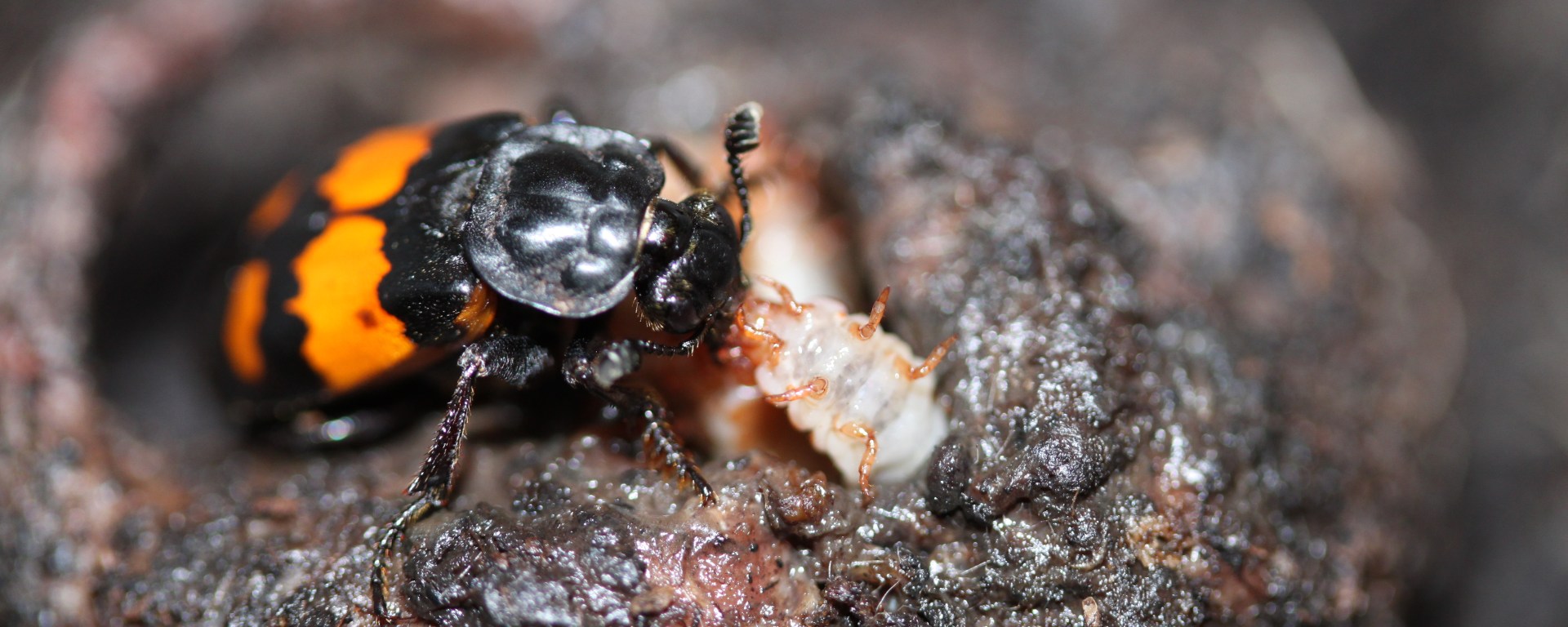
This blog post is provided by Casey Patmore and Per T Smiseth and tells the #StoryBehindThePaper for the article “Plasticity in parental care: Interspecific competitor cues shape biparental cooperation in a burying beetle”, which was recently published in Journal of Animal Ecology. This study examined how burying beetle parental care and breeding success was affected by interspecific competition.
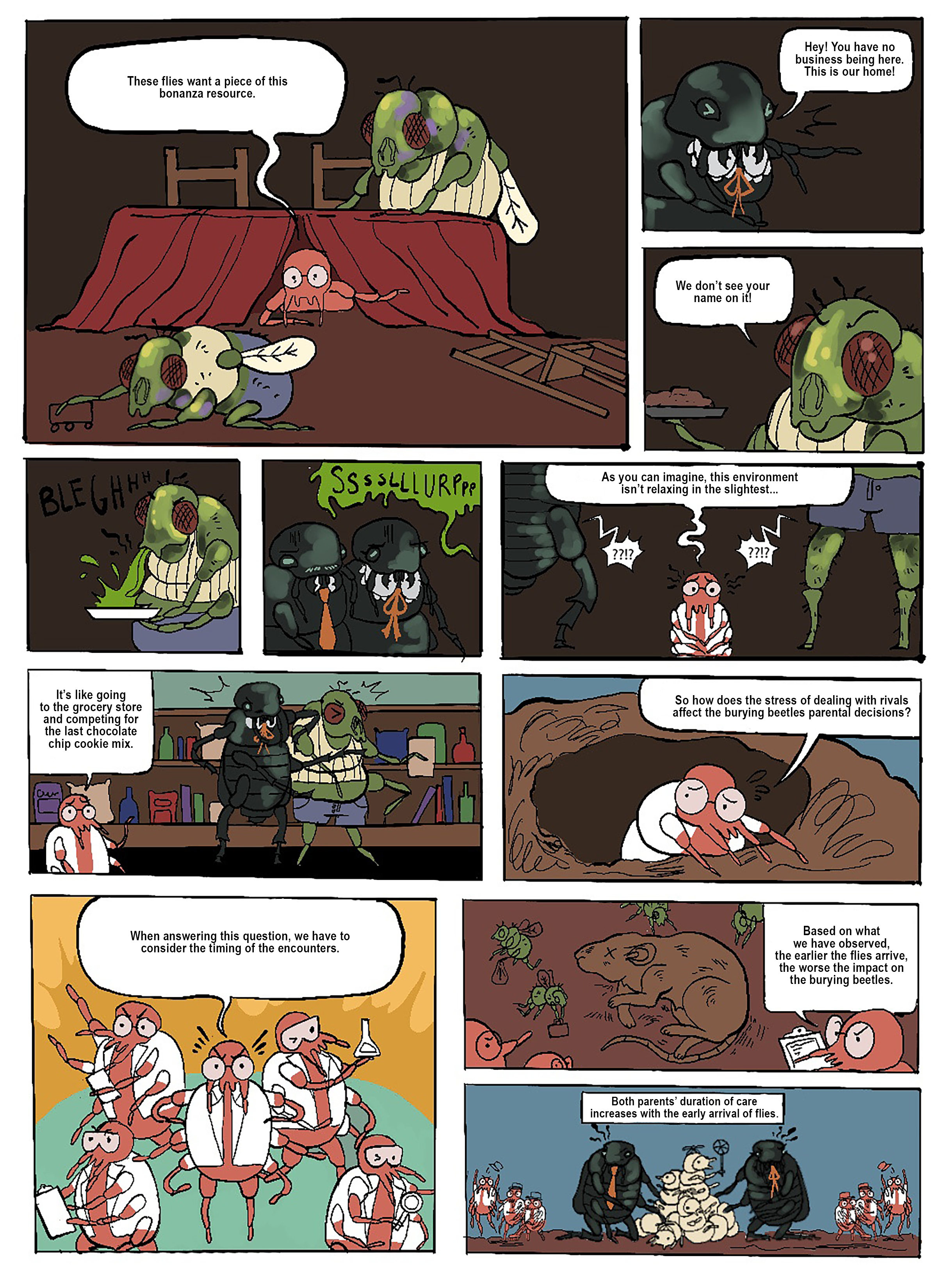
We investigated how perceived risk of interspecific competition affected breeding success and duration of male and female care by staging encounters between breeding pairs of beetles and fly intruders
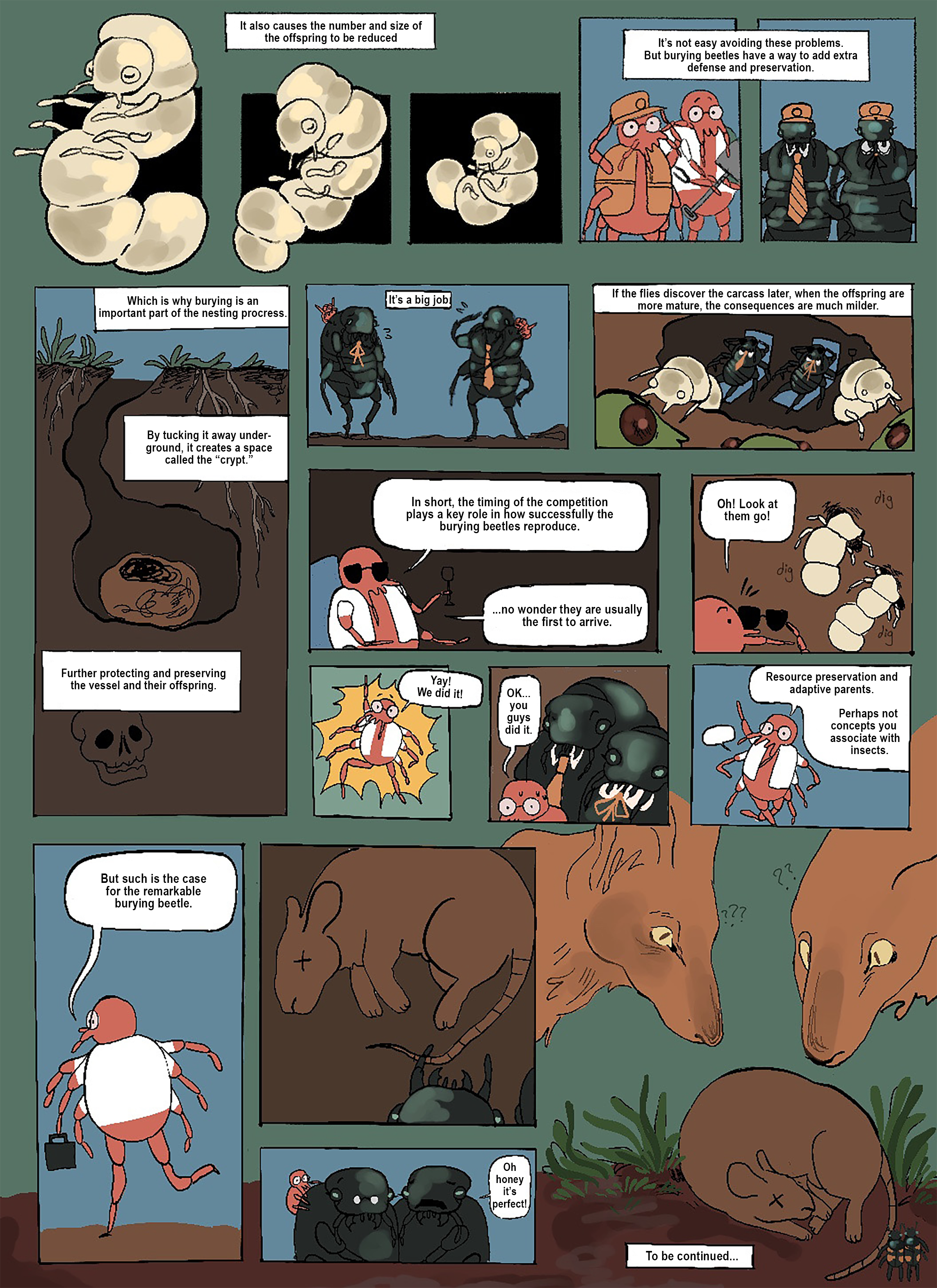
Burying beetles are among the most devoted, and unusual, parents in the insect world. The species we study, Nicrophorus vespilloides, breeds on small vertebrate carcasses, which they bury, preserve, and transform into a nest for their young. Both parents work together: preparing the carcass, defending it from intruders, and even feeding their larvae with pre-digested food. It’s an impressive example of biparental care in an insect, but it comes with a catch. These carcasses are rare, valuable, and highly contested resources.
In the wild, burying beetles face intense competition from other carrion users, especially blowflies like Calliphora vomitoria. These flies can quickly colonise a carcass, laying eggs that hatch into maggots which compete directly with beetle larvae. Given how frequently these species encounter one another, we wanted to understand how the risk of competition — rather than direct conflict — shapes how beetle parents cooperate. Does the mere presence of a rival change how long parents stay? Do male and female parents respond differently? And does timing matter?
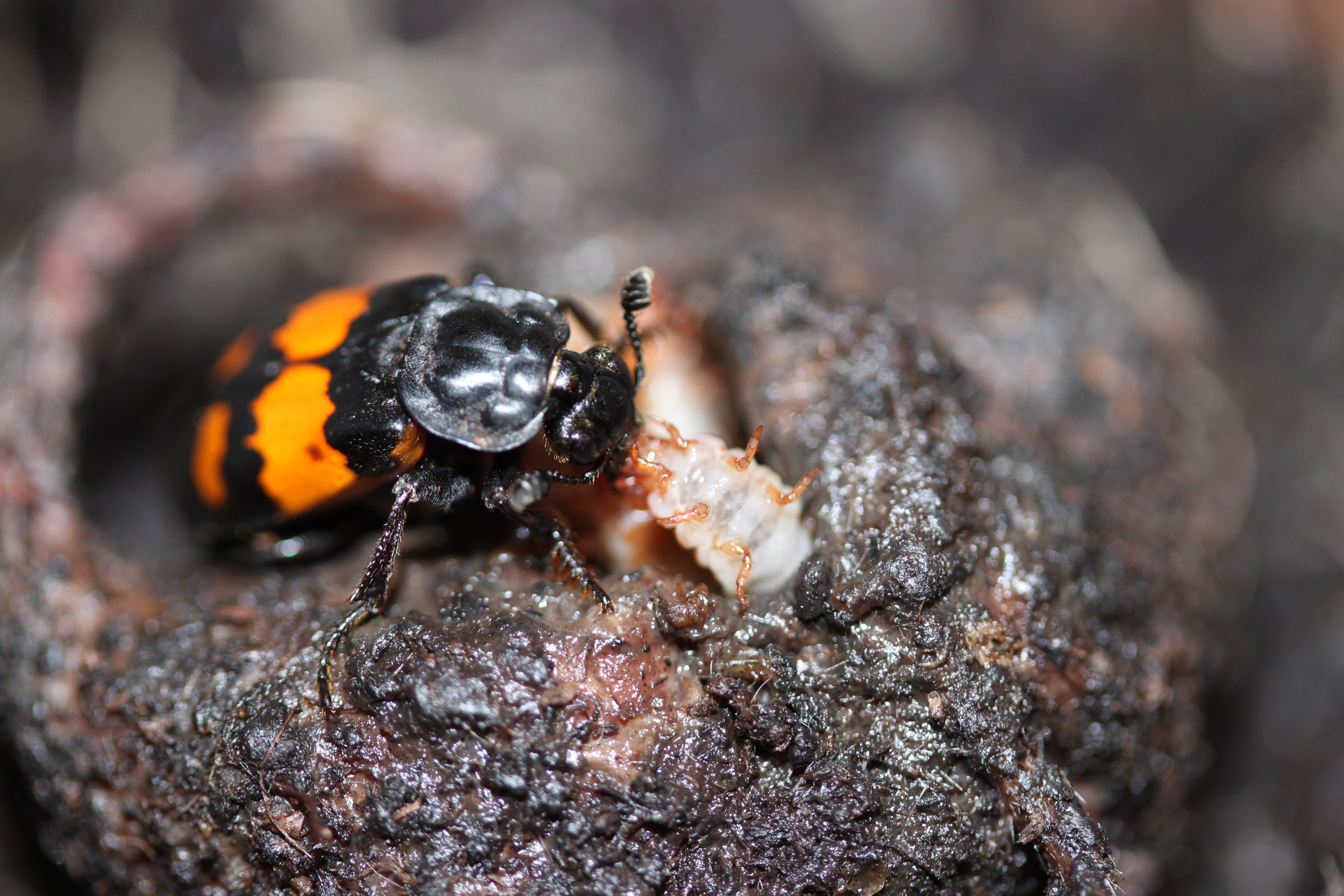
To explore this, we exposed breeding pairs to cues of fly competition by introducing dead flies at different times and in different numbers. This allowed us to isolate how beetles respond to the perception of competition alone. We found something quite interesting: both parents became more committed in the face of competition, staying longer and investing more care. But this extra effort didn’t always translate into success. In fact, breeding attempts were more likely to fail, especially when competition cues appeared early. It seems that while parents try to compensate for the threat, this comes at a cost, highlighting a potential trade-off between defending resources and completing other essential parental tasks.
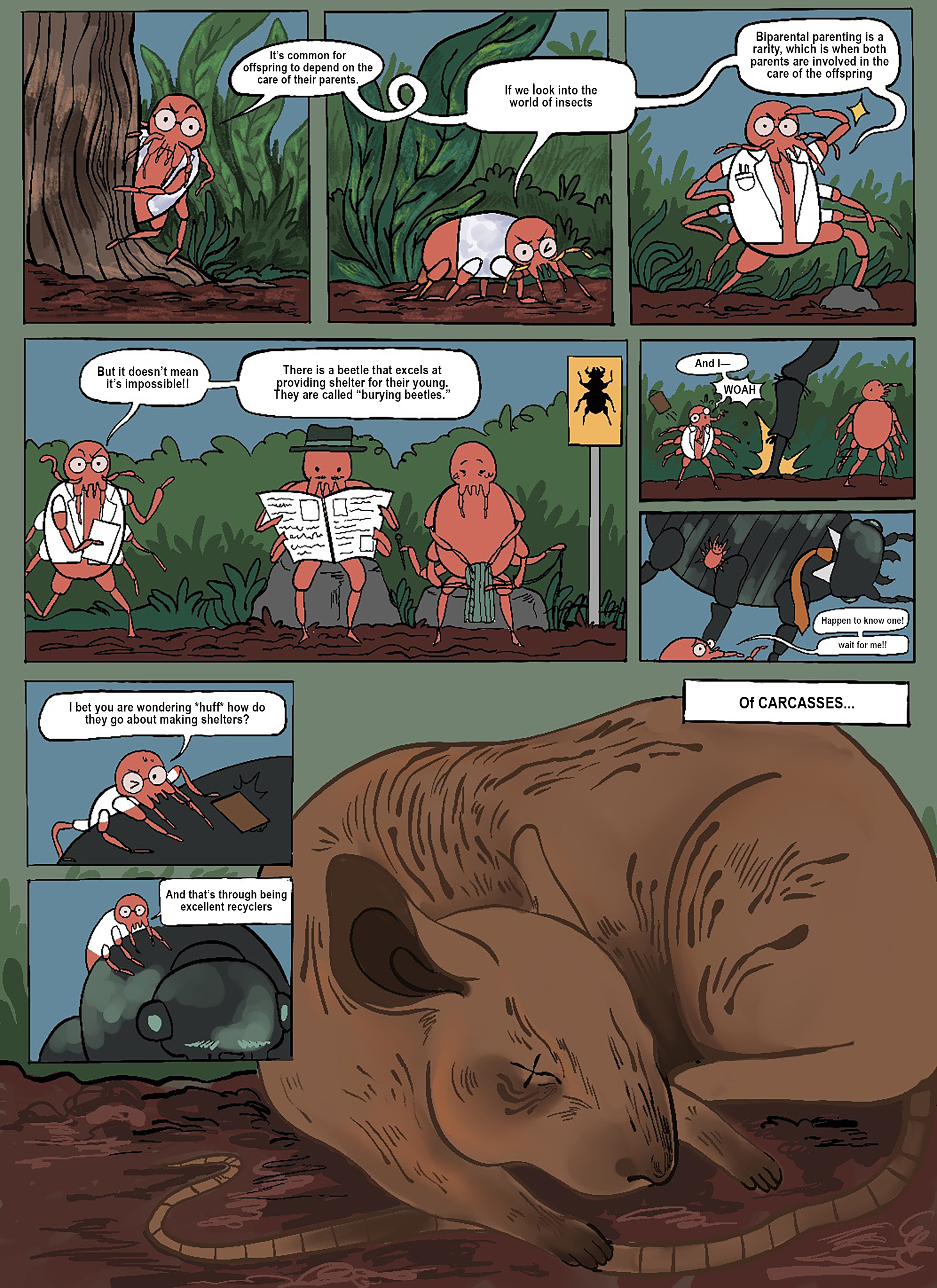
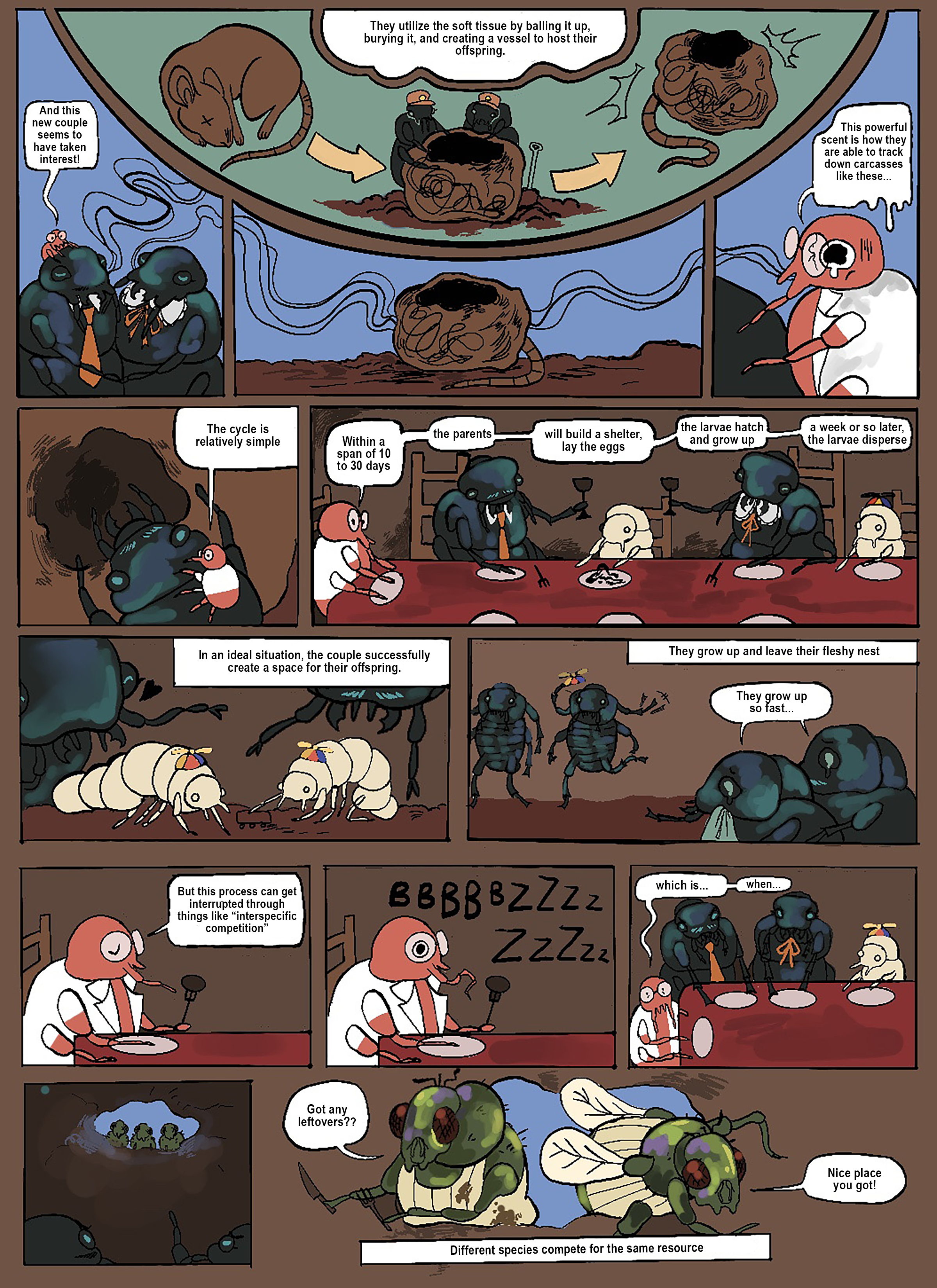
Parenting is already demanding, but under constant threat from competitors, it becomes a balancing act between cooperation, defence, and time. Our study shows that even in insects, parenting is not fixed, but flexible, shaped by the challenges of the environment and the ever-present risk of losing everything. To bring this idea to life, we created this short comic imagining what this pressure might feel like from a beetle’s perspective:
The following comic about this study was created by Skylar Sofferman through the Science Communication and Comics course at the Massachusetts College of Art and Design, led by Assistant Professor Caroline Hu:
Read the paper here:
https://besjournals.onlinelibrary.wiley.com/doi/full/10.1111/1365-2656.70251

