In this blog post, Renilce Carvalho de Castro tells the #StoryBehindThePaper for the article “Environmental and human-related gradients shape the community structure of medium and large terrestrial mammals in a central Amazonian white-sand Forest“, recently published in the Journal of Animal Ecology. This study utilised camera traps to monitor community structure of terrestrial mammals in white-sand ecosystems and evaluate influences of environmental and anthropogenic factors on this structure.
When we first arrived in the white-sand forests of the Rio Negro Sustainable Development Reserve, we encountered a landscape very different from those where we were accustomed to working. Here, we walked through low-stature forests interspersed with patches of open white-sand vegetation, where the vegetation became sparser and white sand lay exposed beneath our feet.
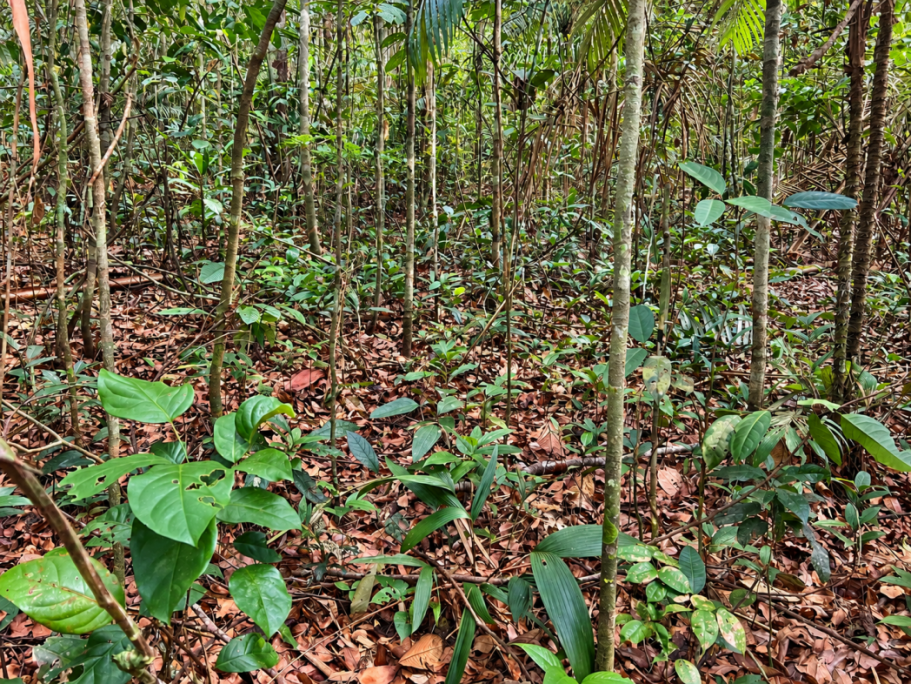
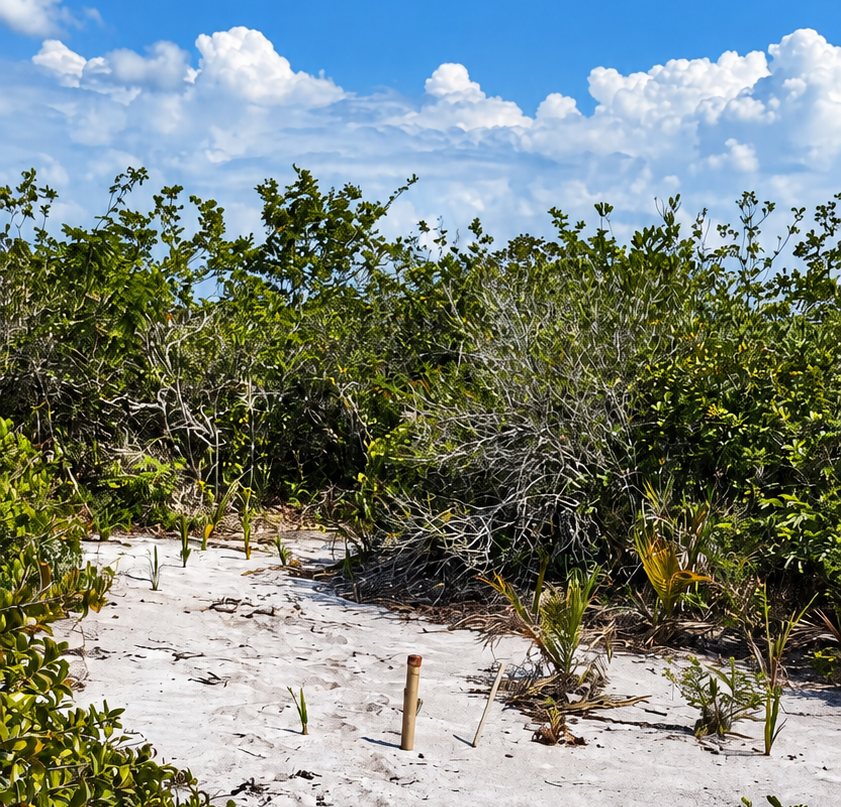
That first encounter made us realize just how distinctive these environments are. White-sand forests grow on sandy, acidic, nutrient-poor soils and remain among the less-studied ecosystems of the Amazon. When it comes to medium- and large-bodied terrestrial mammals, we knew even less about which species used these forests and how they responded to environmental conditions and human presence. That was exactly what we had come to investigate.
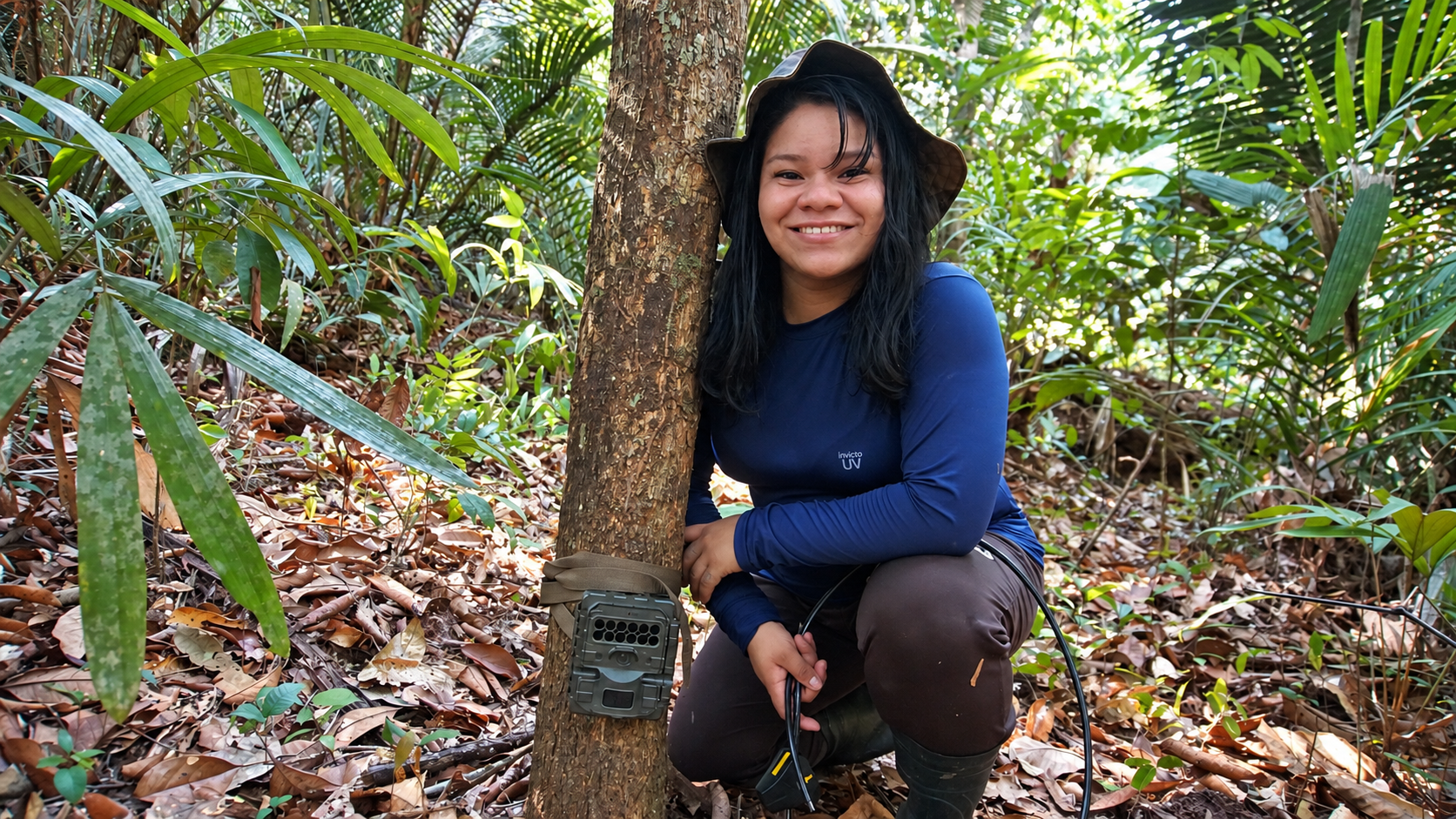
But before the cameras could begin revealing the mammals of the white-sand forests, we first had to reach them. Although our camera traps were installed within the white-sand forests, reaching the sampling plots often meant crossing extensive stretches of open campina. This was where we experienced one of the most challenging aspects of the fieldwork: the heat. With little vegetation cover, exposed sand and the Amazonian sun beating directly down on us, walking long distances while carrying equipment required considerable effort. Water was essential, and at times we had to stop, rest and catch our breath before continuing.
But the sand also revealed who had been there before us. During these walks, we found tracks and scat from jaguars (Panthera onca). Even before checking the first camera-trap images, these signs were already telling us that large predators were using this landscape.
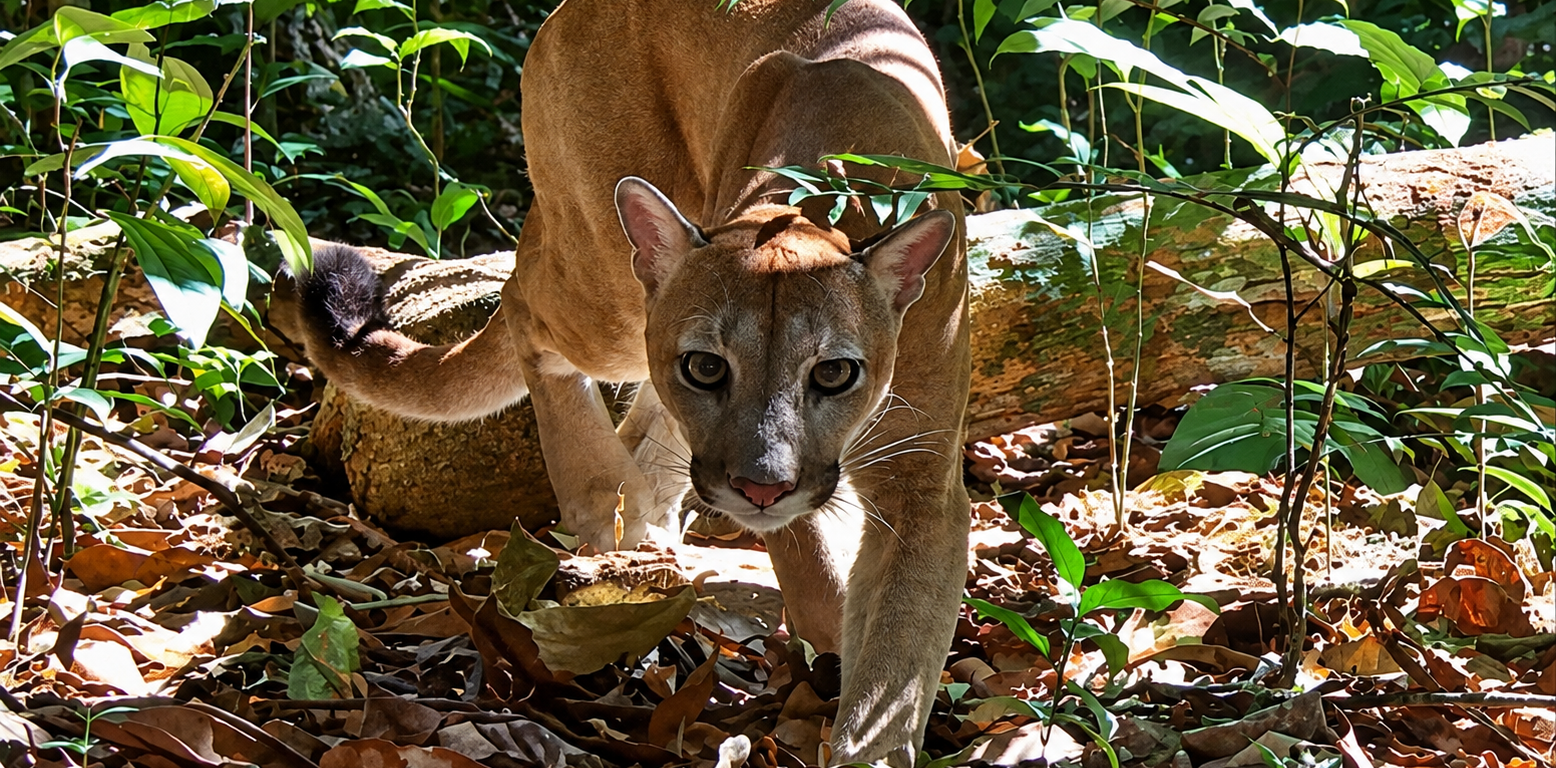
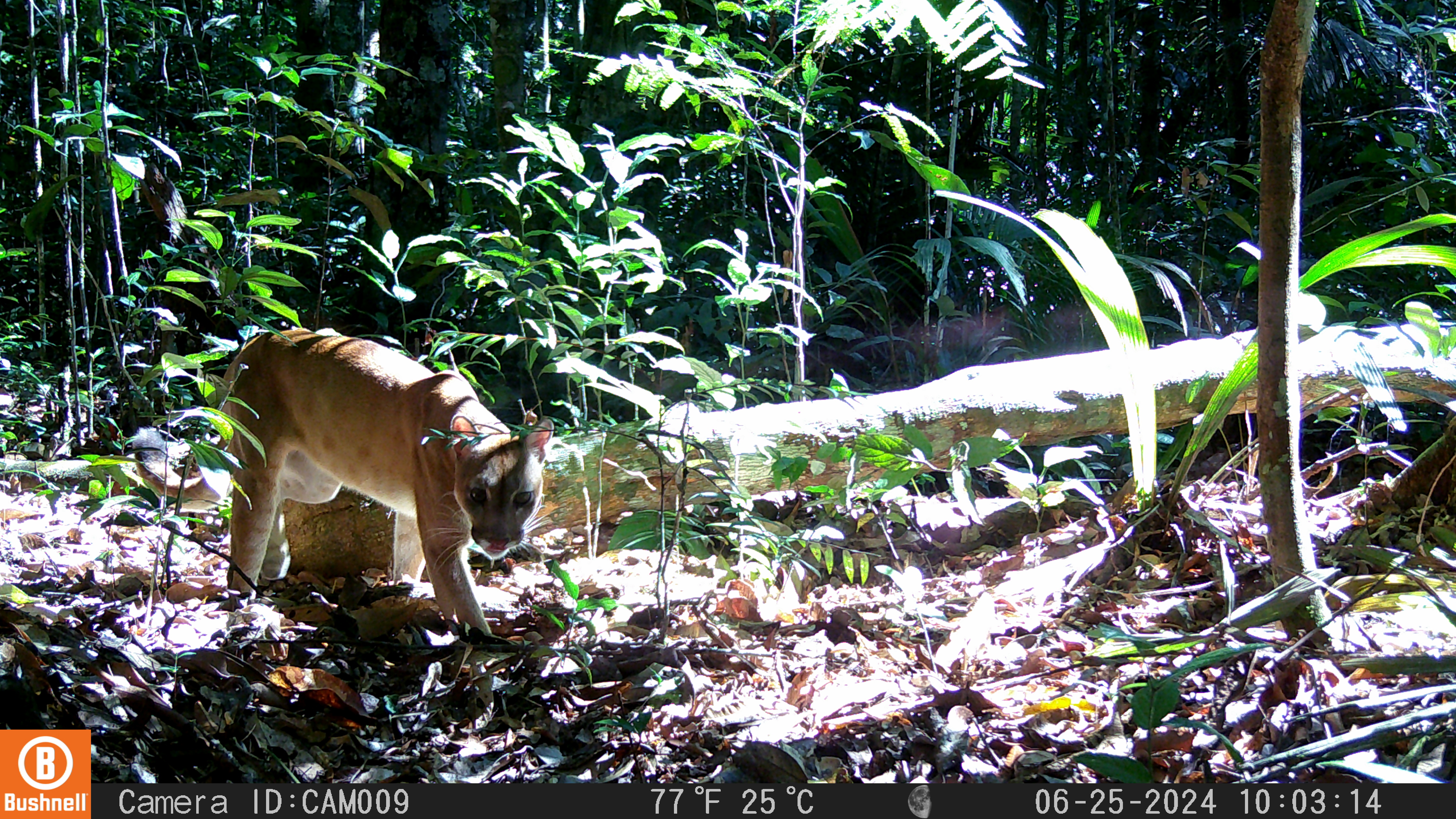
Then came the cameras and a few surprises. One of the first felids captured by our cameras was a puma (Puma concolor), also known locally as the “onça-vermelha” (“red jaguar”). Finding a large felid among our first records was one of those moments that made all the effort of fieldwork worthwhile.
The jaguar (Panthera onca) also appeared. Our records came from the sampling module at km 18, an area that we had experienced during fieldwork as particularly hot and relatively open. Images of one individual caught our attention because some of its characteristics suggested that it might have been a female in reproductive condition. We did not record a cub, so we cannot say that a young animal was accompanying her, but the observation sparked our curiosity and further highlighted the importance of continuing to monitor the area.
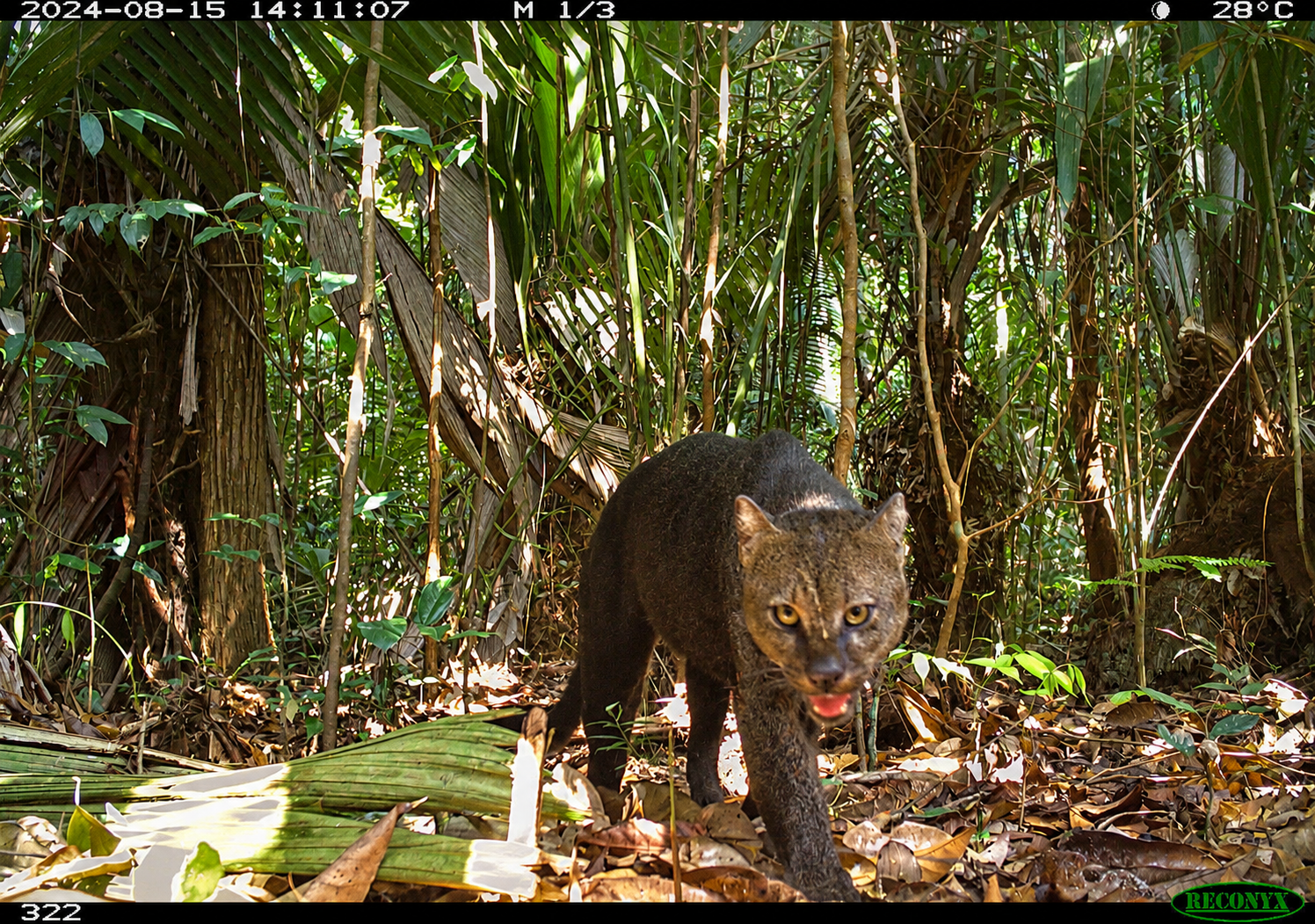
Other images were equally exciting. We recorded tapirs (Tapirus terrestris) together, as well as species such as the giant armadillo (Priodontes maximus), giant anteater (Myrmecophaga tridactyla), white-lipped peccary (Tayassu pecari) and jaguarundi (Herpailurus yagouaroundi). Seeing such a diverse mammal community using these white-sand forests showed us that, although these environments are structurally very different from the terra firme forests we were accustomed to working in, they are used by a wide variety of Amazonian mammals.
At first, however, detections came slowly. Because of the low frequency of records, we extended the period that the cameras remained in the field, increasing our sampling effort to obtain a more robust representation of the mammal community. By the end of the study, we had accumulated 4,721 camera-trap days and recorded 22 species of medium- and large-bodied terrestrial mammals.
When we began analysing the data, another part of the story emerged. Vegetation structure influenced different aspects of mammal community composition and habitat use, while the hydrological gradient had an indirect effect on habitat use through its influence on vegetation structure. But another result particularly caught our attention: human presence was also leaving a clear signature on the mammal community.
Distance from human residences was the main factor associated with changes in mammal assemblage composition. Among frugivore-herbivores, habitat-use intensity was also higher in areas farther from houses. Our study did not directly measure the mechanisms responsible for this pattern. Factors associated with human occupation, such as hunting, the presence of dogs, noise or other forms of disturbance, may contribute to it, but further research will be needed to understand the relative importance of each of these factors.
This finding is especially relevant because the Rio Negro Sustainable Development Reserve is a sustainable-use protected area, where people and biodiversity share the same landscape. Our results do not mean that the presence of local communities is incompatible with conservation. Rather, they highlight the importance of understanding how space is used by both people and wildlife to guide management strategies that can reconcile sustainable use of the landscape with the maintenance of refuge areas for more sensitive species.
After months of camera trapping, kilometres walked under the sun, and thousands of photographs and videos, we left the white-sand forests with new answers, but also with new questions. And perhaps that is one of the most exciting parts of research.
We hope to return. A new survey conducted over an even longer period could help us better understand the occurrence of species that were recorded less frequently and, perhaps, reveal other animals that our cameras have not yet detected.
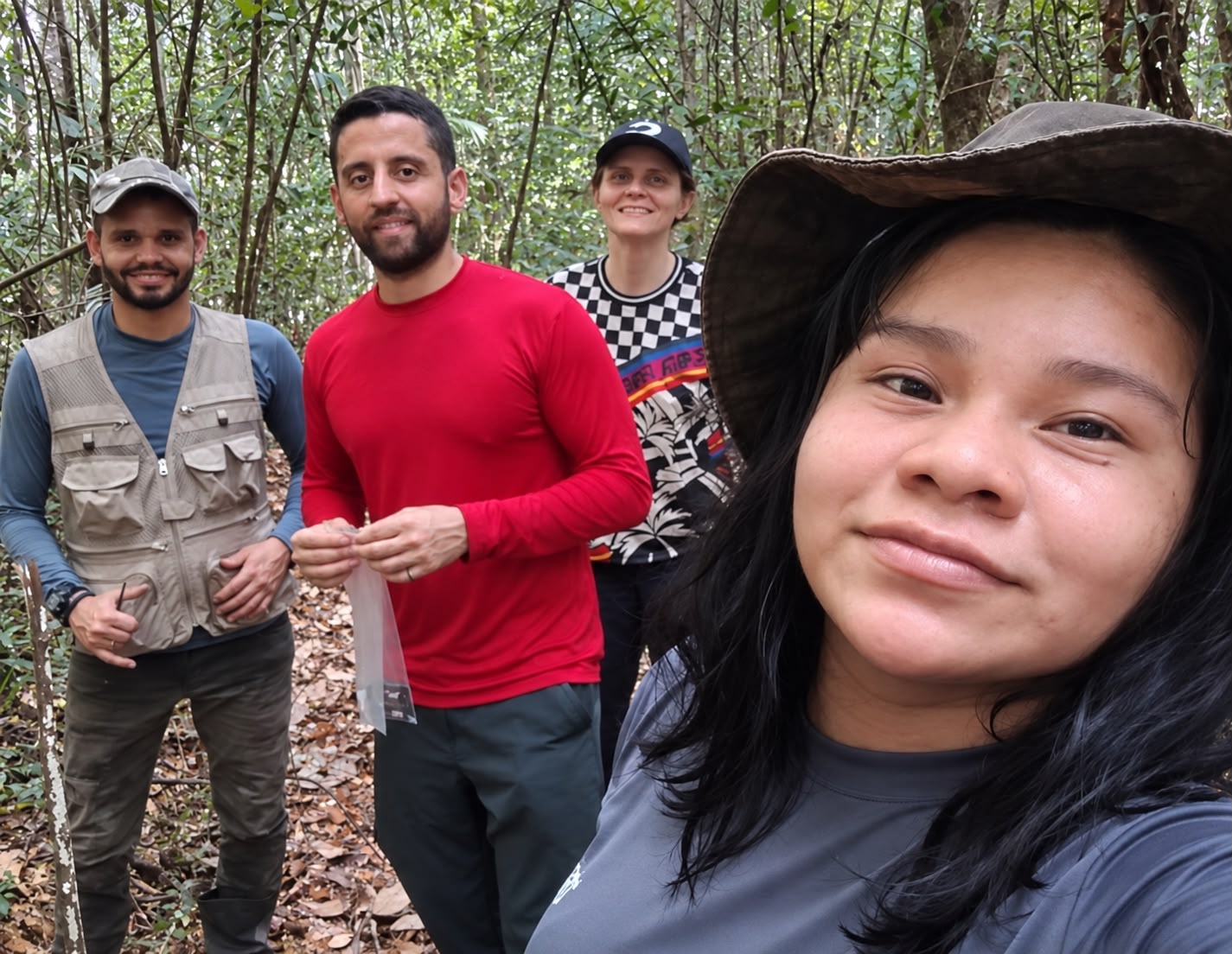
This study grew out of my Master’s research in Ecology at the National Institute for Amazonian Research (INPA) and was developed within a PPBio Western Amazon project dedicated to studying the biodiversity of the white-sand forests of the Rio Negro Sustainable Development Reserve. The research was supported by FAPEAM, CAPES and CNPq, with additional support from PPBio Western Amazon and INCT-CENBAM. We also thank the Biological Dynamics of Forest Fragments Project (BDFFP/PDBFF) for lending us the camera traps used in this research, as well as all collaborators and field team members who helped make this study possible.
Our first experience in these forests showed us just how much remains to be discovered. Among the white sand, distinctive vegetation and paths travelled by mammals, these forests still hold many stories and we hope to return to uncover some of them.
Read the paper here:
https://besjournals.onlinelibrary.wiley.com/doi/full/10.1111/1365-2656.70375

