
This blog post is provided by Nevo Sagi and tells the #StoryBehindThePaper for the article, “Carbon flow to generalist predators shifts between plant- and fungal-derived resources in highly seasonal ecosystems.” This study explored how wolf spiders in the Alaskan Arctic use plant-, fungi- and bacteria-based energy channels, finding that spiders rely more on fungal-derived carbon early in the growing season and at less productive sites, but shift towards plant-derived carbon as the season progresses and ecosystem greenness increases.
Energy flows through food chains along distinct paths derived from living plants, fungi, and bacteria. Animals transfer this energy up the food web by consuming other organisms, but how these energy pathways shift across space and time remains poorly understood. Deciphering this variability can help us map carbon and nutrient fluxes between different ecosystem compartments and understand what controls them. These questions are especially intriguing in highly seasonal environments, where fluctuations in environmental conditions dictate temporal variability in the availability of different resources. The Arctic tundra is such an environment, which is also undergoing long-term warming-induced shifts in ecosystem structure and function. In our study, we set out to test how variations in plant growth influence generalist predators’ use of plant-, fungi- and bacteria-based energy channels across the Alaskan Arctic.
How shifts in resource availability affect carbon fluxes through food webs
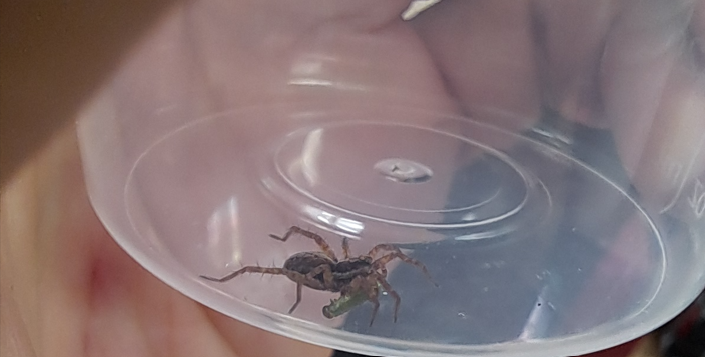
Plant growth in the Arctic is limited to a short summer season when temperatures are sufficiently warm. Plant-eating animals are increasingly abundant in accordance with the precious resource they depend on. In contrast, dead organic matter is a more reliable resource that’s available for longer periods, and brown food webs based on microbial decomposition of this resource are usually more dominant in the Arctic tundra. Likewise, the relative importance of plants and microbes as basal links in Arctic food webs can vary across spatial gradients in environmental conditions that affect plant growth. To assess these questions, we focused on wolf spiders (family Lycosidae), generalist predators that are widespread across the Arctic tundra and couple both green and brown energy channels by feeding through both channels (multi-channel feeding). We sampled wolf spiders across four sites spanning a plant productivity gradient in the Alaskan Arctic during peak summer. To track seasonal changes, we also collected spiders on a weekly basis at one focal site throughout the growing season.
Tracing carbon movement within an ecosystem using isotopic fingerprints
To trace where the spiders got their dietary carbon, we used a chemical tracking technique called essential amino acid carbon isotope fingerprinting. This approach relies on two important principles:
- Plants, bacteria and fungi produce amino acids with unique carbon isotope ratios (δ13C). One can use the patterns among different amino acids’ δ13C values to infer the isotopic fingerprint of these basal organisms.
- Animals cannot produce some of these acids (known as essential amino acids) from scratch. Therefore, they source them from their food and integrate them into their tissues. As a result, we can find these fingerprints in a specific animal and calculate the proportion of carbon that it sourced from plant-, bacteria- and fungi-based food chains.
A seasonal and spatial switch in carbon source
Our findings revealed clear patterns in how wolf spiders assimilate carbon from different energy channels:
- Greener Sites: Spiders collected from sites with higher ecosystem greenness (measured by the normalised difference vegetation index, or NDVI) assimilated more plant-derived energy and less fungal-derived energy.
- Seasonal Shifts: Across the growing season, spiders shifted from primarily assimilating fungal-based resources in early summer to plant-derived resources in late summer, aligning closely with seasonal increases in ecosystem greenness.
- Body Size Differences: Larger wolf spiders assimilated more plant-derived carbon and less fungal-derived carbon compared to smaller spiders.
What this means for tundra ecosystems
We hypothesise that these changes occur because seasonal shifts in plant growth alter the relative availability of plant-eating prey versus microbe-eating prey, prompting generalist predators to switch their feeding choices.
Because generalist predators connect different energy channels, these feeding shifts mean that top-down predator control on plant growth and microbial decomposition can vary with resource availability. Furthermore, our results suggest that wolf spider body size could help predict whether spiders indirectly influence plant growth or decomposition.
As climate change continues to alter seasonality, resource availability, and invertebrate body sizes in high-latitude environments, our findings provide a framework for predicting how predator impacts on ecosystem processes will shift in the future.
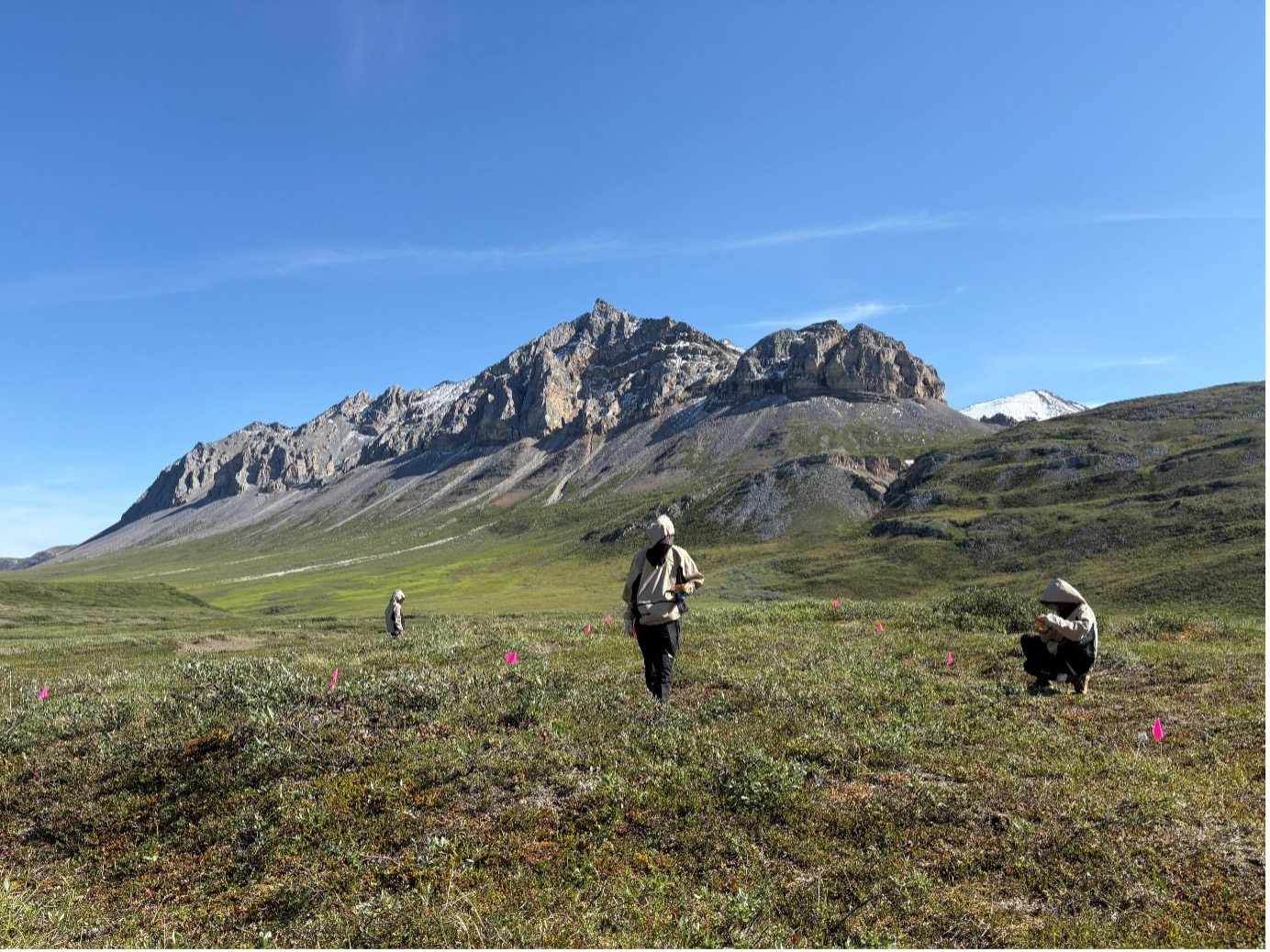
Feature image credit: Amanda Koltz
Read the full paper here: https://besjournals.onlinelibrary.wiley.com/doi/10.1111/1365-2656.70362

